
About Otto Hölder
Lived 1859 – 1937 (aged 77). Otto Hölder was a German mathematician and university teacher, known for Composition series, Hölder condition and Hölder mean.
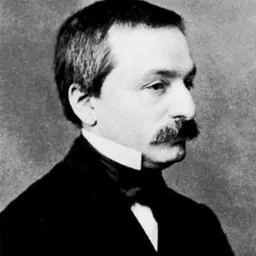
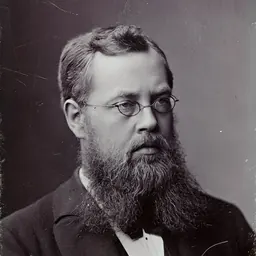
Early life and education Hölder was the youngest of three sons of professor Otto Hölder (1811–1890), and a grandson of professor Christian Gottlieb Hölder (1776–1847); his two brothers also became professors. He first studied at the Polytechnikum (which today is the University of Stuttgart) and then in 1877 went to Berlin where he was a student of Leopold Kronecker, Karl Weierstrass, and Ernst Kummer. Following this, he went to the University of Leipzig but was unable to habilitate there, instead earning a second doctorate and habilitation at the University of Göttingen, both in 1884.
Academic career and later life He was unable to get government approval for a faculty position in Göttingen, and instead was offered a position as extraordinary professor at Tübingen in 1889. Temporary mental incapacitation delayed his acceptance but he began working there in 1890. In 1899, he took the former chair of Sophus Lie as a full professor at the University of Leipzig. There he served as dean from 1912 to 1913, and as rector in 1918.
In 1933, Hölder signed the Vow of allegiance of the Professors of the German Universities and High-Schools to Adolf Hitler and the National Socialistic State.
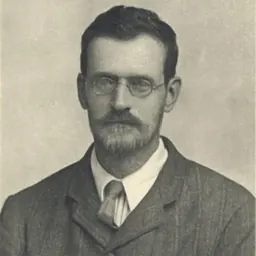
Mathematical contributions Hölder's inequality, named for Hölder, was actually proven earlier by Leonard James Rogers. It is named for a paper in which Hölder, citing Rogers, reproves it; in turn, the same paper includes a proof of what is now called Jensen's inequality, with some side conditions that were later removed by Jensen. Hölder is also noted for many other theorems including the Jordan–Hölder theorem, the theorem stating that every linearly ordered group that satisfies an Archimedean property is isomorphic to a subgroup of the additive group of real numbers, the classification of simple groups of order up to 200, the anomalous outer automorphisms of the symmetric group S6, and Hölder's theorem, which implies that the Gamma function satisfies no algebraic differential equation. Another idea related to his name is the Hölder condition (or Hölder continuity), which is used in many areas of analysis, including the theories of partial differential equations and function spaces.
Don’t just read it —
keep it.
Full-length biographies made to live with: read them, listen on the way to work, watch them tonight.
- E-book
- Audio
- Video
Instant download · yours to keep · every purchase keeps this site free
Important facts
People in Otto Hölder's life
Named in this biography and alive at the same time

Related people
Same field, nearest in time

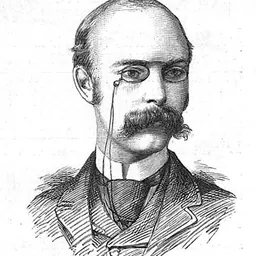

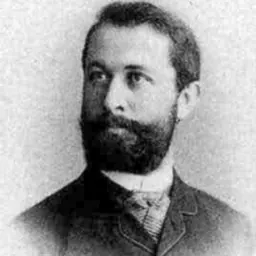
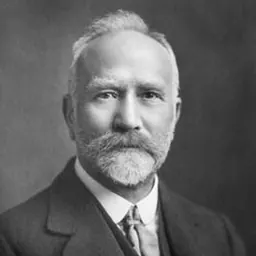
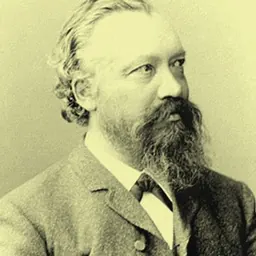
Contemporaries
People whose lives overlapped Otto Hölder's


Frequently asked questions
Who was Otto Hölder?
German mathematician (1859–1937)
When was Otto Hölder born?
Otto Hölder was born on 22 December 1859 in Stuttgart.
When did Otto Hölder die?
Otto Hölder died on 29 August 1937 in Leipzig.
What was Otto Hölder's occupation?
Otto Hölder was a mathematician and university teacher.
What was Otto Hölder known for?
Otto Hölder was known for Composition series, Hölder condition, Hölder mean, Hölder summation, Hölder's inequality and Hölder's theorem.
What nationality was Otto Hölder?
Otto Hölder was German.
Sources & further reading
Cite this page
APA: Biography.guide. (2026). Otto Hölder. https://biography.guide/otto-holder/
MLA: "Otto Hölder." Biography.guide, https://biography.guide/otto-holder/.
Chicago: "Otto Hölder." Biography.guide. https://biography.guide/otto-holder/.
Data last updated: 2026-09-20 · Spot an error? Report a correction.
Page generated 2026-09-27 05:26 UTC