
About Otto Haxel
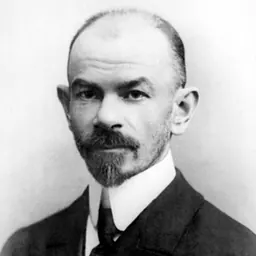
Lived 1909 – 1998 (aged 88). Otto Haxel was a German physicist and nuclear physicist.
Otto Haxel (2 April 1909, in Neu-Ulm – 26 February 1998, in Heidelberg) was a German nuclear physicist. During World War II, he worked on the German nuclear energy project. After the war, he was on the staff of the Max Planck Institute for Physics in Göttingen. From 1950 to 1974, he was an ordinarius professor of physics at the University of Heidelberg, where he fostered the use of nuclear physics in environmental physics; this led to the founding of the Institute of Environmental Physics in 1975. During 1956 and 1957, he was a member of the Nuclear Physics Working Group of the German Atomic Energy Commission. From 1970 to 1975, he was the Scientific and Technical Managing Director of the Karlsruhe Research Center.
Haxel was a signatory of the Manifesto of the Göttingen Eighteen.
Education
From 1927 to 1933, Haxel studied at the Technische Hochschule München (today, the Technical University of Munich) and the University of Tübingen. He received his doctorate in 1933, under Hans Geiger at the University of Tübingen. From 1933 to 1936, Haxel was Geiger’s teaching assistant there, and he completed his Habilitation in 1936.
Career
In 1936, Geiger, as the successor to Gustav Hertz, became an ordinarius professor and department head at the Technische Hochschule Berlin (today, the Technische Universität Berlin, in Berlin-Charlottenburg. Haxel also went to the Technische Hochschule Berlin and became a teaching assistant there in 1936 and a lecturer in 1939.
From at least 1940 to early 1942, Haxel worked on the German nuclear energy project, also called the Uranverein (Uranium Club). He specialized in studies of neutron absorption in uranium (see, for example, the Internal Reports below authored with Helmut Volz, also a former student of Geiger). Haxel was called up for military service in early 1942. He was put in charge of a group doing nuclear research for the German Navy under Admiral Rhein, who had formerly been a submarine commander.
From 1946 to 1950, Haxel was a staff assistant to Werner Heisenberg at the Max-Planck Institut für Physik, in Göttingen. While there, he and Fritz Houtermans collaborated; Houtermans was at the II. Physikalischen Institut of the University of Göttingen. Haxel also worked on the development of “magic numbers” in nuclear shell theory with J. Hans D. Jensen at the Institut für theoretische Physik, Heidelberg, and Hans Suess at the Institut für physikalische Chemie, Hamburg. In 1949, Haxel was also appointed supernumerary professor at the Georg-August-Universität Göttingen. In the 1950s, mainly through the impetus of Haxel, environmental physics was developed there through the application of nuclear physics. This led to the founding of the Institut für Umweltphysik (Institute of Environmental Physics) in 1975, with Karl-Otto Münnich as its founding director.
During 1956 and 1957, Haxel was a member of the (Nuclear Physics Working Group) of the Fachkommission II „Forschung und Nachwuchs“ (Commission II “Research and Growth”) of the Deutschen Atomkommission (DAtK, German Atomic Energy Commission). Other members of the Nuclear Physics Working Group in both 1956 and 1957 were: Werner Heisenberg (chairman), Hans Kopfermann (vice-chairman), Fritz Bopp, Walther Bothe, Wolfgang Gentner, Willibald Jentschke, Heinz Maier-Leibnitz, Josef Mattauch, , Wilhelm Walcher, and Carl Friedrich von Weizsäcker. Wolfgang Paul was also a member of the group during 1957.
From 1970 to 1975, Haxel was the wissenschaftlich-technischen Geschäftsführer (Scientific and Technical Managing Director) of the Forschungszentrum Karlsruhe (Karlsruhe Research Center).
Haxel was a signatory of the manifesto of the Göttinger Achtzehn (Göttingen Eighteen). Charlotte Riefenstahl, a physicist educated at the University of Göttingen, was his first and third wife in four marriages. In February 1944, Houtermans married Ilse Bartz, a chemical engineer; they worked together during the war and published a paper. Houtermans divorced Ilse and remarried Charlotte in August 1953. Haxel married Ilse after her divorce from Houtermans.
Honors
The Freundeskreis des Forschungszentrums Karlsruhe e.V. (Friends of the Karlsruhe Research Center) established and awards the Otto-Haxel-Preis (Otto Haxel Prize), which is given for achievements in the nuclear energy industry.
In 1980, Haxel was awarded the Otto Hahn Prize of the City of Frankfurt am Main for his advocacy of and work on harnessing nuclear energy production.
Internal Reports
The following reports were published in Kernphysikalische Forschungsberichte (Research Reports in Nuclear Physics), an internal publication of the German Uranverein. The reports were classified Top Secret, they had very limited distribution, and the authors were not allowed to keep copies. The reports were confiscated under the Allied Operation Alsos and sent to the United States Atomic Energy Commission for evaluation. In 1971, the reports were declassified and returned to Germany. The reports are available at the Karlsruhe Nuclear Research Center and the American Institute of Physics.
Otto Haxel and Helmut Volz G-37 (17 December 1940) Otto Haxel and Helmut Volz G-38 (11 June 1940) Otto Haxel, Ernst Stuhlinger, and Helmut Volz G-91 (4 August 1941) Otto Haxel and Helmut Volz G-118 (1 February 1941)
Selected literature
O. Haxel and F. G. Houtermans , Zeitschrift für Physik Volume 124, Numbers 7–12, 705–713 (1948). Received 25 February 1948. Institutional affiliations: Haxel – Max-Planck-Institut für Physik, Göttingen and Houtermans – II. Physikalischen Institut der Universität Göttingen, Deutschland. O. Haxel, J. Hans D. Jensen, H. E. Suess Concerning the Interpretation of “Magic” Nucleon Numbers in Connection With the Structure of Atomic Nuclei, Die Naturwissenschaften Volume 35, 376 (1948) Otto Haxel, J. Hans D. Jensen, and Hans E. Suess On the “Magic Numbers” in Nuclear Structure, Phys. Rev. Volume 75, 1766 – 1766 (1949). Institutional affiliations: Haxel – Max-Planck Institut für Physik, Göttingen; Jensen – Institut für theoretische Physik, Heidelberg; and Suess – Institut für physikalische Chemie, Hamburg. Received 18 April 1949. H. E. Suess, O. Haxel, and J. H. D. Jensen On the Interpretation of the Magic Nucleon Numbers in the Structure of Atomic Nuclei [In German], Die Naturwissenschaften Volume 36, 153–155 (1949) O. Haxel, J. H. D. Jensen, and Hans E. Suess , Z. Physik Volume 128, 295–311 (1950) F. G. Houtermans, O. Haxel, and J. Heintze Half-Life of K40, Z. Physik Volume 128, 657–667 (1950) W. Buhring and Otto Haxel Excitation of X Radiation from Ni, Cu, and Mo by Po210 Alpha Particles, Z. Physik Volume 148, 653–661 (1957)
Books
Otto Haxel (Westdt. Verl., 1953) Otto Haxel and Heinz Filthuth (Bibliographisches Inst., 1969)
Don’t just read it —
keep it.
Full-length biographies made to live with: read them, listen on the way to work, watch them tonight.
- E-book
- Audio
- Video
Instant download · yours to keep · every purchase keeps this site free
Important facts
People in Otto Haxel's life
Named in this biography and alive at the same time




Related people
Same field, nearest in time




Contemporaries
People whose lives overlapped Otto Haxel's



Frequently asked questions
Who was Otto Haxel?
German nuclear physicist (1909–1998)
When was Otto Haxel born?
Otto Haxel was born on 2 April 1909 in Neu-Ulm.
When did Otto Haxel die?
Otto Haxel died on 26 February 1998 in Heidelberg.
What was Otto Haxel's occupation?
Otto Haxel was a physicist and nuclear physicist.
What nationality was Otto Haxel?
Otto Haxel was German.
Sources & further reading
Cite this page
APA: Biography.guide. (2026). Otto Haxel. https://biography.guide/otto-haxel/
MLA: "Otto Haxel." Biography.guide, https://biography.guide/otto-haxel/.
Chicago: "Otto Haxel." Biography.guide. https://biography.guide/otto-haxel/.
Data last updated: 2026-09-25 · Spot an error? Report a correction.
Page generated 2026-09-27 05:06 UTC