
About Otl Aicher
Lived 1922 – 1991 (aged 69). Otl Aicher was a German designer, graphic designer, sculptor, typographer, university teacher and graphic artist.
Otto "Otl" Aicher (; 13 May 1922 – 1 September 1991) was a German graphic designer and typographer. Aicher co-founded and taught at the influential Ulm School of Design. He is known for having led the design team of the 1972 Summer Olympics in Munich, and for overseeing the creation of its prominently used system of pictograms. Aicher also developed the Rotis typeface.
Early life and career
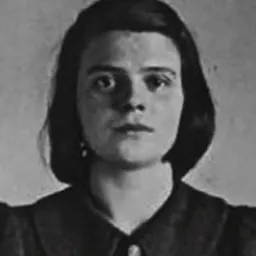
Aicher was born in Ulm, in the south-western state of Württemberg, on 13 May 1922. Aicher was a classmate and friend of Werner Scholl, and through him met Werner's family, including his siblings Hans and Sophie Scholl (both of whom would be executed in 1943 for their membership in the White Rose resistance movement in Nazi Germany). Like the Scholls, Aicher was strongly opposed to the Nazi movement. He was arrested in 1937 for refusing to join the Hitler Youth, and consequently he was failed on his abitur (college entrance) examination in 1941. He was subsequently drafted into the German army to fight in World War II, though he tried to leave at various times. In 1945 he deserted the army, and went into hiding at the Scholls' house in Wutach. Faculty and students included such notable designers as Tomás Maldonado, Peter Seitz, and Anthony Froshaug.
Aicher was heavily involved in corporate branding and is considered one of the pioneers of Corporate design. Among others, he was influential in the corporate identity of the companies Braun and Lufthansa.
1972 Munich Olympics In 1966, Aicher was asked by the organizers of the 1972 Summer Olympics in Munich to become the Olympic Games' lead designer. He was asked to create a design for the Olympics that complemented the architecture of the newly built stadium in Munich designed by Günther Behnisch. Aicher consulted with Masaru Katsumie, who had designed the previous 1964 Tokyo Olympic Games. He created pictograms using a series of grid systems and a specific bright colour palette that he chose for these Games. These designs were directly influential on the DOT pictograms, developed in 1974 by the United States Department of Transportation, which applied the same principles to standard public signage such as those for toilets and telephones; the DOT pictograms have in turn been used around the world. The series of pictograms he created was not a simple task; the goal of each pictogram was to function as a clear sign of the activity it represented while simultaneously maintaining its universal comprehension.
Otl Aicher also helped to design the logo of the Munich Olympics. He went through several stages with his design team before finally finding the successful emblem. One of their first ideas was to use an element of the city's coat of arms or Münchner Kindl within the design which showed a monk or child pointing into the distance while clasping a book in his hand. Other ideas were to use the surrounding areas of the city, referencing the sun, mountains and landscape within the design.
Aicher was honored by the Munich City Council on 6 May 2010, when a street, Otl-Aicher-Straße, in the City's Borough No. 12 (Schwabing-Freimann) was named after him. The Leutkirch Realschule also bears his name.
Publications Aicher wrote many books on design and other subjects, including: "The Kitchen is for Cooking" (1982) "Walking in the Desert" (1982) "Critique of the Automobile" (1984) "Inside the War" (1985) "The World as Design" (Die Welt Als Entwurf) (1991) "Analog and Digital" (Analog Und Digital) (1991)
Publications on Otl Aicher and his work: Foster, Norman: Otl Aicher 1991. In: David Jenkins (Hg.): On Foster ... Foster On, München: Prestel, 2000, pp. 592–595, Rathgeb, Markus: Otl Aicher – Design as a method of action. PhD thesis at The University of Reading, 2001 Rathgeb, Markus: Otl Aicher. Phaidon Press, 2006. (Monograph)
Don’t just read it —
keep it.
Full-length biographies made to live with: read them, listen on the way to work, watch them tonight.
- E-book
- Audio
- Video
Instant download · yours to keep · every purchase keeps this site free
Important facts
Family & relationships
People in Otl Aicher's life
Named in this biography and alive at the same time






Related people
Same field, nearest in time



Contemporaries
People whose lives overlapped Otl Aicher's


Frequently asked questions
Who was Otl Aicher?
German graphic designer and typographer (1922–1991)
When was Otl Aicher born?
Otl Aicher was born on 13 May 1922 in Ulm.
When did Otl Aicher die?
Otl Aicher died on 1 September 1991 in Günzburg.
What was Otl Aicher's occupation?
Otl Aicher was a designer, graphic designer, sculptor, typographer, university teacher and graphic artist.
What nationality was Otl Aicher?
Otl Aicher was German.
Sources & further reading
Cite this page
APA: Biography.guide. (2026). Otl Aicher. https://biography.guide/otl-aicher/
MLA: "Otl Aicher." Biography.guide, https://biography.guide/otl-aicher/.
Chicago: "Otl Aicher." Biography.guide. https://biography.guide/otl-aicher/.
Data last updated: 2026-09-25 · Spot an error? Report a correction.
Page generated 2026-09-27 05:11 UTC