
About Osman Digna
Lived 1836 – 1926 (aged 89–90). Osman Digna was a Sudanese politician, military personnel, amir and businessperson.
Osman Digna ( 1840–1926) was a follower of Muhammad Ahmad, the self-proclaimed Mahdi, in Sudan, who became his best known military commander during the Mahdist War. He was claimed to be a descendant from the Abbasid family. As the Mahdi's ablest general, he played an important role in the fate of General Charles George Gordon and the end of Turkish-Egyptian rule in Sudan.
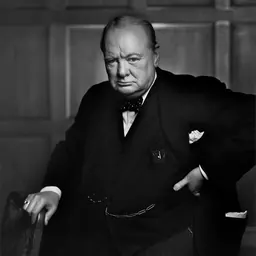
In Britain, Osman Digna became a notorious figure, both demonised as a savage and respected as a warrior. Winston Churchill described him as an "astute" and "prudent" man, calling him "the celebrated, and perhaps immortal, Osman Digna."
Mahdist leader Osman Digna's father was a Kurd and his mother hailed from the Hadendoa tribe of the Beja people. His birthplace is not documented, but Suakin was said to be the town where he was born. He was originally known as Osman Ali. He lived in Alexandria, Egypt, where he dealt in the selling of slaves. After the English forced him to quit this business, he took part in the revolt of Ahmed 'Urabi. After the failure of the revolt at the Battle of Tel al-Kebir (13 September 1882), he attached himself to the cause of the Mahdi in Sudan.
About this time he received the name "Digna" because of the fullness of his beard ("the bearded one," from , "the beard"). He was the leader of a powerful army around Suakin. His first battle was an attempt to capture a Turkish-held fort at Sinkat in 1883. His initial attack was repulsed, but the fort eventually fell after a siege.
At the First Battle of El Teb he inflicted a severe defeat on a much larger Egyptian force led by Baker Pasha near Tokar, on 4 February 1884. Immediately after this victory, however, a new British-Egyptian force was sent to retrieve the situation, and he was defeated by General Graham near Tokar at the Second Battle of El Teb.
Both sides withdrew to restore their forces, but Graham soon launched a second attack designed to crush Osman Digna completely. At the Battle of Tamai, the Mahdist forces exploited a gap in the British position, and succeeded in breaking an infantry square. They were almost able to cut off parts of the British force, but the British were able to rally and consolidate their position. The Mahdists were subjected to intense flanking fire and were finally defeated. Despite his defeat, as the only foreign commander who broke the British infantry square, Osman Digna and his troops acquired a reputation amongst the British for immense fighting-prowess. The prowess of his troops is celebrated in Rudyard Kipling's poem "Fuzzy-Wuzzy". He is also named in The Battle of El-Teb, a poem by William McGonagall.
The defeats did not, however, destroy the Mahdists, and Osman Digna remaining in control of his supporters. Graham later withdrew, and Osman Digna restored his army. He presented the battle as a victory, saying that the British had fled "in fear". He wrote to the Mahdi claiming that he had inflicted 8,000 casualties on the British, with only 2,000 of his own troops killed. Nevertheless, the British campaign had achieved very little, as Osman Digna "retained both Sinkat and Tokar and the Suakin-Berber route was controlled by the Ansar [Mahdists]".
Later operations Osman Digna later served under the Mahdi's successor Abdallahi ibn Muhammad (known as the Khalifa), who launched a series of military operations in subsequent years. Osman Digna took command of a Mahdist force invading Ethiopia in 1885, but was defeated by Ethiopian general Ras Alula at the Battle of Kufit on 23 September. This became a sitting target for Kitchener. At the ensuing Battle of Atbara, he launched a barrage followed by a rapid attack. The Mahdist position collapsed. Osman managed to lead a few thousand warriors on a retreat to the south, and most of the remainder were killed or captured, including Mahmud, who was captured by Sudanese troops of the Egyptian Brigade.
In 1899 Osman Digna fought in the last campaign of the Mahdist forces, whose strength had been broken in the previous year at Omdurman. At the Battle of Umm Diwaykarat he was injured, but was the only leader who escaped and continued the resistance. He tried to reach safety in the Hejaz, but on 19 January 1900, he was captured near Tokar and sent as a prisoner to Rosetta. There, he served in prison for eight years, and after his release stayed in Egypt until he died in 1926.
Don’t just read it —
keep it.
Full-length biographies made to live with: read them, listen on the way to work, watch them tonight.
- E-book
- Audio
- Video
Instant download · yours to keep · every purchase keeps this site free
Important facts
People in Osman Digna's life
Named in this biography and alive at the same time



Related people
Same field, nearest in time





Contemporaries
People whose lives overlapped Osman Digna's


Frequently asked questions
Who was Osman Digna?
Sudanese military commander (1836-1926)
When was Osman Digna born?
Osman Digna was born in 1836 in Suakin.
When did Osman Digna die?
Osman Digna died in 1926 in Wadi Halfa.
What was Osman Digna's occupation?
Osman Digna was a politician, military personnel, amir and businessperson.
What nationality was Osman Digna?
Osman Digna was Sudanese.
Sources & further reading
Cite this page
APA: Biography.guide. (2026). Osman Digna. https://biography.guide/osman-digna/
MLA: "Osman Digna." Biography.guide, https://biography.guide/osman-digna/.
Chicago: "Osman Digna." Biography.guide. https://biography.guide/osman-digna/.
Data last updated: 2026-09-20 · Spot an error? Report a correction.
Page generated 2026-09-27 05:20 UTC