
About Oskar Negt
Lived 1934 – 2024 (aged 89). Oskar Negt was a German philosopher, university teacher and sociologist.
Oskar Reinhard Negt (; 1 August 1934 – 2 February 2024) was a German philosopher and critical social theorist. He was a professor of sociology in Hanover from 1972 to 2002, regarded as one of Germany's most prominent social scientists.
A member of the Socialist German Students' Union, Negt studied philosophy and sociology in Frankfurt with Theodor Adorno, and was an assistant of Jürgen Habermas. He was one of the mentors of the Außerparlamentarische Opposition, and when the protest movement fragmented, tried as leader of the Sozialistisches Büro in Offenbach to establish an "over-factional consciousness". the son of a small farmer When the camp doors were finally reopened, Negt and his sisters were reunited with their parents in Soviet-occupied Berlin after having been placed in quarantine near Rostock on their return to Germany. Negt's childhood was deeply affected by missing out on early development, with no exposure to schooling. In 1951, with rising political pressure on Negt's family due to his father's involvement in the SPD, the family fled to West Berlin, where they would spend six months as asylum seekers. In 1955, the Negt family settled into Oldenburg in Lower Saxony. He was emerited in 2002. Negt's work with Kluge has been described as "highly unconventional" but significant in "an attempt to reinstate the human body to its rightful place in critical theory."
Personal life Negt died in Hanover on 2 February 2024 after a long illness, at age 89. These include Immanuel Kant, Georg Hegel, Karl Marx, Auguste Comte, and some of the major Western Marxists. He drew on work in labour sociology, organizational theory, political journalism and more. Negt's primary concerns relate to labor, teaching, and politics. These experiences led him to feel that while standard education for union members in metal working factories in Germany was sufficient for teaching legal questions, it was insufficient in political education. Negt thus understood genuine education to be inherently political, because democracy must be learned, making education existential for a democratic society. Negt was thus suspicious of the ideology and logic of capital and the market replacing all other forms of social reality. This informed his views on education as the holistic development of the person, limited not only to "processing knowledge and information" but also the ability to deal with emotions, to compromise, negotiate, and share with others. Thus for Negt, "good political education" means that the students can "think for themselves." Their seminal work Public Sphere and Experience was an analysis of the limits of the bourgeois public sphere, which shaped public opposition.
Awards In 2011 Negt was awarded the for his political work. (with Kluge) Public Sphere and Experience: Analysis of the Bourgeois and Proletarian Public Sphere, Verso; Reprint edition (2 February 2016) Originally issued as Public Sphere and Experience: Toward an Analysis of the Bourgeois and Proletarian Public Sphere (Theory & History of Literature) by Univ of Minnesota Pr; First edition (1 December 1993). Adult Education and European Identity. Policy Futures in Education. 6 (6): 744–756. (2013) (with Kluge) History and Obstinacy, Zone Books (11 April 2014)
In German Negt's complete works were published by Steidl Verlag in twelve volumes in 2016. Strukturbeziehungen zwischen den Gesellschaftslehren Comtes und Hegels. (dissertation) Frankfurt 1964. Soziologische Phantasie und exemplarisches Lernen. Zur Theorie der Arbeiterbildung. (habilitation) Frankfurt 1968. Politik als Protest. Reden und Aufsätze zur antiautoritären Bewegung. Frankfurt 1971. (with Kluge) Öffentlichkeit und Erfahrung. Zur Organisationsanalyse von bürgerlicher und proletarischer Öffentlichkeit. Frankfurt 1972. Keine Demokratie ohne Sozialismus. Über den Zusammenhang von Politik, Geschichte und Moral. Frankfurt. 1976. (with Kluge): Geschichte und Eigensinn. Geschichtliche Organisation der Arbeitsvermögen – Deutschland als Produktionsöffentlichkeit – Gewalt des Zusammenhangs. Frankfurt 1981. Lebendige Arbeit, enteignete Zeit. Politische und kulturelle Dimensionen des Kampfes um die Arbeitszeit. Frankfurt /New York 1984. Alfred Sohn-Rethel. Bremen 1988. Modernisierung im Zeichen des Drachen. China und der europäische Mythos der Moderne. Reisetagebuch und Gedankenexperimente. Frankfurt 1988. Die Herausforderung der Gewerkschaften. Plädoyers für die Erweiterung ihres politischen und kulturellen Mandats. Frankfurt/New York 1989. (with Kluge) Maßverhältnisse des Politischen: 15 Vorschläge zum Unterscheidungsvermögen. Frankfurt 1992 Kältestrom. Göttingen 1994. Unbotmäßige Zeitgenossen. Annäherungen und Erinnerungen. Frankfurt 1994. Achtundsechzig. Politische Intellektuelle und die Macht. Göttingen 1995. Kindheit und Schule in einer Welt der Umbrüche. Göttingen 1997. (with ) Königsberg–Kaliningrad: Reise in die Stadt Kants und Hamanns. Göttingen 1998. Warum SPD? 7 Argumente für einen nachhaltigen Macht- und Politikwechsel. Göttingen 1998. (with Kluge): Der unterschätzte Mensch. Frankfurt 2001. (* Kant und Marx. Ein Epochengespräch. Göttingen 2003. Wozu noch Gewerkschaften? Eine Streitschrift. Steidl Verlag, 2004, Die Faust-Karriere. Vom verzweifelten Intellektuellen zum gescheiterten Unternehmer. Göttingen 2006.
Don’t just read it —
keep it.
Full-length biographies made to live with: read them, listen on the way to work, watch them tonight.
- E-book
- Audio
- Video
Instant download · yours to keep · every purchase keeps this site free
Important facts
People in Oskar Negt's life
Named in this biography and alive at the same time


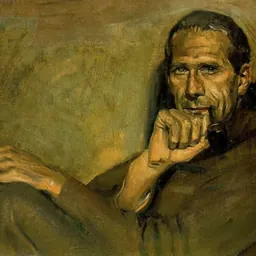

Related people
Same field, nearest in time
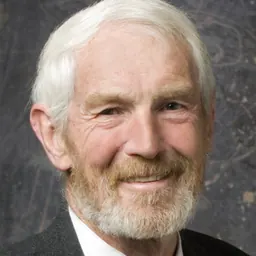
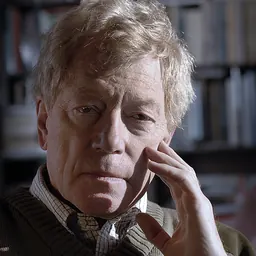



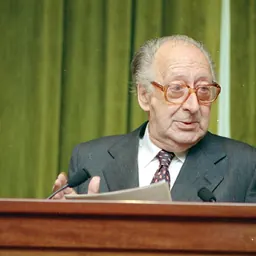
Contemporaries
People whose lives overlapped Oskar Negt's






Frequently asked questions
Who was Oskar Negt?
German philosopher (1934–2024)
When was Oskar Negt born?
Oskar Negt was born on 1 August 1934 in East Prussia, Wischnjowoje.
When did Oskar Negt die?
Oskar Negt died on 2 February 2024 in Hanover.
What was Oskar Negt's occupation?
Oskar Negt was a philosopher, university teacher and sociologist.
What nationality was Oskar Negt?
Oskar Negt was German.
Sources & further reading
Cite this page
APA: Biography.guide. (2026). Oskar Negt. https://biography.guide/oskar-negt/
MLA: "Oskar Negt." Biography.guide, https://biography.guide/oskar-negt/.
Chicago: "Oskar Negt." Biography.guide. https://biography.guide/oskar-negt/.
Data last updated: 2026-09-20 · Spot an error? Report a correction.
Page generated 2026-09-27 05:18 UTC