
About Oskar Loerke
Lived 1884 – 1941 (aged 56). Oskar Loerke was a writer, playwright, painter, poet, literary editor and librettist.
Oskar Loerke (13 March 1884, Jungen – 24 February 1941, Berlin) was a German poet, prose writer, literary critic and essayist. Loerke was a prominent figure in Expressionism and magic realism in Germany.
Loerke paved the way for nature poetry with his formally strict poems characterized by intense imagery, musicality and mythical traits. His works made a significant moral and aesthetic contribution not only to German literature but also to world literature. Turning to ancient cultural traditions, in particular, to magic as a system of perception of the world, Loerke developed his own special image of the world and his own artistic language, which can be considered as a dialogue between the artist and the era.
His literary debut came with the short story Vineta (1907). In 1911, his first volume of poetry was published. At age 29, he won the Kleist Prize in 1913 (jointly with ). The prize money enabled him to travel to Italy and Algiers.
From 1910 to 1917, Loerke was a member of the Donnerstags-Gesellschaft ("Thursday Society") in Berlin, a circle for artists and intellects to discuss literature, music and painting. In 1917, Loerke joined S. Fischer Verlag as an editor and got to know the authors of the publishing house, including Thomas Mann. After World War I, he became an enthusiastic supporter of Max Herrmann-Neiße and Walter Rheiner.
Between 1920 and 1928, Loerke contributed numerous articles and reviews to the newspaper Berliner Börsen-Courier. Between 1929 and 1932, he also contributed to the literary journal Die Kolonne, which was open to nature poetry.
In 1933, Loerke, who opposed Nazism, was expelled from the Prussian Academy of Arts. However, later that year, he had signed the Gelöbnis treuester Gefolgschaft ("pledge of the most loyal followers"), a declaration of allegiance to Hitler, reportedly to protect his Jewish publisher Samuel von Fischer. He was then reinstated in the purged German Academy of Poetry, a sub-department the Prussian Academy of Arts.
Loerke retreated to his house in Frohnau, Berlin, and remained as chief editor of S. Fischer Verlag, which he tried to defend against ever new repressions and censorship measures. His volumes of poetry, Der Silberdistelwald (1934), Der Wald der Welt (1936) and Der Steinpfad (1938), established his reputation as a poet of inner emigration and representative of the naturmagischen Schule (Natural Magic School). His grave was recognized as one of Berlin's Ehrengraeber ("honor grave") until 2021, and after public outcry, its maintenance was extended by the Senate of Berlin for another twenty years. Hermann Kasack, a lifelong friend of Loerke, published many of his works posthumously.
Works
Poems
1911 Wanderschaft (contains Blauer Abend in Berlin) 1916 Gedichte (the second edition in 1929 was published under the title Pansmusik) 1921 Die heimliche Stadt 1926 Der längste Tag 1930 Atem der Erde. Sieben Gedichtkreise 1934 Der Silberdistelwald 1936 Der Wald der Welt 1938 Magische Verse (collected and introduced by Peter Suhrkamp) 1939 Kärntner Sommer (published as a manuscript and in few copies by ) 1941 Der Steinpfad. (first appeared in 1938 as a manuscript and in few copies by Stomps) 1949 Die Abschiedshand (posthumous)
Novels and stories
1907 Vineta 1909 Franz Pfinz 1910 Der Turmbau 1919 Das Goldbergwerk 1919 Chimärenreiter 1919 Der Prinz und der Tiger 1921 Der Oger.
Literary essays and reviews
1922 Wandlungen eines Gedankens über die Musik und ihren Gegenstand (on J. S. Bach) 1925 Zeitgenossen aus vielen Zeiten 1928 Formprobleme der Lyrik 1935 Das unsichtbare Reich (on J. S. Bach) 1933 Die arme Öffentlichkeit des Dichters 1935 Das alte Wagnis des Gedichtes 1938 Anton Bruckner. Ein Charakterbild 1939 Hausfreunde. Charakterbilder
Don’t just read it —
keep it.
Full-length biographies made to live with: read them, listen on the way to work, watch them tonight.
- E-book
- Audio
- Video
Instant download · yours to keep · every purchase keeps this site free
Important facts
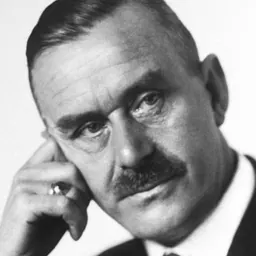
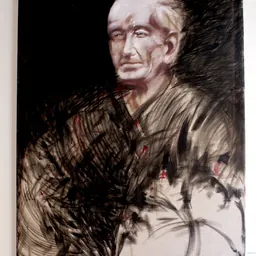
People in Oskar Loerke's life
Named in this biography and alive at the same time




Related people
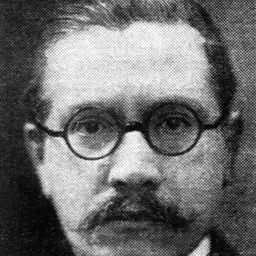
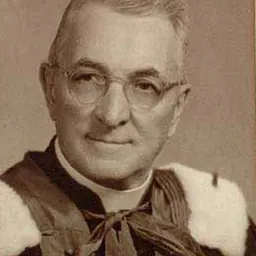
Same field, nearest in time

Contemporaries
People whose lives overlapped Oskar Loerke's

Frequently asked questions
Who was Oskar Loerke?
German writer (1884-1941)
When was Oskar Loerke born?
Oskar Loerke was born on 13 March 1884 in Wiąg.
When did Oskar Loerke die?
Oskar Loerke died on 24 February 1941 in Berlin.
What was Oskar Loerke's occupation?
Oskar Loerke was a writer, playwright, painter, poet, literary editor and librettist.
What nationality was Oskar Loerke?
Oskar Loerke's recorded nationality: German Reich.
Sources & further reading
Cite this page
APA: Biography.guide. (2026). Oskar Loerke. https://biography.guide/oskar-loerke/
MLA: "Oskar Loerke." Biography.guide, https://biography.guide/oskar-loerke/.
Chicago: "Oskar Loerke." Biography.guide. https://biography.guide/oskar-loerke/.
Data last updated: 2026-09-20 · Spot an error? Report a correction.
Page generated 2026-09-27 05:28 UTC