
About Orville L. Hubbard
Lived 1903 – 1982 (aged 79). Orville L. Hubbard was an American politician.
Orville Liscum Hubbard (April 2, 1903 – December 16, 1982) was an American politician who served as the mayor of Dearborn, Michigan, from 1942 to 1978. Hubbard was an effective administrator who served 15 consecutive terms while being nationally known as an outspoken segregationist who sought to keep Dearborn free of the perceived social and political ills of neighboring Detroit. A biographer described Hubbard as a "one-time high school athlete, ex-Marine, nonpracticing attorney, self-acknowledged expert on matters from the milking of cows to the history of the American Revolution, and personal symbol of suburban America's resistance to racial integration."
Early years Hubbard was born April 2, 1903, in Batavia Township, Michigan, and raised on a farm near Union City. He attended Fordson High School in Dearborn, Michigan. He left high school for Detroit at the age of 18 to work for Dodge in Hamtramck. After his military discharge, he worked as a reporter for The Wall Street Journal while he studied at the Detroit College of Law, graduating in 1933. Before being elected mayor of Dearborn in November 1941, Hubbard ran for office unsuccessfully on nine occasions, including three unsuccessful campaigns for mayor of Dearborn, three campaigns for the Michigan State Senate and one each for Congress, Dearborn City Council and township justice of the peace.
Mayor of Dearborn: 1942–1978 Hubbard was elected mayor 15 times, with his last term in office beginning in 1973. Sometimes referred to as the "Dictator of Dearborn," he regularly won re-election with more than 70% of the vote and once recruited a candidate "to avoid the unseemly appearance of an unopposed election." Hubbard's "opponent" was reportedly seen on more than one occasion wearing a Hubbard button on his jacket. Hubbard suffered a serious stroke on November 3, 1974, and the City Council president served as mayor pro tem, running the city on a day-to-day basis, for the rest of Hubbard's final term.
The Detroit Free Press wrote in 1982 that Hubbard was "an acknowledged master at catering to [his] constituency." Dearborn city councilman Thomas Dolan agreed, saying the "secret to Hubbard's success was that he gave the people what they wanted." This included low taxes and excellent city services, as well as perks such as a free babysitting service for shoppers, a summer camp in Oakland County, and police escorts home for intoxicated New Year's Eve revelers. He also boasted that one of his tactics to discourage blacks who had just moved into Dearborn was by providing police and fire protection that was "a little too good"—wake-up visits every hour or so through the night in response to trouble calls.
Hubbard's other statements on race include the following: He once examined the bullet-riddled body of a black man and called it an open-and-shut case of suicide.
Hubbard's racial views were not limited to African-Americans. He was known to complain that "the Jews own this country," that the Irish "are even more corrupt than the Dagos," and as Middle Easterners began moving into Dearborn that "the Syrians are even worse than the niggers." The complex, a one-mile (1.6 km) walk from the beach, included a heated pool, organized poker nights and other activities. The project was billed in the 1960s as the first attempt by a U.S. city to own property outside the state. In 2007, Dearborn voters authorized selling the property (then valued at over $8 million) to help overcome a city budget deficit.
Unsuccessful proposals During his tenure as Dearborn mayor, Hubbard made several unsuccessful proposals, including a proposal to incorporate several other Wayne County suburbs into a super-suburb of Dearborn and a proposal for the City of Dearborn to purchase and operate Detroit's Ambassador Bridge and Detroit-Windsor Tunnel.
Personal life and death In 1927, Hubbard married the former Faye Cameron (1905–1979) and they raised four sons and a daughter. Their marriage was rocky; though the couple never divorced, they were legally separated from 1965 until Faye's death in 1979. From 1964 to 1982, Orville lived with his companion, Maureen Keane, Dearborn's City Service director.
Hubbard suffered a devastating stroke in 1974, which left him paralyzed and speechless. After a second stroke eight years later, he was admitted to Henry Ford Hospital in Detroit, where he died on December 16, 1982. He was interred at Riverside Cemetery in Union City, Michigan. Dearborn's African-American population grew from fewer than 100 in 1980 to more than 1,200 in 2000, which represented less than 1.3 percent of the population in a city that borders the predominantly African-American City of Detroit.
Controversy over the Orville Hubbard statue
A statue of Hubbard erected in 1989 in front of City Hall is a subject of controversy. A Michigan Historical marker near the statue refers to Hubbard as "an effective administrator" who "made Dearborn known for punctual trash collection," but omits any discussion of his segregationist policies. Some groups had urged the City to remove the statue. In his book, Lies Across America: What Our Historic Sites Get Wrong, James W. Loewen listed the Hubbard statue as one of the Top 20 historical monuments ripe for "toppling," along with the obelisk celebrating the White League in New Orleans and "The Good Darky" statue at the Rural Life Museum in Baton Rouge.
The City removed the statue from its longtime location outside City Hall on September 29, 2015 and placed it at the Dearborn Historical Museum. It was again moved, after complaints it was in too prominent of a location, to the side of the McFadden Ross House, further out of sight. On June 5, 2020, the statue was removed from the outside of the museum and may have been moved to Union City, Hubbard's hometown. Dearborn City Council President Susan Dabaja posted on Facebook that the Hubbard family "will place it at his gravesite."
Carl Levin's comments at Rosa Parks' funeral In 2005, Senator Carl Levin spoke at the funeral of Rosa Parks, making the following comments about Hubbard: "The South had Orval Faubus; Michigan had Orville Hubbard. Orville Hubbard vowed to keep Dearborn clean, which some like to interpret as keep Dearborn white, despite Hubbard's dedication to a well kept city and strict City Ordinances in regards to property maintenance and the Dearborn Public Schools annual 'Clean Up, Paint Up, Fix Up Parade.'" Levin's comments drew an angry response from Hubbard's family. A letter published in the Detroit Free Press from Hubbard's granddaughter, Susan L. Hubbard, referred to Levin's comments as "mean-spirited ramblings of an arrogant, Washington politician."
Musical: "Orvie!" In 2006, Hubbard was the subject of a musical play, Orvie! The musical was written by David L. Good, a former Detroit News reporter and editor, who is the author of a biography of Hubbard, and the composer Bob Milne. Hubbard's daughter, Nancy Hubbard, then the president pro tem of the Dearborn City Council, described the play as "a put-down, like a joke," that distorted her father's contributions. She said her father was a popular mayor who shoveled snow, picked up trash and sent constituents birthday cards and post cards from his travels. "He did everything for this community—the libraries, civic center, the pools. He put Dearborn on the map."
Don’t just read it —
keep it.
Full-length biographies made to live with: read them, listen on the way to work, watch them tonight.
- E-book
- Audio
- Video
Instant download · yours to keep · every purchase keeps this site free
Important facts
People in Orville L. Hubbard's life
Named in this biography and alive at the same time

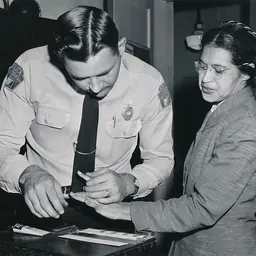



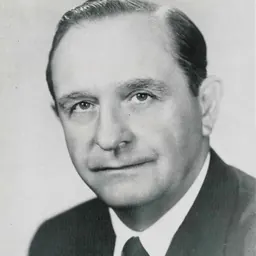

Related people
Same field, nearest in time





Contemporaries
People whose lives overlapped Orville L. Hubbard's
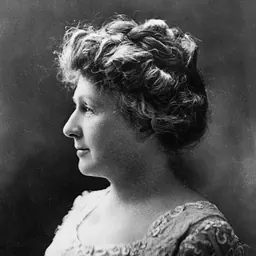
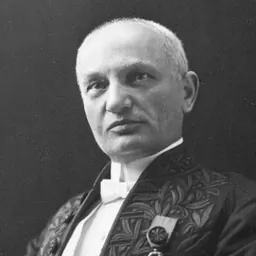
Frequently asked questions
Who was Orville L. Hubbard?
American mayor of Dearborn, Michigan (1903-1982)
When was Orville L. Hubbard born?
Orville L. Hubbard was born on 2 April 1903 in Batavia Township, Michigan, Michigan.
When did Orville L. Hubbard die?
Orville L. Hubbard died on 16 December 1982 in Detroit, Michigan.
What was Orville L. Hubbard's occupation?
Orville L. Hubbard was a politician.
What nationality was Orville L. Hubbard?
Orville L. Hubbard was American.
Sources & further reading
· Wikipedia: Orville L. Hubbard
Cite this page
APA: Biography.guide. (2026). Orville L. Hubbard. https://biography.guide/orville-l-hubbard/
MLA: "Orville L. Hubbard." Biography.guide, https://biography.guide/orville-l-hubbard/.
Chicago: "Orville L. Hubbard." Biography.guide. https://biography.guide/orville-l-hubbard/.
Data last updated: 2026-09-20 · Spot an error? Report a correction.
Page generated 2026-09-27 05:26 UTC