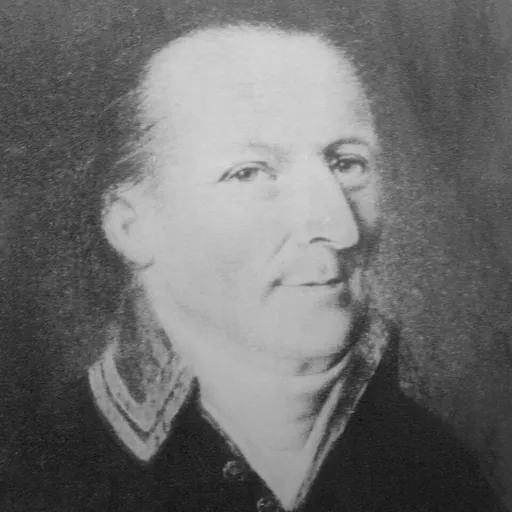
About Olof Tempelman
Lived 1745 – 1816 (aged 71). Olof Tempelman was a Swedish architect.
Olof Samuel Tempelman (February 21, 1745 in Källstad, Östergötland – July 27, 1816 in Stockholm) was a Swedish architect and, from 1779, professor at the Royal Swedish Academy of Arts. He was appointed royal architect in 1799.
Early life
He was the son of Samuel Tempelman (1711-1748), curate of Herrestad, and his wife Susanna Maria Ridderström (1718-1753). According to tradition, the name was derived from the Templars. The family had immigrated from Dorpat in Estonia, and had for generations lived in Östergötland. Susanna was the daughter of a captain and grew up in Östergötland. When Tempelman was three years old, his father died. He was cared for by his father's older brother, Peter Tempelman, who served as priest in the Östra Stenby congregation. His uncle was a man of scientific interest, who collected books and had contact with the Royal Swedish Academy of Sciences. Tempelman had a happy childhood and showed an early interest in design. His received his early education at home and continued studying, along with his cousin, at the high school in Linköping.
At Uppsala University in 1763, he began studying theology and the humanities while working as a tutor for income. But he eventually immersed himself in science, following in the likes of Carl Linnaeus, Anders Celsius, and Samuel Klingenstierna. Tempelman wrote a thesis in astronomy under Daniel Melanderhjelm before starting on a master's thesis in physics, De frictione corporum super plano horizontale motorum.
Career
Carl Fredrik Adelcrantz succeeded Carl Johan Cronstedt as Superintendent of Antiquities in 1767, and two years later, he hired Tempelman. Adelcrantz hired Tempelman for his insight and skill, and took a personal interest in his development. While Tempelman wrote his master's thesis, he began work as an architect at the Superintendent's office. The thesis was elegantly illustrated and dedicated to Adelcrantz. He also continued to tutor and met the city architect Carl Henric König, one of the era's most skilled and high-profile architects as well as technically literate; he created drawings and descriptions for the inventor Christopher Polhem. This was the area that interested Tempelman.
In the spring of 1775, Adelcrantz sent Tempelman on a study trip to Copenhagen. In October 1776, Gustav III assigned Tempelman to be an information aide for fortifications; he trained under Fredrik Dederichs who taught prospective officers and architects since the 1750s, including Erik Palmstedt. Tempelman came to be involved in Gustav III's new opera house at Norrmalmstorg. It was a complex project and Adelcrantz appointed Tempelman to be responsible for project implementation. Tempelman designed Gustav III's Pavilion in with detailed instructions from the king. Many of Tempelman projects related to churches but there were also other public buildings. In addition, he undertook private commissions. Adelcrantz often made the first sketches, but the two men worked closely together.
Adelcrantz urged Tempelman to become a professor. In 1780, he was appointed professor at the Royal Swedish Academy of Arts. Tempelman traveled to Paris and Rome. He visited Naples with Carl August Ehrensvärd and they also made a trip to Pompeii and Vesuvius, returning home via Venice, Milan, Genoa, Antibes, Marseille, and Paris. The 1780s were a successful period of increasingly independent tasks, and, with international experience, he developed a more independent design. The 1790s were a politically unsettled time in Sweden. In July 1798, Tempelman complained that sight in one of his eyes was deteriorating. The office of the Superintendent of Antiquities, however, was still busy designing churches, schools, and hospitals, especially outside Stockholm, and this is where Tempelman gave significant effort. After suffering two serious illnesses within a year, his physical and emotional health deteriorated. He did not give up work entirely, continuing for several years at the office of the Superintendent of Antiquities, and also teaching at the academy.
Personal life Through his connections with Adelcrantz, Tempelman met Britta Elisabet Gyllenstam, daughter of Colonel Jonas Zacharias Gyllenstam and Catharina Elisabeth von Numers. They married in 1782. In the following year, they had a daughter, Mary Catherine, who died as an infant; his wife died a year later. Tempelman secondly married Dorothea Catherina Pagenkopff, the daughter of the German shoemaker Michael C. Pagenkopff, in 1804. They had five children, two boys who died early, and three girls. Tempelman died on 27 July 1816, and was buried in Stockholm, leaving behind his wife and three daughters.
Partial list of works
Old Town, Stockholm, castle environment, 1774 Royal Palace, rearranging the rooms & floors, 1774 Tranemo church, Västergötland, 1774, not done, 1600 Century church in the 1880s, replaced by new hexagonal church building was designed by architect Emil Victor Langlet Ulriksdal, Uppland, north wing of the building's attic, 1774 Västerås gymnasium, Västmanland, restructuring proposals for Senate, 1774 Hycklinge Church, Ostrogothia, 1775, Per Wilhelm Palm Roth prepares new draft 1792 Göta Court of Appeal, Jonkoping, 1775 Valbo church, Gästrikland, tower and vestry, 1775, the tower was built in 1775 Nora Church, Västmanland, 1776, not performed, a new church built in the 1880s Selångers church, Medelpad, 1776, erected in 1780-1781 Sollerö church, Dalarna, 1776 Sofia Magdalena Church, Askersund, school and almshouses, 1777 Björsäters church, Västergötland, 1777 Helsingborg, Corps-de-garde, 1777, building guards and jail completed in 1778, demolished 1882 Core Church, West Yorkshire, organ facade in 1777, destroyed by fire in 1893 Nässjö old church, Småland, 1777, erected in 1789-1791 Hornstull, city sports and customs houses, Stockholm, 1777, the archway demolished in 1905, customs houses demolished in 1933 Skeppsholmen, magazines, Stockholm, 1777 & 1779, rebuilt, now part of the Academy of Fine Arts Tuna church, Medelpad, tower and nave, 1777, long house with a gable roof was built from 1776 to 1778, the tower was built until 1937 Uppsala Cathedral, Sture chancel, wrought iron grilles, 1777 Western Torups Church, Zealand, organ facade, 1777 Årstads courthouse, Halland, 1777, torn, probably 1973 Ödeshögs Church, West Yorkshire, 1777, rebuilt in the 1880s Örkened Church, Zealand, 1777, erected in 1786-1788 Alvesta church, Småland, organ façade, 1778, built as proposed by Pehr Schiörlin Stora Kopparberg church, Falun, tower and altar set-up, 1778, the tower built in 1780, transformative 1900, altar setup exchanged 1900 Kil's Church, wa, towers, 1778, was built in 1779-1780 Kläckeberga church, Smaland, altarpiece installation, 1778, not done Linkoping, Stångebro, stone bridge, 1778, erected in 1779-1780, demolished for the construction of the Kinda Canal, new bridge for drawing 1870 Replots church, Ostrobothnia, Finland, 1778, erected in 1781, however, without a tower Sollerö church, Dalarna, pulpit, 1778 Säters church, Dalarna, 1778, begun in 1780 Silvii school, Tun, Västergötland, 1778, built from 1780 to 1781, restored 1965 Värnamo church, Småland, organ façade, 1778, the organ was built in 1778, the church torn in the 1870s Värö church, Halland, organ façade, 1778, the organ was demolished along with the church in 1855 Västerås dean farm, 1778, completed in 1780, a historic building in 1981 Fridlevstads church, Blekinge, towers, 1779, not performed Hultsjö church, Småland, 1779, not done, plans for a new church of hoof-and city architect Per Axel Nyström 1859 Korsholm, Toby Bridge, Ostrobothnia, Finland, 1779, built in 1781, antiquarian protected 1982 Kättilstads Church, West Yorkshire, organ facade, 1779, revision of the proposal by Pehr Schiörlin, performed after the proposal Gustaf Church, Lulea, SWE, 1779, conducted from 1787 to 1790, destroyed by fire in 1887 Rystads Church, West Yorkshire, in 1779, built in 1780-1783 Långholmen, Spinnhusbron, Stockholm, 1779, demolished Tavastkyro church, Häme, Finland, 1779, erected in 1780-1782, first tower 1880 Bettna church, Södermanland, & chapel, 1780, unexecuted Heinola residence, Häme, Finland, 1780, not built Helgeandsholmen, Count Per's house and Lower Royal. Stallgården, Stockholm, 1780, executed around 1780, demolished 1893 Drottningholm, Ståthållarbostad & stables, Upland, 1781, completed in 1787 as a residence North 's control, Stockholm, incl. plans to create a place for artists, sculptor and professor Johan Tobias Sergel konungastod, 1781 Börringe Church, Zealand, 1782, erected in 1783-1787, carnitine curved hood replaced by a pyramid-shaped in the 1870s Drottningholm, the dukes' stables, Upland, 1782, converted into senior citizen housing in 1985, a historic building in 1987 Rystads Church, West Yorkshire, organ facade, 1782 Slack's Church, West Yorkshire, altar setup & organ facade, 1782 Vårdö church, Aland, Finland, 1782, the church later expanded during the 1780s, the tower was built in 1805 Turku Hospital, Finland Proper, 1782, built 1783-1784, demolished 1880 Arbrå church, Hälsingland, pulpit, 1783 Enåsa church and chapel, Västergötland, 1783 Hedensö manor, Södermanland, wing, 1783 Hökhuvuds Church, Upland, organ facade, 1783, organ building of Olof Schwan 1783, new organ works behind the old organ, 1936 St John's Church, Stockholm, 1783, not done Skeppsholmen, Kungl. woodyard, Stockholm, 1783 Coins Hall, Stockholm, 1783 Ulriksdal, Upland, Confidence, 1783 Vissefjärda church, Småland, organ façade, 1783, organ building of Pehr Schiörlin 1784, replaced in 1883 by organ from Kalmar Cathedral Consulates & post office, Helsingor, Denmark, 1784, was built in 1791 County residence of Härnösand, 1784 St. Peter's Church, Malmo, stands & organ facade, 1784 Siuntio Church, Nyland, organ façade, Finland, 1784, facade was built as drawn, organ replacement work Söraby church, Småland, bleachers & organ façade, 1784, organ building of Pehr Schiörlin 1785, only the facade preserved Al's church, Dalarna, pulpit, 1784, conducted from 1785 to 1787 Eastern Eds church, Smaland, altarpiece installation, 1784, carried out, but only altarpiece rescued by fire in 1958 Drottningholm, residential, Upland, 1785, not performed Drottningholm castle stables, Upland, 1785, not performed Drottningholm, ståthållarkansliet, Upland, 1785, was introduced in 1787 Gothenburg's Hospital, 1785, demolished 1963 Härnösand Gymnasium, Tennessee, 1785, monument 1982 Härnösand Hospital, Tennessee, 1785, ready 1788, a historic building in 1967 Jonsbergs Manor, West Yorkshire, Manor House, 1785, erected in 1791, a historic building in 1980 Vänersborgs church, Västergötland, 1785, only the facade preserved Österåkers church, Södermanland, 1785 Dädesjö church, Småland, 1786, completed 1794 Haga, Upland, farm buildings, 1786, executed about 1786 Haga Castle, Uppland, 1786 Vähäkyrö church, Ostrobothnia, Finland, 1786, built in 1803 Church of Hämeenlinna, Häme, Finland, 1786, completed 1798 Uppsala University, auditoriums, 1786 Ölme church, Värmland, built in 1787-1788 Drottningholm Castle, Upland, bridges in the English Park, 1787 Haga, Upland, Corps-de-garde, building guard 1787 Haga, Upland, Gustav III 's Pavilion, 1787 Collegium medicum, Stockholm, 1787, probably carried We Southern church, Småland, organ façade, 1787, the organ built by Per Schiörlin 1788 Uppsala University, Botanicum, 1787 S Church, Småland, 1788, was built 1830-1831 after a proposal by Per Axel Nyström 1828 Bodsjö church, Jamtland, 1788 Rinna's Church, West Yorkshire, in 1788, built in 1799-1802 Sollerö church, Dalarna, altar set-up, 1788 Western Karaby Church, Zealand, towers, 1788, not done, the tower was built in 1794 after another proposal, a new longhouse from drawings by architect Axel Almfelt 1822-1826 Växjö Bishop farm (Östrabo), Småland, 1788 Hohenwarth, farmhouse, Pomerania, Germany, 1789, demolished 1856 Crow Hults church, Småland, 1789, erected in 1801-1802 Forsmark church and chapel, Upland, 1790, erected in 1796-1802 Gothenburg hospital, a granary and brewery, 1790 Hällekis manor, Västergötland, farmhouse & barn, 1790, extension was built around 1790 Härkeberga Church, Upland, pulpit, 1790 Kvidinge Church, Zealand, towers, 1790 Linköping City Hall, West Yorkshire, 1790, not performed Gustaf Church, Lulea, altar setup, 1790, carried out but the church destroyed by fire The church, Southwest Finland, 1790, organ building of Olof Schwan 1791 Norsborgs manor, pavilion, 1790, Sundby church, Södermanland, 1790 Vasteras Cathedral, Västmanland, epitaph, 1790 Christinae church, Alingsås, stands & organ facade, 1791 Härnösand Gymnasium, Tennessee, lectern, 1791 Falsterbo Light, Skåne, in 1792, built in 1793-1796, upper demolished 1842-1843, monument 1935 Färingtofta Church, Zealand, 1792 Trinity Church, Karlskrona, 1792, north portico finished first in 1862 after the Temple's proposal Lindberg's Church, Halland, 1792, not done Linköping Cathedral, tomb, 1792 Notte Appliances church, Småland, 1792, new church was built first in the 1830s after the drawing of the master mason John Abraham Wilelius Ulrika Eleonora Church in Stockholm, front steps, 1792 Royal Palace in Stockholm, King Gustav IV Adolf floor, 1792 Tuna church, Småland, organ facade, 1792, at the rebuilding in the 1890s were preserved only Pehr Schiörlins organ works from 1795 Varberg's Church, Halland, 1792, the organ facade preserved but rebuilt and with sparser ornamentation Fors Room Church, Smaland, altarpiece installation, 1793 Kuopio county, Savo, Finland, 1793, unexecuted Ljung's Church, West Yorkshire, in 1793, built in 1796-1798 Church of Sund, Östergötland, altar setup & pulpit, 1793 Heinola hospital, Häme, Finland, 1794, was built in 1797-1799, now demolished Jönköping Hospital, 1794, the hospital ended 1825 Karlskrona hospital, 1794 Nyköping Hospital, Saint Anne's Hospital in 1794, completed 1799 Nässjö old church, Småland, organ façade, 1794, processing of Pehr Schiörlins facade drawing from 1794 Vårdnäs Church, West Yorkshire, in 1794, long houses built from 1795 to 1797 Växjö Hospital, Småland, 1794, not performed Växjö residence, Småland, wind decor & Fence, 1794 Grime's church, Halland, 1795, carried out, the tower, however, first during the 1900s Holm's church, Medelpad, 1795, demolished in 1903, new construction in the Gothic Revival King church of Sund, Östergötland, 1795 Rosersberg, Upland, 1795 Lind Hov Royal Farm, Halland, farmhouse & wings, 1796, grand pianos built in 1896, first farmhouse 1838 Lunda church, Södermanland, pulpit, 1796 Stockholm Observatory, 1796 Vreta Abbey Church, Östergötland, gravestone, 1796 But are Church, Upland, 1797, built 1797-1806 Stora Tuna Church, Dalarna, organ façade, 1797, organ building in 1800, fire damage, 1807, new organ, 1969 Oulu Hospital, Ostrobothnia, Finland, 1797, not performed Västerås Hospital, Västmanland, 1797, the buildings demolished in the 1880s Dädesjö church, Småland, bleachers, 1798 Gryts church, Södermanland, stands & organ façade, 1798, unexecuted Linköping gymnasium, 1799, new trivial school built in 1828-1830 Kälviä church, Ostrobothnia, Finland, bell tower and parish magazine, 1799, was built in 1803-1804 Vaxholm Church, Upland, 1799, the church consecrated in 1803, the tower is not built Eastern Husby Church, West Yorkshire, 1799 Karstula chapel church, Ostrobothnia, Finland, 1800 Stockholm Smedjegård custody, 1800 Strängnäs Cathedral, Södermanland, organ facade, 1800 Tubbetorps property, Västergötland, farmhouse, 1800, probably done around 1800, new residential building built in 1803-1804 Sleeping Valla's Church, West Yorkshire, 1800, not performed, built and designed by Samuel Enander 1816 Matteröds Church, Zealand, 1802, new tower 1897-1898 Brännkyrka Church, Stockholm, 1802 Vreta Abbey Church, Östergötland, tomb, 1802, not done Fittja bridge, SWE, 1803, built 1813, torn at the beginning of the 1900s Kalmar gymnasium, Småland, 1803 Leppävirta Church, Savo, Finland, in 1803, erected, but burned in 1834, the new church after the drawing of the architect Carl Ludvig Engel 1846 Rolf's church, Halland, 1803, revised in 1816 by conductor and Lieutenant Pehr Wilhelm Palmroth, towers erected in the 1920s Skedevi Church, Missouri, 1803, transept my windows bricked up during the 1900s Bötoms church, Ostrobothnia, 1804, erected in 1808-1811 Jämshög church, Blekinge, 1804, erected in 1804-1833 Vaxholm Church, Upland, organ facade, 1804 Pori School, Vaasa, Finland, 1804, the outbreak of war interrupted the building, burned again in the great fire of 1852 Hammar Lunda Church, Zealand, stands & organ façade, 1805, executed in a somewhat simplified condition of the organ is only the facade preserved Herrevadskloster, Scania, demesne, 1805, not performed Frederick Church, Karlskrona, Blekinge, tornhuvar, 1805, not performed Norrtälje church, Upland, Altar, 1805 Säters church, Dalarna, towers, 1805, the tower damaged by fire in 1803, after a new drawing of Tempelman repaired 1806 Vaksala Church, Upland, stands & organ façade, 1805, Organ building after drawing of Olof Schwan, facade and some original parts preserved Bjorn Borg's town hall, Vaasa, Finland, 1806, started in 1807, after the war broke new drawings in 1839, destroyed in the fire of 1852 District Hammar's Church, West Yorkshire, altar set-up, 1806 Karbennings Church, Västmanland, 1806, not done, a new church in 1845 Kristdala church, Småland, bleachers & organ facade, 1806 Marstrand's Church, Bohuslän, bleachers & organ façade, 1806, not performed Säters church, Dalarna, altar pulpit, 1806 S Church, Jamtland, organ facade, 1807 Erajärvi chapel church, Häme?, Finland, 1807, built in 1821 Fagerhults church, Småland, gallery, 1807, probably made, the church torn in the 1890s Gothenburg Cathedral, tomb, 1807 Harlösa Church, Zealand, stands & organ façade, 1807, carried out, replaced with new organ Härnösand Gymnasium, Tennessee, entrance gate, 1807, fences & gates, erected in 1810 Sala Church, Västmanland, towers, 1807, none of the proposals made Stockholm, Nytorget, Skånegatan 83, residential, 1807, demolished 1930 Västra Husby Church, West Yorkshire, 1807, erected after a simplified drawing of Axel Almfelt 1816, burned 1977, rebuilt Oved's Church, Zealand, stands & organ facade, 1807 Crow Hults church, Småland, organ façade, 1808, processing of Pehr Schiörlins proposal in 1807, organ construction with simplified facade of Schiörlin 1810-1811 Norrsunda Church, Upland, organ facade, 1808, executed, new organ built in 1963 Eastern Husby Church, West Yorkshire, pulpit, 1808 Botkyrka church, Södermanland, bleachers & organ facade, 1810 Säters church, Dalarna, bleachers & organ facade, 1811 Vadstena school, West Yorkshire, 1811, medieval schoolhouse torn down in 1810, a new schoolhouse for other drawings, built first in 1831 Caroli cemetery, Borås, Västergötland, 1812 Hörups Church, Zealand, organ facade, undated, probably not done Sjöö Castle, Uppland, the measurement of Tessin the Elder terrace & stairs, undated
Don’t just read it —
keep it.
Full-length biographies made to live with: read them, listen on the way to work, watch them tonight.
- E-book
- Audio
- Video
Instant download · yours to keep · every purchase keeps this site free
Important facts
People in Olof Tempelman's life
Named in this biography and alive at the same time

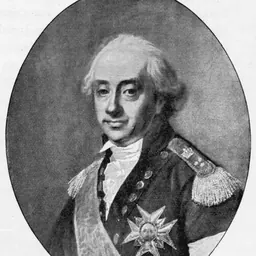
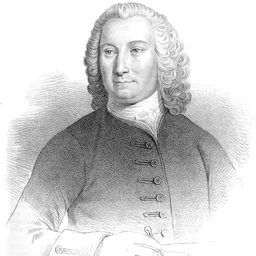


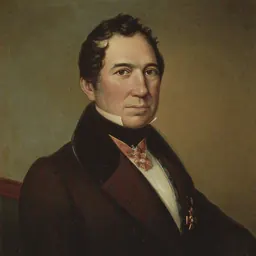
Related people
Same field, nearest in time
Contemporaries
People whose lives overlapped Olof Tempelman's





Frequently asked questions
Who was Olof Tempelman?
Swedish architect (1746-1816)
When was Olof Tempelman born?
Olof Tempelman was born on 21 February 1745 in Östergötland.
When did Olof Tempelman die?
Olof Tempelman died on 27 July 1816 in Klara Church Parish.
What was Olof Tempelman's occupation?
Olof Tempelman was an architect.
What nationality was Olof Tempelman?
Olof Tempelman was Swedish.
Sources & further reading
Cite this page
APA: Biography.guide. (2026). Olof Tempelman. https://biography.guide/olof-tempelman/
MLA: "Olof Tempelman." Biography.guide, https://biography.guide/olof-tempelman/.
Chicago: "Olof Tempelman." Biography.guide. https://biography.guide/olof-tempelman/.
Data last updated: 2026-09-20 · Spot an error? Report a correction.
Portrait: Wikimedia Commons · author & licence
Page generated 2026-09-27 04:57 UTC