
About Olof Celsius
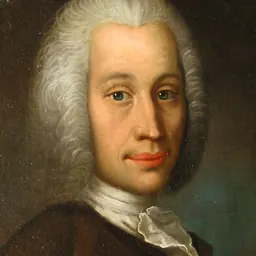
Lived 1716 – 1794 (aged 77). Olof Celsius was a Swedish priest, historian, university teacher, politician and bishop.
Celsius' remains lie in this mass grave at Norra kyrkogården in Lund, Sweden. Olof Celsius the Younger (15 December 1716 – 15 February 1794) was a Swedish civil servant, church official, politician and historian. He was professor of history at Uppsala University from 1747, bishop of the Diocese of Lund from 1777, and member of the Swedish Academy from 1786. He was the son of Olof Celsius and cousin of Anders Celsius.
Biography Celsius was born in Uppsala, Sweden, to botanist Olof Celsius and Margareta Insulander. In 1740 Celsius received his Master of Philosophy. In 1742 he became docent in history of education, in 1744 deputy librarian and in 1747 professor of history at Uppsala University. After being ordained as a priest, he received his Doctor of Theology in 1752. In 1753 he was appointed vicar of the parish of Kungsholmen and in 1760 of Jakob and Johannes Parish in Stockholm. In 1774 he became vicar of the Storkyrko parish and in 1777 was promoted to bishop of Lund. Among his friends were priest Ebbe Bring and bishop Thure Weidman.
In 1756 he was knighted along with his siblings. His children adopted the name von Celse. In 1738 he attempted to give Olof von Dalin's weekly journal Then Swänska Argus a successor, and published . The attempt failed, but Celsius became the first to introduce literary criticism in his journal. As a member of the Uppsala Society of Science, he also published many historical articles in his , self-published in 1742. A major heroic poem, Gustaf Vasa (1774), was less successful, as were some hymns and translations of alexandrines from classical authors. As an orator, Celsius had a great reputation, both in academic eloquence and politics. In 1745 he published , which was in many ways a hastily produced work, but for a long time remained the only work of its kind.
However, Celsius' literary and scientific activities were mainly devoted to historical works. He is one of the most important Swedish historians of the 18th century. Best known is his (King Gustaf I's History; 1746–1753), which was printed in three editions. 1774 saw the publication of (King Erik XIV's History). Both these works are well-written, but they lack thorough source research. In 1767, on behalf of the estates, Celsius published the beginning of , his main work. It begins with the death of Ansgar in 865 and covers up to 1022. Celsius' writing was so highly regarded that he was elected a member of the Swedish Academy when it was founded in 1786. In 1746 he had been appointed member number 103 of the Royal Swedish Academy of Sciences, where his father was also a member. He was president of the Christian society Pro Fide et Christianismo in 1776 and 1777. From 1763 to 1770 he was a member of the hymnal committee and in 1770 a member of the education commission.
Margareta Elisabeth (1745–1748) Catharina Charlotta (1747–1803), married vicar Jonas Breding Olof (1749–1750) Ingrid Fredrika (1751–1751) Elisabeth Ulrika (1751–1817), married vicar Lars Anton Borg Margareta Fredrika (1753–1828), married vicar Erik Benjamin Westman and later vicar Nils Insulin Inga Lovisa (1754–1811), married bishop Thure Weidman; children ennobled with the name in 1805 Olof (1757–1838), served as lieutenant colonel Magnus Anton (1767–1833), served as chief magistrate
Celsius was buried in Lund Cathedral, but his remains were moved to Norra kyrkogården in Lund in 1875.
Don’t just read it —
keep it.
Full-length biographies made to live with: read them, listen on the way to work, watch them tonight.
- E-book
- Audio
- Video
Instant download · yours to keep · every purchase keeps this site free
Important facts
People in Olof Celsius's life
Named in this biography and alive at the same time



Related people
Same field, nearest in time




Contemporaries
People whose lives overlapped Olof Celsius's




Frequently asked questions
Who was Olof Celsius?
Swedish priest and historian (1716-1794)
When was Olof Celsius born?
Olof Celsius was born on 15 December 1716 in Uppsala Cathedral Assembly.
When did Olof Celsius die?
Olof Celsius died on 15 February 1794 in Lund Cathedral parish.
What was Olof Celsius's occupation?
Olof Celsius was a priest, historian, university teacher, politician and bishop.
What nationality was Olof Celsius?
Olof Celsius was Swedish.
Sources & further reading
· DBpedia: Olof Celsius the Younger
Cite this page
APA: Biography.guide. (2026). Olof Celsius. https://biography.guide/olof-celsius/
MLA: "Olof Celsius." Biography.guide, https://biography.guide/olof-celsius/.
Chicago: "Olof Celsius." Biography.guide. https://biography.guide/olof-celsius/.
Data last updated: 2026-09-26 · Spot an error? Report a correction.
Page generated 2026-09-27 05:16 UTC