
About Olivia Zúñiga
Lived 1910 – 1990 (aged 79–80). Olivia Zúñiga was a Mexican poet, novelist, essayist and writer.
Olivia Zúñiga Correa (21 August 1916 – 1992) was a Mexican poet, novelist, and essayist.
Biography Olivia Zúñiga Correa was born in Villa Purificación, Jalisco, on 21 August 1916. Her parents were the revolutionary General Eugenio Zúñiga and Trinidad Correa Gonzalez-Hermosillo.
From the age of two or three she was under the care of a maternal uncle, priest Rafael Guillermo Correa González-Hermosillo, who took her to live in Tenamaxtlán, Jalisco and assigned her a private teacher, Miss Crescencia López. Later, Olivia dedicated herself to reading the books of the parish.
In 1930, General Lázaro Cárdenas, who had been part of the General Staff of General Eugenio Zúñiga in 1914, took her to live in Mexico City. Olivia, of extraordinary beauty, in 1942 was studying dramatic art with the japanese actor, stage director and choreographer Seki Sano.
Her first work was published in print in 1947, a volume of poetry titled Amante imaginado (Imagined Lover), with a prologue by the Spanish playwright Luis Fernández Ardavín.
In the 1950s and 1960s she collaborated in the Guadalajaran magazines Ariel, by Emmanuel Carballo; Et Caetera, by Adalberto Navarro Sánchez, and Summa and Xallixtlico, by Arturo Rivas Sainz (of whom she was a student in the subject of Grammar), and in the Mexico City magazines Fuensanta and México en la Cultura.
She also wrote for the readers of the newspapers Excélsior, Supplement of Novedades de México, and El Nacional.
Her novels are decidedly autobiographical. She was the first person to receive the Premio de Literatura Jalisco, in 1950, for her novel Retrato de una niña triste (Portrait of a Sad Girl). In 1958 she received the José María Vigil Medal, which is awarded to distinguished writers.
In her last years she could be seen in Mexico City, living alone and with her face covered by a veil, because like the Swedish actress Greta Garbo, she disliked for people to see how time had taken its toll on her beauty.
Works Poetry Amante imaginado (Imagined Lover), 1947. Los amantes y la noche (The Lovers and the Night), 1953. Hasta el grano de luz (Until the grain of light), 1969. El hijo, inédito (The son, unpublished).
Novel Retrato de una niña triste (Portrait of a Sad Girl), 1950. Entre el infierno y la luz (Between Hell and Light), 1952. La muerte es una ciudad distinta (Death is a Different City), 1959.
Story Antología universal de lecturas infantiles (Universal Anthology of Children's Reading), 1952.
Essay Mathias Goeritz, 1962; it was later translated into English.
Don’t just read it —
keep it.
Full-length biographies made to live with: read them, listen on the way to work, watch them tonight.
- E-book
- Audio
- Video
Instant download · yours to keep · every purchase keeps this site free
Important facts
People in Olivia Zúñiga's life
Named in this biography and alive at the same time



Related people
Same field, nearest in time


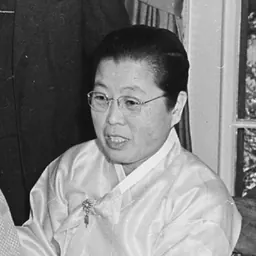
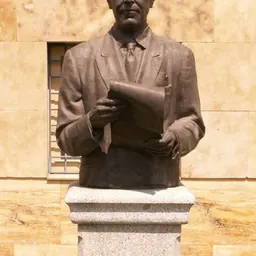
Contemporaries
People whose lives overlapped Olivia Zúñiga's






Frequently asked questions
Who was Olivia Zúñiga?
Mexican writer and journalist
When was Olivia Zúñiga born?
Olivia Zúñiga was born on 21 August 1910 in Villa Purificación Municipality.
When did Olivia Zúñiga die?
Olivia Zúñiga died in 1990.
What was Olivia Zúñiga's occupation?
Olivia Zúñiga was a poet, novelist, essayist and writer.
What nationality was Olivia Zúñiga?
Olivia Zúñiga was Mexican.
Sources & further reading
Cite this page
APA: Biography.guide. (2026). Olivia Zúñiga. https://biography.guide/olivia-zuniga/
MLA: "Olivia Zúñiga." Biography.guide, https://biography.guide/olivia-zuniga/.
Chicago: "Olivia Zúñiga." Biography.guide. https://biography.guide/olivia-zuniga/.
Data last updated: 2026-09-20 · Spot an error? Report a correction.
Page generated 2026-09-27 05:31 UTC