
About Oliver Arthur King
Lived 1855 – 1923 (aged 67–68). Oliver Arthur King was a pianist and composer.
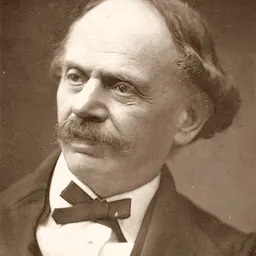
Oliver Arthur King (5 July 1855, Islington, London - 23 August 1923, Hammersmith, London) was a British composer, pianist, organist and conductor.
Oliver King started learning piano at 6-years old, he was noticed by Joseph Barnby for his talent, and made King a choirboy in the St. Andrew's Church which he excelled in the role. He learned the organ and became a deputy organ and assistant to Joseph Barnby until 1874 when he moved to Leipzig to study at the Conservatory. After Leipzig, King moved back to London as a skilled pianist and was appointed the pianist to Princess Louise in 1879. During her trip to Ottawa, King played in several performances, touring across Canada and America as a pianist and composer.
After his stay in North America from 1879 to 1883, King moved back to London, with his reputation of being the pianist to Her Royal Highness Princess Louise, he became the organist of the Novello Oratarios and a popular composer of chants and anthems. He wrote a concert-overture "Among the Pines" which won a prize from the Royal Philharmonic Society. His popularity was only in England and he wasn't able to achieve much fame in the rest of Europe. His performance activity died down, although a professor of piano in the Royal Academy of Music, his main musical activities lessened especially after the beginning of the 20th-century, and King died at the age of 68 in Hammersmith.
Biography Early life and education
Oliver Arthur King was born in 1855 in Islington, he was introduced to the piano at 6-years-old, and was noticed to have an early talent for the instrument, and by the time King was 8, he was noticed and taught by Joseph Barnby who was the choirmaster of St. Andrew's Church by Wells Street in London. In St. Andrew's Church, King was a chorister who had to frequently perform, particularly on Wednesday and Sunday services, King was noted for his talents and was soon co-teaching younger kids in singing as well as learning the organ, which he soon took up a position playing and singing during Wednesday and Sunday services. However, King was also mischievous, and received the name Scaramouch for his actions, and was often beaten with a cane, which proved ineffective, and instead was placed with the younger boys as a form of humiliation, which was effective.
In 1877, Oliver King wrote a piano concerto (dedicated to his teacher Carl Reinecke) in which King premiered as both a conductor and composer, this was to be his last major moment in Leipzig as he moved back to London that same year.
Travelling in Canada and America
King took up a residence in a hotel near Rideau Hall, here King would frequently work on many pieces for the piano and also for orchestra, including his Symphony in F major "Night" which was composed (or at least completed) in 1880.
Besides playing with royalty, King frequently performed in Ottawa in public, these concerts were originally mildly successful, however over time King's popularity grew, and so did the success of these concerts. These concerts brought newer styles of music from Europe, particularly from Germany and England. However, in December 1881, Oliver King moved to New York City for composition and performing. The piano piece Gavotte was a popular hit in America, and 2 pieces which were composed in Ottawa, Curfew and Slumber Song, were still popular in the states.
Return to London
In 1883, Oliver King moved back to London. In early 1882, he already made his plan to go back to England, he received letters from Joseph Barnby about assistance as an organist in the St. Anne's Church in Soho. However, King went on to become the organist and musical director of the Marylebone Church from 1883 to 1886, he gave numerous concerts at the church and outside the church. For example, he gave performances of Bach and other choral and religious works, but gave an England-premiere performance of his piano concerto on 7 November 1885 under the conductorship of in a newly built concertroom in St James's Hall, this performance was part of an event held by John Brinsmead, a London-based piano maker, and by the end of the event a prize was given by Brinsmead and William George Cusins to King for his piano concerto. Also during this time period, King became the organist of the Novello Oratario Concerts, where he would play many works and compose many works under Novello, Ewer and Co. music publishers. this work was in competition with 46 other overtures including those composed by Michael Costa, and Julius Benedict. The overture was performed under the baton of William George Cusins, with great success, winning first place. The Musical Times in 1883 commented about the overture, saying the Allegro's "Themes are so good, and their orchestral treatment so attractive, that we can hear them again with pleasure, and still have the zest for their recapitulation in the second part."
In 1886, King resigned his position in the Marylebone church, during this time he toured around Britain, Ireland and the Netherlands as pianist, however he also composed heavily, during the time between 1886 and 1893 he wrote 4 significant works: Psalm 137, by the Waters of Babylon (1888) a choral work which premiered in the Chester Music Festival, and received numerous more performances during the 1890s; and the 4th significant work is a part-song called Soldier rest, thy warfare o'er (1893), this work was very popular in his day and was based on already existing text. In 1893, Oliver King became a professor of piano in the Royal Academy of Music, and King most likely took on a life with less public performances, he still continued composing, writing three cantatas from 1893 to 1897, the first called Proserpina (Before 1895?) is written for a chorus of female voices, and soloist and for orchestra, the second Romance of the Roses (1895) has lyrics written by Ellis Walton, a British composer and lyricist, the 3rd cantata was The Sands o' (of) Dee written in 1897-98 with words based on text by Charles Kingsley.
1900-Death After 1900 there is very little recorded activity, it is known he still composed, however often re-published previous works, newer significant works were The Three Fishers (1908), the Carol-anthem In A Stable Lowly (1913) and Ye Shall Go Out with Joy (1913), which was mentioned in the Press after publication and The Musical Times giving praise. His works were still popular, even used in teachings and were examples in music competitions.
On 23 August 1923, the unmarried and childless Oliver King was announced dead, in the December 1923 publishings of The Musical Times, a separate section titled "The late Oliver King" was made written by a friend whose initials are "H. K." and lived in The Clergy House and in Wilton Place. The person states how talented King was in his young age, however failed to "fulfill the promise of his early youth."
Compositions Although a prolific composer in choral work, many of King's works have been forgotten, and none have a recording except for a Pavan for Organ in Track 4 of PRCD1193 (Priory Records) and Prelude for Lent, (Op 10 No. 2; for Organ and Choral or just Organ) which is on Hyperion Records.
This is not an exhaustive list, it will only feature the more notable of pieces.
List of Compositions
Vocal 50+ anthems, canons, part songs, vocal duets, songs, hymns etc. Curfew (1879–80) Slumber Song (1879–80) The star that now is shining (before 1883) Sing a song of praise (before 1883) Soldier rest, thy warfare o'er (1883) Israfel (1885?, published 1890; based on the poem Israfel by Edgar Allan Poe) In A Stable Lowly for 4 voices and organ (1913) Ye Shall Go Out with Joy (1913)
Cantatas Proserpina (Before 1895?) Romance of the Roses (1895), with lyrics by women composer and lyricist Ellis Walton The Sands o' Dee (1897–98), with lyrics based on text by Charles Kingsley The Naiades (????)
Other Psalm 137, by the Waters of Babylon (1888) (For solo, chorus, and orchestra)
His style post-1900 was still considered "effective" and in his piece The Three Fishers (1908), his musical output was "fresh" as reviewed positively by The Musical Times.
Don’t just read it —
keep it.
Full-length biographies made to live with: read them, listen on the way to work, watch them tonight.
- E-book
- Audio
- Video
Instant download · yours to keep · every purchase keeps this site free
Important facts
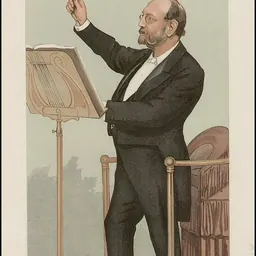
People in Oliver Arthur King's life
Named in this biography and alive at the same time


Related people
Same field, nearest in time




Contemporaries
People whose lives overlapped Oliver Arthur King's




Frequently asked questions
Who was Oliver Arthur King?
British composer, pianist, organist and conductor
When was Oliver Arthur King born?
Oliver Arthur King was born in 1855 in London.
When did Oliver Arthur King die?
Oliver Arthur King died on 23 October 1923 in London.
What was Oliver Arthur King's occupation?
Oliver Arthur King was a pianist and composer.
Sources & further reading
· Wikipedia: Oliver Arthur King
· DBpedia: Oliver King (composer)
Cite this page
APA: Biography.guide. (2026). Oliver Arthur King. https://biography.guide/oliver-arthur-king/
MLA: "Oliver Arthur King." Biography.guide, https://biography.guide/oliver-arthur-king/.
Chicago: "Oliver Arthur King." Biography.guide. https://biography.guide/oliver-arthur-king/.
Data last updated: 2026-09-20 · Spot an error? Report a correction.
Page generated 2026-09-27 05:06 UTC