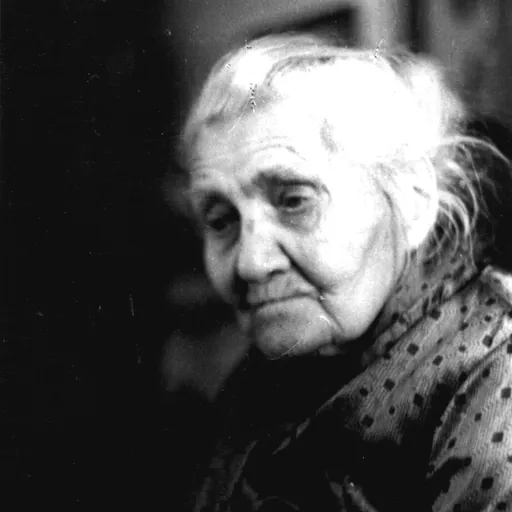
About Olha Duchyminska
Lived 1883 – 1988 (aged 105). Olha Duchyminska was an Austrian and Ukrainian poet, writer and translator.
Olha-Oleksandra Vasylivna Duchyminska (; 8 June 1883 – 24 September 1988) was a Ukrainian writer, feminist, and political activist. She is best known for her 1911 poetry work A Bunch of Forget-Me-Nots and her 1945 novel Eti, which addressed the Holocaust. A prominent figure in the Ukrainian women's movement, she co-founded the "Women's Library" in 1912 and organized literacy courses for women in Galicia. She was also a member of the Organisation of Ukrainian Nationalists (OUN), serving as a delegate during the short-lived West Ukrainian People's Republic.
After working as a schoolteacher in small hamlets around Lviv, Duchyminska started working on literary works beginning in 1905. A close friend, Ivan Franko published some of her earlier works in newspapers and bulletins. Eventually, in 1911, she published a book of 15 poems called A Bunch of Forget-Me-Nots, which was widely celebrated for its address of feminine discourse and humanism. Her only other prominent work she published during her lifetime was the novella Eti, which addressed the Holocaust in Lviv with a distinctly anti-war theme. In addition to her literary works, she was a prominent feminist advocate, as she worked with other feminists to promote women's literature in Ukraine. However, in 1949, she was arrested in connection with the murder of Communist writer Yaroslav Halan, and later sentenced to the gulags, where she spent 9 years until being released in 1958 after Joseph Stalin's death. Following her imprisonment, and unable to return home, she moved around Western Ukraine until settling with a cousin of militant leader Stepan Bandera, dying in 1988 in Ivano-Frankivsk.
Early life Duchyminska was born on 8 June 1883 in the village of Mykolaiv, which was then part of the Kingdom of Galicia and Lodomeria in Austria-Hungary (now Ukraine). She was the daughter of a school director, Vasyl Reshetylovych, and Bronislava Lytvyn who was Polish and the sister of one of Vasyl's gymnasium classmates in Sumy. Her great-grandfather from her family's side came from the village of Reshetylivka, and her grandfather settled in Galicia after marrying into the Bachynsky family of priests. Shortly after Olha's birth, her sisters who were born a little bit after Olha, Severyna and Yarorslava, died of dysentery. In 1887, Vasyl was transferred to work as a teacher in the village of Lopushna in Bibrka. In 1888, her younger sister Mira was born, who managed to survive into adulthood. In 1892, the family relocated to Khorobriv (now in Sokal urban hromada) for Vasyl's work, and again in 1894 to Kunyn (now in Dobrosyn-Maheriv settlement hromada). After initially being homeschooled, she attended a girls' special school starting in fifth grade in Stanyslaviv (now Ivano-Frankivsk), but she stopped in 1897 when her father died and she became an orphan.
After her father's death, thanks to her maternal uncle Yosyp‑Marian Lytvyn who worked as a catechist in Stanyslaviv, she was able to be placed in the Basillian Sisters' school in Yavoriv where she completed up to eighth grade. In 1899, she began to attend the Teacher's Seminary in Przemyśl, where she graduated from in 1902.
Career Teaching After graduating, she was assigned to work as the village schoolteacher in the hamlet of Zalozy (now in Zhovkva urban hromada), where she worked at from 1 September 1902 to 30 August 1903. She was then transferred a multitude of times within short spans from 1903 to 1906, working in Butyny (now in Sheptytskyi Raion), Lysovychi, and Zaderevach (now in Morshyn urban hromada).
Literary works
Early on in her literary career she met Ivan Franko, who attempted to get her literary work known by publishing in 1905 Duchyminska's poem in "Swan Song" founded in the daily newspaper Dilo under the pseudonym "Irma Ostapivna", which she called a reworking of Bohdan Lepky's verse. He then published her work "Irony of Fate!" in 1906 in the Literary-Scientific Bulletin (a work of the Shevchenko Scientific Society), and later reprinted in the declamation anthology Rozvaha in 1908, which depicted marriage as chains in a feminist critique of domestic life. She also worked on two poems, Z vesnoiu, wherein she called for sisters and brothers to work, and Narodyny syna about the birth of a child although neither was published.
A few years later, in 1911, she published her first and only poetry collection during her lifetime, a book of 15 poems titled A Bunch of Forget-Me-Nots, again under the pseudonym "Irma Ostapivna" in the student society Sich within Chernivtsi. It was compiled by Mykola Venhzhyn, who also did the preface of the book, and prominently featured personal tragedy after the loss of her children. Most of her writing sought to reveal the essence of a person through feelings and sensations, and although she emphasized tragedy she also prominently featured humanism and love for life to remain truly human. Women were portrayed as the heart of history in the stories, like Mary Magdalene and Ukraine itself as part of a distinct feminine discourse. Stylistically, it prominently used fragmentation and ellipses to convey emotion, highlighting the female voice as a bearer of history and suffering. It linked spring to symbolizing renewal and consolation, and autumn as a sadness that paradoxically blooms in defiance, winter as cold and old age yet also protective and beautiful. Thus, she absorbed elements of modernism and neo-romanticism, and her writing often juxtaposed opposing moods while ultimately affirming beauty, which many critics described as original and unique. By 1925, she organized a local chapter of Prosvita, aimed at promoting literature and national consciousness, and also the following year organized the cooperative "Peasant Union" in rural Galicia to help with women's education. Later, in 1930, she became the Head of the Department of Criticism and Reviews of the Kolomyia magazine "Women's Destiny". She did this until 1939. During her initial arrest conducted by Lieutenant Surovtsev, her apartment was looted for "bourgeois excesses" and all of her manuscripts were confiscated. While the investigation lasted for the next two years, she was kept in prison in a solitary cell. During her imprisonment, she alleged she was interrogated, tortured, and abused. Finally, on 25-26 May 1951, she was sentenced by a Military Tribunal under the Criminal Code of the Ukrainian USSR, under Articles 54-1a and 54-11, to 25 years of imprisonment in a gulag. During her time in the gulags, she was physically abused and prohibited from corresponding.
On 19 June 1956, after Joseph Stalin's death, her case was agreed to be reviewed again. During the appeal, Article 54-11 was removed, and Article 54-1s of the Criminal Code was reclassified as Article 80-1, thus reducing her sentence to 10 years imprisonment. However, she was released early on 19 December 1958, when she was 75 years old. During some time after Sambir, she was deported and moved to Irkutsk Oblast in Russia, where she worked in storage facilities and reconnected with fellow writers who were political prisoners.
Eventually, after being allowed to return to Ukraine, she resettled in Chernivtsi. In 1973, she finally relocated to live with Myroslava Antonovych, a cousin of militant leader Stepan Bandera, who she lived with for the last 15 years of her life. He later served in the Battle of Kyiv as part of the UPR forces, but upon the Bolshevik victory in the battle, he was captured and interned in Czechoslovakia where he stayed at. She has also had a street named after in Lviv, which connects Kuznyarivka with the intersection of Almazna and Ozernaya streets. It was named after her in 1993. In September 2023, a memorial plaque was dedicated to her in Ivano-Frankivsk, which was created on the initiative of the Union of Ukrainian Women.
She was also the prototype for the character of Lviv-based writer Olena Haidukevich in the 1973 film "Until the Last Minute" by Valery Isakov. Vilde and Olha's relationship was later depicted in the Maria Zankovetska Theatre's play "St. Nicholas Evening" by Roman Horak.
Don’t just read it —
keep it.
Full-length biographies made to live with: read them, listen on the way to work, watch them tonight.
- E-book
- Audio
- Video
Instant download · yours to keep · every purchase keeps this site free
Important facts
People in Olha Duchyminska's life
Named in this biography and alive at the same time

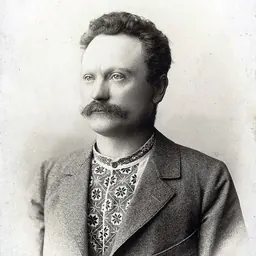
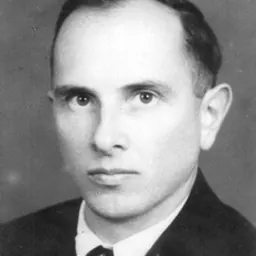


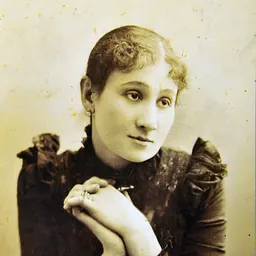
Related people
Same field, nearest in time

Contemporaries
People whose lives overlapped Olha Duchyminska's



Frequently asked questions
Who was Olha Duchyminska?
Ukrainian poet (1883-1988)
When was Olha Duchyminska born?
Olha Duchyminska was born on 8 June 1883 in Mikolayiv.
When did Olha Duchyminska die?
Olha Duchyminska died on 24 September 1988 in Ivano-Frankivsk.
What was Olha Duchyminska's occupation?
Olha Duchyminska was a poet, writer and translator.
What nationality was Olha Duchyminska?
Olha Duchyminska was Austrian and Ukrainian.
Sources & further reading
Cite this page
APA: Biography.guide. (2026). Olha Duchyminska. https://biography.guide/olha-duchyminska/
MLA: "Olha Duchyminska." Biography.guide, https://biography.guide/olha-duchyminska/.
Chicago: "Olha Duchyminska." Biography.guide. https://biography.guide/olha-duchyminska/.
Data last updated: 2026-09-20 · Spot an error? Report a correction.
Page generated 2026-09-27 05:10 UTC