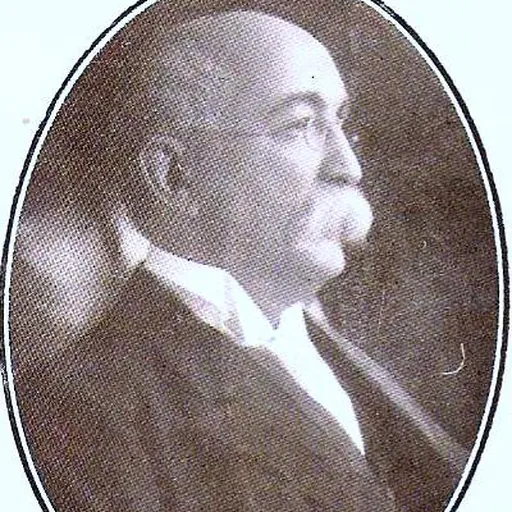
About Olegario Molina
Lived 1843 – 1925 (aged 81–82). Olegario Molina was a Mexican lawyer.
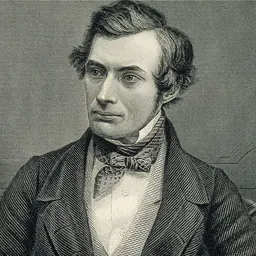
Olegario Molina Solís (6 March 184328 April 1925) was a Mexican lawyer, businessman and politician who served as the governor of Yucatán from 1902 to 1907 and the secretary of development, colonization and industry in the government of Porfirio Díaz from 1907 to 1911. He was also a member of the Chamber of Deputies in two terms.
Born in Bolonchén, in what is now the state of Campeche, Molina and his family moved to Hecelchakán in the state of Yucatán in his youth. He studied law, becoming a lawyer. He was elected unopposed as the governor of the state in 1901, being reelected in 1906. During his governorship, he implemented many sanitary reforms and began bringing the Maya population into the state's education system. Molina also developed the state's henequen industry, being a member of the state's henequen oligarchy.
In 1907, Molina was appointed as the secretary of development by President Díaz. In this role, he made a failed attempt to regulate the country's mining sector, and supported the forced deportations of Sonora's Yaqui population to perform forced labor in Yucatán. He resigned during the Mexican Revolution in 1911, going into exile in Cuba later in the decade. He died in the 1920s, having never returned to Mexico.
Ancestry The Molina family was Spanish in origin, having immigrated to Mexico in the eighteenth century. Molina's paternal grandparents were Julián Molina y Bastante and Paula Esquivel del Granado, while his maternal grandparents were Felipe de Solís Lara and Rosalía Rosales Valdés. Also in Bolonchén, his son Juan Francisco expanded their tobacco farm and opened a store, marrying into the prominent Solís Rosales family. His parents were Juan Francisco Molina y Esquivel and Cecilia Solís Rosales, who married in 1835. Ricardo (born 1840), José María (born 1844), José Trinidad (born 1846), Pastor (born 1846), Augusto (born 1847), Juan Francisco (born 1850), Audomaro (born 1852), , and Casiana, the latter of whom died at birth. and Juan Francisco Molina Solís was a prominent historian.
In 1847, Molina y Esquivel fought in the Caste War of Yucatán, and when he returned he found that Maya rebels razed the family store and the Molina-Rosales estate. As a result, in 1850, he moved the family to Hecelchakán and rebuilt their fortune. At the age of five, due to a maid giving him the wrong medicine, Molina lost his left eye. Due to this, during his primary education, his mother read his lessons to him. They had six children: Olegario, who died young, María, Teresa, Dolores, Luis Augusto, and Carmela. Molina took office on 1 February 1902, succeeding . Yucatán's previous two governments had been liberal and then conservative. Molina's government represented a break from this revolving ideological trend, instead being "scientific", moderate, and influenced by positivism. This trend followed the Porfirian line and would be Yucatán's government until the end of the Porfiriato. The Catholic Church viewed Molina's government as the best way to prevent Yucatán's anticlerical faction from returning to power. During his governorship, the Church's religious infrastructure was strengthened, with more Catholic churches and schools being built.
In the first week of his governorship, Molina gave up his salary, instead directing it to fund the construction of Yucatán's general hospital, later known as "Agustín O'Horán" hospital. It would take almost the entirety of his term to complete. Molina's administration also saw increased sanitary reform in Mérida, which had previously been struck by epidemic diseases. Education was also a priority for Molina's government, as the elite businessmen, intellectuals and politicians of the positivist regime wished to bring "civilization" to Yucatán's indigenous Maya population, many of whom lived in semi-independent areas in the state's east and south. According to the American journalist John Kenneth Turner, Molina's land holdings in Yucatán and Quintana Roo amounted to 15,000,000 acres, or 23,000 square miles. In October 1902, Molina's exporting house , Molina y Compañía, signed a secret contract with International Harvester sought to eliminate competitors and force the price of fiber down.
From July to October 1903, Molina's brother served as interim governor while he was out of the state on vacation. On 1 February 1906, Molina was elected to a second term. His reelection sparked controversy in Yucatán society, with many calling for the establishment of a true democracy and a change in power, both in the state and the rest of the country. Molina was again absent from 16 April to 6 December 1906, during which Muñoz Arístegui served as interim governor. Molina moved his residency to Mexico City, and became a member of the Científicos ("Scientists"), technocratic members of Díaz's circle. Molina particularly got along well with the finance minister, José Yves Limantour, all of Díaz's cabinet except for two ministers (José Yves Limantour and ) resigned on 24 March 1911, including Molina. His successor, Manuel Marroquín y Rivera, was announced on 28 March along with Díaz's new cabinet. Díaz would ultimately resign himself in May. After Molina's resignation, he retired to Mérida back in Yucatán. He lived there until his wife died in 1914. Due to pressure from revolutionaries, Molina and his doctor Rafael Betancourt fled to Paris that year. Following the ascent of socialist Salvador Alvarado to the governorship of Yucatán in 1915, the alliance between the henequen oligarchy and International Harvester established by Molina began to be rolled back. However, at the time of his death, Molina was still one of the wealthiest entrepreneurs in Yucatán, which historian Allen Wells viewed as showcasing the Revolution's goal of agrarian reform falling short in the state. Most of the wealthy henequeneros worked with Alvarado and supported his policies, with Molina having been one of the few who left the state.
Don’t just read it —
keep it.
Full-length biographies made to live with: read them, listen on the way to work, watch them tonight.
- E-book
- Audio
- Video
Instant download · yours to keep · every purchase keeps this site free
Important facts
People in Olegario Molina's life
Named in this biography and alive at the same time

Related people
Same field, nearest in time



Contemporaries
People whose lives overlapped Olegario Molina's

Frequently asked questions
Who was Olegario Molina?
Mexican lawyer
When was Olegario Molina born?
Olegario Molina was born in 1843 in Bolonchén de Rejón.
When did Olegario Molina die?
Olegario Molina died in 1925 in Havana.
What was Olegario Molina's occupation?
Olegario Molina was a lawyer.
What nationality was Olegario Molina?
Olegario Molina was Mexican.
Sources & further reading
Cite this page
APA: Biography.guide. (2026). Olegario Molina. https://biography.guide/olegario-molina/
MLA: "Olegario Molina." Biography.guide, https://biography.guide/olegario-molina/.
Chicago: "Olegario Molina." Biography.guide. https://biography.guide/olegario-molina/.
Data last updated: 2026-09-22 · Spot an error? Report a correction.
Portrait: Wikimedia Commons · author & licence
Page generated 2026-09-27 05:02 UTC