
About O. O. McIntyre
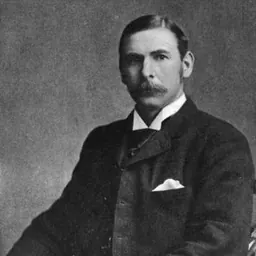
Lived 1884 – 1938 (aged 53). O. O. McIntyre was an American journalist.
Oscar Odd McIntyre (February 18, 1884 – February 14, 1938) was a New York newspaper columnist of the 1920s and 1930s.
Small-town life
In 1929, McIntyre described his approach in the preface to Twenty-five Selected Stories, a collection of his articles from Cosmopolitan: "I write from a country town angle of a city's glamour, and the metropolis has never lost its thrill for me. Things the ordinary New Yorker accepts casually are my dish—the telescope man on the curb, the Bowery lodging houses and drifters... speakeasies...." He often wrote with affection about small-town life, as in "That Was Happy New Year" (1932): Children scrubbed clean, fathers in frock coats and mothers in rustling silks moved from one home to another.
In the late afternoon, if the weather permitted, those who were not enjoying late afternoon naps would go to the public square to hear a band concert or perhaps an address by Colonel John L. Vance.
It was a gathering that would seem incongruous in this jazz age; Pappy Pitrat, the old French scholar, with his heavy cane and cape; Miss Eliza Sanns, a delicate bit of lavender and old lace; Colonel Creuzet with his snow white shock of hair; Mr. Hutchinson, the hardware merchant, who wore stiff white shirts on week-days; C. D. Kerr, the druggist, whom Editor Sibley called the best dressed man in town.
Most of these people today are “sleeping, sleeping on the hill.” It has been nearly twenty years now since I have seen Gallipolis. They tell me of a new high school building that occupies two blocks.
Back Street has been paved. A new bridge spans the Chicamaugua. The Park Central has a mosaic floor. There are concrete walks in the public square and Billy Schartz’s cigar store is now “The Smoke Shop.”
I want to go back again, but I hope there have not been too many changes. I like to think of the tolling evening church bells, the cows being driven home from pasture, the shrill whistle of the Hocking Valley train at six-fifteen as she rounded the curve at Fox’s dairy.
I hope the older men are still sitting out front on the big scales at Neal’s Mill at twilight and that the motor age has not forever stilled that doleful “ting-tang-ting-gg!” floating out from the anvils of the blacksmith shops.
I hope to go over at noon and join the little crowd that used to gather around the iron pump in the lower end of the public square. And I cherish a hope that the rusty old tin cup is there on the same brass chain.
I hope “Banty” Merriman still has a place for me to loaf in the back room of his jewelry store and that Harry Maddy will join me in one of our old walks up through Maple Shade past the fair grounds.
I want to keep always my memories of those dead and gone days when my world was young—when Karl Hall and I dug a cave under the river bank; when Alfie Resener and I smoked our first corn silk cigaret; when Harry Maxon and I set fire to McCormack’s haymow; when Ned Deletombe and I were taken to the Justice of Peace by Constable Jack Dufour for swimming naked in the creek.
Books After McIntyre traveled to London and Paris, he also wrote about those cities. His books include the 1935 bestseller The Big Town.
Death He died on Valentine's Day, February 14, 1938, of a heart attack at 2 A.M. at his apartment, 290 Park Avenue in Manhattan, New York City. He left an estate of $72,456 (approximately $ today). He was buried in Gallipolis on a high bluff overlooking the Ohio River. where a marble bench bears the tribute "Beloved of a Nation." Maybelle Hope Small McIntyre, who lived to the age of 101, died in a nursing home in Point Pleasant, West Virginia on April 28, 1985.
Legacy After McIntyre's death, the newspaper column was continued by editor Charles Benedict Driscoll until 1951. When Driscoll's biography, The Life of O. O. McIntyre (Greystone Press, 1938), was published seven months after McIntyre's death, it made The New York Times bestseller list.
The O. O. McIntyre Park District in Gallipolis is named in his honor. A Gallia County film production about McIntyre was made in 1994 by Edna Pierce Whiteley. The O. O. McIntyre Story: Chronicle of a Journalist of Note is narrated by Whiteley with Earl Tope as the voice of McIntyre. The film is available as a 30-minute videocassette.
Archives The Gallia County Historical/Genealogical Society has more than a dozen three-inch binders on McIntyre.
Fellowship The annual O. O. McIntyre Postgraduate Writing Fellowship was established in 1986 by the Missouri School of Journalism to help aspiring writers further their careers.
Don’t just read it —
keep it.
Full-length biographies made to live with: read them, listen on the way to work, watch them tonight.
- E-book
- Audio
- Video
Instant download · yours to keep · every purchase keeps this site free
Important facts
People in O. O. McIntyre's life
Named in this biography and alive at the same time


Related people
Same field, nearest in time


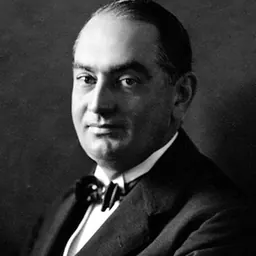

Contemporaries
People whose lives overlapped O. O. McIntyre's

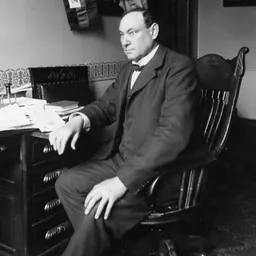
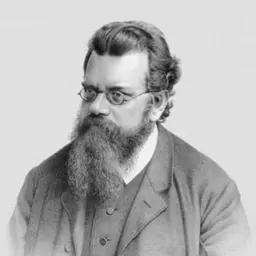

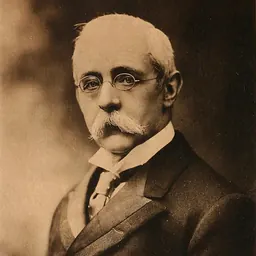
Frequently asked questions
Who was O. O. McIntyre?
American journalist
When was O. O. McIntyre born?
O. O. McIntyre was born on 18 February 1884 in Plattsburg.
When did O. O. McIntyre die?
O. O. McIntyre died on 14 February 1938 in New York.
What was O. O. McIntyre's occupation?
O. O. McIntyre was a journalist.
What nationality was O. O. McIntyre?
O. O. McIntyre was American.
Sources & further reading
Cite this page
APA: Biography.guide. (2026). O. O. McIntyre. https://biography.guide/o-o-mcintyre/
MLA: "O. O. McIntyre." Biography.guide, https://biography.guide/o-o-mcintyre/.
Chicago: "O. O. McIntyre." Biography.guide. https://biography.guide/o-o-mcintyre/.
Data last updated: 2026-09-22 · Spot an error? Report a correction.
Page generated 2026-09-27 05:09 UTC