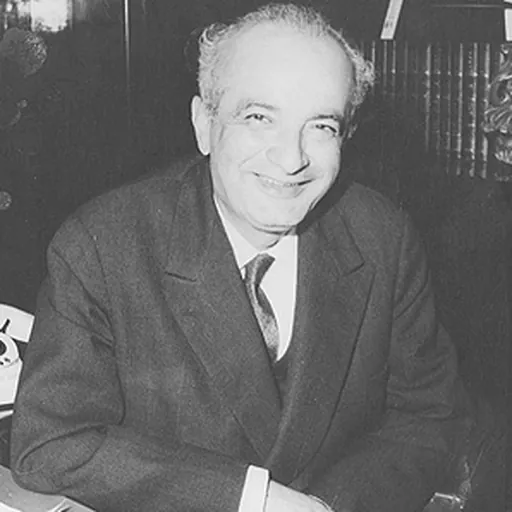
About Noureddin Alamouti
Lived 1901 – 1965 (aged 63–64). Noureddin Alamouti was a politician.
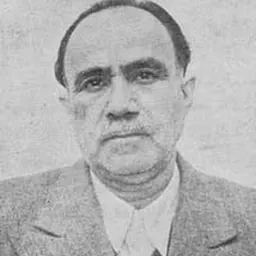
Noureddin Alamouti (; 1901–1965) was an Iranian judge and politician. He served as the justice minister under the cabinet of Ali Amini, during which he was noted for forming a powerful anti-corruption division that led to "the last serious attempt to realize the rule of law" in Pahlavi Iran.
Early life He came from the rural district of Alamut. In 1919, he joined the Democrat Party and was imprisoned in 1923 for "agitating among the local peasantry". Alamouti was employed at the justice ministry during the rule of Reza Shah.
Political career One of the members of the "group of fifty-three", he was jailed in 1938. He later joined the Tudeh Party of Iran immediately after its establishment in 1941 and was elected to its provisional central committee. and served as the party's general secretary, a position he shared with Mohammad Bahrami and Iraj Eskandari.
He was listed by Tudeh for a Tehran seat in the Iranian legislative election, 1943–1944, but was defeated. In 1946, Alamouti was excluded from the central committee because he was "not full-fledged Marxist". He left the party in 1947 and joined the entourage of Ahmad Qavam.
Ministry Alamouti was appointed as the justice minister in 1961 and served in that capacity until July 1962. He launched a campaign to fight corruption and abuse of power among the ruling elite that led to the jailing of several high-ranking officials, including police chief general Alavi-Moghadam (charged with bribe taking), military prosecutor Hossein Azmoudeh and former plan and budget head Abol Hassan Ebtehaj (charged with $69 million embezzlement). He appointed Ahmad Sayyed Javadi as prosecutor of Tehran, who joined him in the anti-corruption legal activism. Among the military officers prosecuted during the period, were General Kia, Zarghami, Daftari, Khazaei and Nevissi. After he left office following Ali Amini's resignation, all detainees were released and the charges were dropped, however the effects of the activism were not forgotten. Three years later, some 100 judges were dismissed.
Don’t just read it —
keep it.
Full-length biographies made to live with: read them, listen on the way to work, watch them tonight.
- E-book
- Audio
- Video
Instant download · yours to keep · every purchase keeps this site free
Important facts
People in Noureddin Alamouti's life
Named in this biography and alive at the same time


Related people
Same field, nearest in time





Contemporaries
People whose lives overlapped Noureddin Alamouti's


Frequently asked questions
Who was Noureddin Alamouti?
politician
When was Noureddin Alamouti born?
Noureddin Alamouti was born in 1901 in Varak, Qazvin.
When did Noureddin Alamouti die?
Noureddin Alamouti died in 1965 in Tehran.
What was Noureddin Alamouti's occupation?
Noureddin Alamouti was a politician.
What nationality was Noureddin Alamouti?
Noureddin Alamouti's recorded nationality: Iranian peoples.
Sources & further reading
· Wikipedia: Noureddin Alamouti
Cite this page
APA: Biography.guide. (2026). Noureddin Alamouti. https://biography.guide/noureddin-alamouti/
MLA: "Noureddin Alamouti." Biography.guide, https://biography.guide/noureddin-alamouti/.
Chicago: "Noureddin Alamouti." Biography.guide. https://biography.guide/noureddin-alamouti/.
Data last updated: 2026-09-24 · Spot an error? Report a correction.
Portrait: Wikimedia Commons · author & licence
Page generated 2026-09-27 05:09 UTC