
About Norman Norell
Lived 1900 – 1972 (aged 72). Norman Norell was an American fashion designer and costume designer.
Norman David Levinson (April 20, 1900 – October 25, 1972) known professionally as Norman Norell, was an American fashion designer famed for his elegant gowns, suits, and tailored silhouettes. His designs for the Traina-Norell and Norell fashion houses became famous for their detailing, simple, timeless designs, and tailored construction. By the mid-twentieth century Norell dominated the American fashion industry and in 1968 he launched a perfume in collaboration with Revlon.
Born in Noblesville, Indiana, Norell arrived in New York City in 1919, studied fashion illustration and fashion design at Parsons School of Design and Pratt Institute, and began his career designing costumes for silent-film stars. Before partnering with Anthony Traina to form the Traina-Norell fashion house in 1941, Norell spent twelve years with Hattie Carnegie as a designer for her custom-order house. In the 1960s Norell became the sole owner of his own fashion house on Seventh Avenue in Manhattan. Norell amassed numerous private clients, including Hollywood stars and entertainers, wealthy socialites, and the wives of politicians and industrialists. On occasion, Norell created fashion designs for Hollywood films. Norell considered his greatest contribution to fashion was the inclusion of simple, no-neckline dresses.
Norell was the first recipient of the American Fashion Critics' Award, later known as the Coty Award, the first designer inducted into the fashion industry critics' Hall of Fame, and a recipient of an International Fashion Award from the United Kingdom's Sunday Times. He is also among the first American fashion designers to be honored with a bronze plaque along New York City's Seventh Avenue. Norell was a founder of the Council of Fashion Designers of America and a member of the Parsons School of Design's board of trustees, as well as a critic and teacher in the fashion design department at Parsons and a mentor to younger designers. The Pratt Institute awarded Norell an honorary fine arts degree. Norell continued to design fashions until his death in New York City in 1972.
Early life and education Norman David Levinson was born on April 20, 1900, in Noblesville, Indiana. He was the second son of Nettie and Harry Levinson. Norman's only sibling was an older brother named Frank. The family resided in the east side of a double home at 840 Cherry Street in Noblesville. His father, a haberdasher, ran a men's clothing store in Noblesville, but Norman later credited his mother with introducing him to fashion. Around 1905 Norman's father opened a men's hat store on Pennsylvania Street in Indianapolis, Indiana, and the family moved to Indianapolis about a year later.
Norman attended Indianapolis's Benjamin Harrison School and Shortridge High School. Frail and frequently ill in his early childhood, Norman recuperated in bed, amusing himself by drawing. Although his brother worked in the family's store from a young age and later managed the family's retail business, Norman preferred drawing and attending the theater. Norman saw three or four theater performances a week and entertained himself by sketching costumes and theater sets. Norman's brother returned to Indianapolis after his enlistment in the military during World War I, but Norman attended a military school in Kentucky. After a brief and miserable period at the school, Norman withdrew and returned to Indianapolis, but he had no interest in joining the family's clothing business. Norman never legally changed his surname to Norell.
Early years Following completion of his coursework at Pratt, Norell began his fashion career as a costume designer in New York City. In 1922 Norell joined the Paramount Pictures studios based in Astoria, Queens, New York, where he designed clothes for Gloria Swanson, Rudolph Valentino, and other stars of silent-film stars.
Traina-Norell fashion house
When Norell left Carnegie's fashion house in 1941, he was not yet in the financial position to open his own fashion-design business, but he had earned a strong reputation for his designs within the industry. Anthony Traina, a wholesale clothing manufacturer, offered Norell a partnership. Traina would look after the business while Norell designed the fashions. Traina offered Norell a larger salary if Norell's name did not appear on the label, a smaller salary it did. Norell chose the lower salary/better visibility option. Traina-Norell launched its first collection in 1941.
Norell's fashions for the Traina-Norell label became famous for their detailing, simplicity, timeless design, and high-quality construction. According to The New York Times, the Traina-Norell collection became a "status symbol among American women." Norell's designs for a chemise, a sequin-covered sheath dress, and a fur-trimmed trench coat helped make the Traina-Norell label "a fashion byword," whose prestige equaled the Parisian labels.
In 1943, Norell became the first recipient of the American Fashion Critics' Award, later known as the Coty Fashion Award. That same year he accepted a teaching position in the fashion design department at New York's Parsons School of Design. Norell maintained a close relationship with the school until his death in 1972. Over the years Norell became known for making impromptu visits to the school to assist Parsons students with their projects. Norell also mentored younger designers such as Bill Blass, another fashion designer from Indiana, and Stephen Sprouse. Norell contributed to the war effort as a volunteer on the weekends in New York's hospitals to help care for wounded soldiers.
Although Norell made annual trips to Paris after World War II to purchase fabric and traveled across the United States to show and sell his work, he remained a New York City resident for the rest of his life. Norell turned down an offer from Harry Cohn, head of Columbia Pictures, to move to Hollywood and create costume designs for the film studio. Norell received his second Coty Award in 1951 and became the first winner of the fashion industry critics' Hall of Fame award in 1956, the same year Norell designed Marilyn Monroe's wedding dress for her marriage to playwright Arthur Miller.
Norell fashion house
After Traina retired in 1960 Norell and several silent partners established the Norell fashion house. Norell retained ownership of fifty-one percent of the company's stock. The firm's main office and showroom were on Seventh Avenue; its factory in lower Manhattan employed 150 workers. Norell held his first solo fashion show in June 1960.
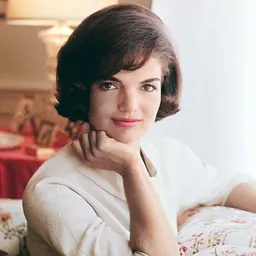
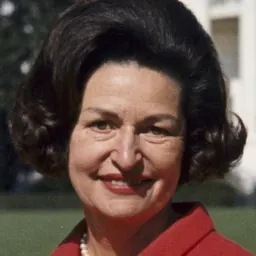
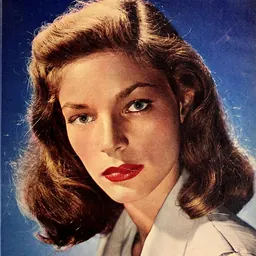
Norell amassed numerous private clients, including Hollywood stars such as Monroe, Lauren Bacall, Judy Garland, Carol Channing, Dinah Shore, and Lena Horne. Jacqueline Kennedy Onassis, Lady Bird Johnson, Babe Paley, and Lyn Revson, the wife of Revlon cosmetics founder Charles Revson, were also among his private clients. On occasion, Norell created designs for Hollywood films, including three ensembles for Doris Day that appeared in That Touch of Mink (1962) and fashions for the film Sex and the Single Girl (1964). Norell took an active role in making selections for the composition of the new fragrance, which he described as "floral with green overtones." The perfume sold at $50 an ounce when it was successfully introduced in 1968, earning Norell an estimated $1 million. The venture provided him with sufficient funds to buy out his silent partners and become the sole owner of the Norell fashion house. Norell's dominance of the American fashion industry began to decline in the late 1960s as other designers, such as Blass and Halston, rose to prominence, but Norell was widely considered "the dean of the fashion industry" in the United States.
Norell, a chain smoker, was diagnosed with throat cancer and underwent successful surgery on his vocal cords in 1962. His voice remained a hoarse whisper for the remainder of his life. Norell underwent a hernia operation in 1969. Newspapers also reported that he suffered from migraine headaches and diverticulitis. His funeral service was held at the Unitarian Church of All Souls in Manhattan. Norell's remains are interred at Crownland Cemetery, Noblesville, Indiana, along with other members of the Levinson family.
The New York Times noted that Norell's designs were known for their "glamour, timelessness and high quality construction." Fashion critics also praised Norell for his keen eye for detail, accuracy in judging proper proportion, effective use of color, and insistence on high-quality workmanship. Norell's lavish, avant-garde fashion shows showcased his designs that were tailored for the American woman's active lifestyle.
Honors and tributes In 1941 Norell became the first recipient of what became known as the Coty Award, the industry critics' top honor for fashion design. and a member of the Parsons School of Design's board of trustees.
In 2021, the Indiana Historical Bureau, Hamilton County Historical Society, Levinson Family, Rebar Develop, Nickel Plate Arts, and the City of Noblesville installed a historical marker in Noblesville, Indiana. It is located along 8th Street, between Cherry Street & Maple Avenue.
Don’t just read it —
keep it.
Full-length biographies made to live with: read them, listen on the way to work, watch them tonight.
- E-book
- Audio
- Video
Instant download · yours to keep · every purchase keeps this site free
Important facts
People in Norman Norell's life
Named in this biography and alive at the same time


Related people
Same field, nearest in time



Contemporaries
People whose lives overlapped Norman Norell's


Frequently asked questions
Who was Norman Norell?
American fashion designer (1900-1972)
When was Norman Norell born?
Norman Norell was born on 20 April 1900 in Noblesville.
When did Norman Norell die?
Norman Norell died on 25 October 1972 in New York City.
What was Norman Norell's occupation?
Norman Norell was a fashion designer and costume designer.
What nationality was Norman Norell?
Norman Norell was American.
Sources & further reading
Cite this page
APA: Biography.guide. (2026). Norman Norell. https://biography.guide/norman-norell/
MLA: "Norman Norell." Biography.guide, https://biography.guide/norman-norell/.
Chicago: "Norman Norell." Biography.guide. https://biography.guide/norman-norell/.
Data last updated: 2026-09-22 · Spot an error? Report a correction.
Page generated 2026-09-27 05:27 UTC