
About Hattie Carnegie
Lived 1886 – 1956 (aged 69). Hattie Carnegie was an American fashion designer.
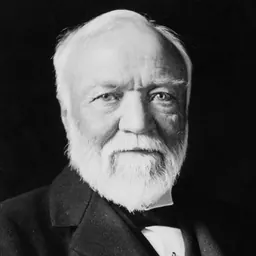
Hattie Carnegie (March 15, 1886 – February 22, 1956) was a fashion entrepreneur based in New York City from the 1920s to the 1950s. She was born in Vienna, Austria-Hungary, as Henrietta Kanengeiser. By her early 20s, she had taken the surname Carnegie as an homage to Andrew Carnegie, the richest person in the United States at the time.
Early life and career Born to a poor Jewish family, she was the second of seven children born to Hannah and Isaac Kanengeiser. When she was a young girl, her family immigrated to the United States, settling on the Lower East Side of Manhattan. At this point, Carnegie had a working capital of $100,000. By 1929, the business had sales of $3.5 million a year. Later, Ball moved back to New York City in 1932 to resume her pursuit of a career as an actress and supported herself by again working for Carnegie and as the Chesterfield cigarette girl.
Carnegie could not sew or cut a pattern herself, but she had an eye for talent. Her company discovered some of the most prominent American fashion designers of the twentieth century, such as Norman Norell, For nearly a decade, the made-to-order department was headed by Pauline Fairfax Potter.
In response to the austerity measures of World War II, Carnegie designed a dress for home sewers that was published in the April 12, 1943, issue of Life magazine. Made to order by Carnegie, the dress was said to cost $175, but Life readers could make their own for as little as $5.
Carnegie's specialty was "the little Carnegie suit". The WAC design was so timelessly elegant that it was still in use for women's U.S. Army uniforms in 1968.
By the time of her death in 1956, Carnegie had established an $8 million business.
Marriages Carnegie was married three times, including to:
Ferdinand Fleischman, a prominent New York City florist, as his second wife. He was a son of Joseph Fleischman, a florist, hotelier, and owner of the Fleischman Baths. Carnegie and Fleischman married c. 1922–1923; by this marriage, she had a stepson, Frederick Fleischman (born 1915). Fleischman subsequently married, in September 1924, as his third wife, Sallie White, the former wife of Abraham White and one of Carnegie's friends and clients. the Texas Fashion Collection, and at the Museum of Lifestyle & Fashion History in Boynton Beach, Florida. An exhibit of the dresses shown at the boutique of Hattie Carnegie was mounted at the Fashion Institute of Technology in 1996. The exhibit, Hattie Carnegie: American Style Defined, was curated by Professor Rose Simon.
Her work is included in the collection of the Museum of Fine Arts Houston.
Don’t just read it —
keep it.
Full-length biographies made to live with: read them, listen on the way to work, watch them tonight.
- E-book
- Audio
- Video
Instant download · yours to keep · every purchase keeps this site free
Important facts
People in Hattie Carnegie's life
Named in this biography and alive at the same time


Related people
Same field, nearest in time




Contemporaries
People whose lives overlapped Hattie Carnegie's



Frequently asked questions
Who was Hattie Carnegie?
fashion designer (1889-1956)
When was Hattie Carnegie born?
Hattie Carnegie was born on 15 March 1886 in Vienna.
When did Hattie Carnegie die?
Hattie Carnegie died on 22 February 1956 in New York City.
What was Hattie Carnegie's occupation?
Hattie Carnegie was a fashion designer.
What nationality was Hattie Carnegie?
Hattie Carnegie was American.
Sources & further reading
Cite this page
APA: Biography.guide. (2026). Hattie Carnegie. https://biography.guide/hattie-carnegie/
MLA: "Hattie Carnegie." Biography.guide, https://biography.guide/hattie-carnegie/.
Chicago: "Hattie Carnegie." Biography.guide. https://biography.guide/hattie-carnegie/.
Data last updated: 2026-09-25 · Spot an error? Report a correction.
Page generated 2026-09-27 05:11 UTC