
About Norman Cousins
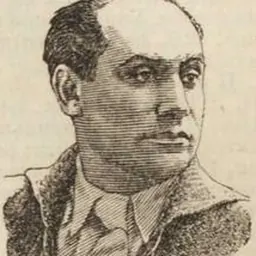
Lived 1915 – 1990 (aged 75). Norman Cousins was an American journalist, writer, literary critic, professor, peace activist and editing staff.
Norman Cousins (June 24, 1915 – November 30, 1990) was an American political journalist, author, professor, and world peace through world state advocate.
Early life Cousins was born to Jewish immigrant parents Samuel Cousins and Sarah Babushkin Cousins, in West Hoboken, New Jersey (which later became Union City). At age 11, he was misdiagnosed with tuberculosis and placed in a sanatorium. Despite this, he was an athletic youth, and he claimed that as a young boy he "set out to discover exuberance."
Cousins attended Theodore Roosevelt High School in the Bronx, New York City, graduating on February 3, 1933. He edited the high school paper, "The Square Deal," where his editing abilities were already in evidence. Cousins received a bachelor's degree from Teachers College, Columbia University, in New York City.
Career He joined the staff of the New York Evening Post (now the New York Post) in 1934, and in 1935 was hired by Current History as a book critic. He later ascended to the position of managing editor. He also befriended the staff of the Saturday Review of Literature (later renamed Saturday Review), which had its offices in the same building, and by 1940, joined the staff of that publication as well. He was named editor-in-chief in 1942, a position he would hold until 1972. Under his direction, circulation of the publication increased from 20,000 to 650,000. and became an adjunct professor in the Department of Psychiatry and Biobehavioral Sciences. An element of the book is that Cousins rejected what later became known as MAD and Deterrence theory. The possibility of war, he suggested, increases in proportion to the effectiveness of weapons. “Far from banishing war, the atomic bomb may in itself constitute a cause of war.” It promises aggressors a “lightening blow of annihilation… What a temptation for the blitzkrieger!” Later, he added a collection of non-fiction books on the same subjects, such as the 1953 Who Speaks for Man?, which advocated a World Federation and nuclear disarmament.
Despite his role as an advocate of liberalism, he jokingly expressed opposition to women entering the workforce. In 1939, upon learning that the number of women in the workforce was close to the number of unemployed males, he offered a solution: "Simply fire the women, who shouldn't be working anyway, and hire the men. Presto! No unemployment. No relief rolls. No depression."
A proponent of world state as the solution to wars, Cousins attempted to frighten humanity into world state, even though his reach in that regard was limited. He knew that wars killed many people in history and the total number of killed would be useful to his aims. But this number is neither known nor knowable. Cousins thought about some high number and decided that 3,640,000,000 would be good enough. He published the number in 1953. For decades since, the number circulated in scholarly literature in various countries as established fact and caused several scholars to search in archives for its source. The search yielded no result. The number proved to be “hoax” and even Cousins' method of extrapolation remained an unsolved puzzle.
In the 1950s, Cousins played a prominent role in bringing the Hiroshima Maidens, a group of twenty-five Hibakusha, to the United States for medical treatment. He served as president of the World Federalist Association and chairman of the Committee for Sane Nuclear Policy, which warned that the world was bound for a nuclear holocaust if the threat of the nuclear arms race was not stopped. In the 1960s, he began the American-Soviet Dartmouth Conferences for peace process. Following the 1962 Cuban missile crisis, President John F. Kennedy saw that he was the proper person to find the terms that would be accepted by Nikita Khrushchev to avert nuclear war. Both sides used unofficial intermediaries to relay messages outside the usual diplomatic routes. For example Kennedy used Norman Cousins, who was well appreciated in Moscow for his leadership of SANE, the Committee for a SANE Nuclear Policy. This helped the two leaders forge the highly successful Limited Test Ban Treaty of 1963. For his role he was thanked by President John F. Kennedy and Pope John XXIII; the Pope also awarded him his personal medallion. Cousins was also awarded the Eleanor Roosevelt Peace Award in 1963, the Family Man of the Year Award in 1968, the United Nations Peace Medal in 1971, and the Niwano Peace Prize and the Albert Schweitzer Prize for Humanitarianism, both in 1990. Experts at Dr. Rusk's rehabilitation clinic confirmed this diagnosis and added a diagnosis of ankylosing spondylitis. His struggle with that illness and his discovery of laugh therapy is detailed in his 1979 book Anatomy of an Illness as Perceived by the Patient.
Later in life, he and his wife, Ellen, together fought his heart disease, again with exercise, a daily regimen of vitamins, and the good nutrition provided by Ellen's organic garden.
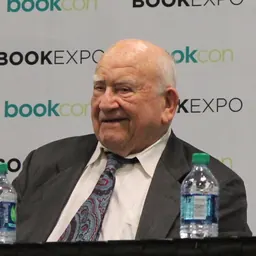
Movie portrayal Cousins was portrayed by actor Ed Asner in a 1984 television movie, Anatomy of an Illness, which was based on Cousins's 1979 book Anatomy of an Illness as Perceived by the Patient: Reflections on Healing. Cousins was not pleased with the commercial nature of the movie, nor with Hollywood's sensationalistic treatment of his experience. He and other members of the Cousins family were also taken aback by the casting of Asner, since the two men bore scant physical resemblance to each other. But Asner tried faithfully, Cousins felt, to convey the spirit of his subject, and once the film was completed, Cousins was said by Asner to look upon the movie with a certain degree of tolerance, if not delight.
Death Cousins died of heart failure on November 30, 1990, in Los Angeles, having survived years longer than his doctors predicted: 10 years after his first heart attack, 26 years after his collagen illness, and 36 years after his doctors first diagnosed his heart disease.
Don’t just read it —
keep it.
Full-length biographies made to live with: read them, listen on the way to work, watch them tonight.
- E-book
- Audio
- Video
Instant download · yours to keep · every purchase keeps this site free
Important facts
People in Norman Cousins's life
Named in this biography and alive at the same time



Related people
Same field, nearest in time



Contemporaries
People whose lives overlapped Norman Cousins's




Frequently asked questions
Who was Norman Cousins?
American journalist (1915–1990)
When was Norman Cousins born?
Norman Cousins was born on 24 June 1915 in West Hoboken.
When did Norman Cousins die?
Norman Cousins died on 30 November 1990 in Los Angeles.
What was Norman Cousins's occupation?
Norman Cousins was a journalist, writer, literary critic, professor, peace activist and editing staff.
What nationality was Norman Cousins?
Norman Cousins was American.
Sources & further reading
Cite this page
APA: Biography.guide. (2026). Norman Cousins. https://biography.guide/norman-cousins/
MLA: "Norman Cousins." Biography.guide, https://biography.guide/norman-cousins/.
Chicago: "Norman Cousins." Biography.guide. https://biography.guide/norman-cousins/.
Data last updated: 2026-09-20 · Spot an error? Report a correction.
Page generated 2026-09-27 05:18 UTC