
About Norman Cohn
Lived 1915 – 2007 (aged 92). Norman Cohn was a British historian, screenwriter, university teacher, anthropologist, sociologist and academia.
Norman Rufus Colin Cohn FBA (12 January 1915 – 31 July 2007) was a British academic, historian and writer who spent 14 years as a professorial fellow and as Astor-Wolfson Professor at the University of Sussex.
Life Cohn was born in London, to a German Jewish father and a Catholic mother. He was educated at Gresham's School and Christ Church, Oxford. He was a scholar and research student at Christ Church between 1933 and 1939, taking a first-class degree in Modern Languages in 1936 (French) and in 1939 (German).
Following the death of his wife Vera, in December 2004 he married Marina Voikhanskaya, a psychiatrist of Russian origin who had protested in the 1970s against the forcible detainment of political dissidents in the Soviet Union.
Career Cohn's work as a historian focused on the problem of the roots of that persecutorial fanaticism which became resurgent in modern Europe at a time when industrial progress and the spread of democracy had convinced many that modern civilisation had stepped out forever from the savageries of earlier historical societies. In his The Pursuit of the Millennium, an influential work translated into more than eleven languages, he traced back to the distant past the pattern of chiliastic upheaval that marred the revolutionary movements of the 20th century. Likewise, in Europe's Inner Demons he tracked the historical sources of the mania for scapegoating minorities which, within Christendom, culminated in the Great European witchhunt.
His book Warrant for Genocide describes the Protocols of the Elders of Zion, an antisemitic forgery purporting to describe a Jewish conspiracy for world domination and its influence and effects. He argued that this conspiracy theory motivated its supporters to seek the massacre of the Jewish people and became a major psychological factor in the Nazi Holocaust.
In Cosmos, Chaos and the World to Come (1993), he sought to trace the source of millennial religious themes in ancient civilizations.
As Ferrari pointed out, "the writings of Norman Cohn have gone on to influence entire generations of readers and scholars, from all sorts of backgrounds and vocations. Through their works, historians Stuart Clark (Thinking with Demons, 1997), Michael Burleigh (The Third Reich, 2000; Earthly Powers, 2005; Sacred Causes, 2006), Daniel Pick (The Pursuit of the Nazi Mind, 2012), philosophers Pierre-André Taguieff (L’imaginaire du complot mondial, 2006), John Nicholas Gray (Black Mass, 2007) and novelists William Gibson and Ian McEwan have evidenced their intellectual debt to Cohn, who—in the words of psychiatrist Anthony Storr —dedicated his entire life to ‘the important parts of history other historians do not reach: the collective myths that underpin the assumptions, prejudices and beliefs which shake and shape human societies’". Cosmos, Chaos and the World to Come: The Ancient Roots of Apocalyptic Faith (1993, revised edition 2001) Noah's Flood: The Genesis Story in Western Thought (1996)
Essays "The Horns of Moses", Commentary, vol. 3 (September 1958) "The Myth of the Jewish World Conspiracy: A Case Study in Collective Psychopathology", Commentary, vol. 41, no. 6 (June 1966) 35 "Monsters of Chaos", Horizon: Magazine of the Arts, no. 4 (1972), 42 "Permanence de Millénarismes", Le Contrat Social: revue historique et critique des faits et des idées, vol. 6, no. 5 (September 1962) 289 "Adamo: the Distinguished Savage", The Twentieth Century, vol. 155 (January 1954), 263 "The Saint-Simonian Extravaganza", The Twentieth Century, vol. 154 (July 1953), 354 "The Magus of the North", The Twentieth Century, vol. 153 (January 1953), 283 "The Saint-Simonian Portent", The Twentieth Century, vol. 152 (July 1952) "How Time Acquired a Consummation", in Apocalypse Theory and the End of the World (1995), 21–37(compilation)
Don’t just read it —
keep it.
Full-length biographies made to live with: read them, listen on the way to work, watch them tonight.
- E-book
- Audio
- Video
Instant download · yours to keep · every purchase keeps this site free
Important facts
Family & relationships
People in Norman Cohn's life
Named in this biography and alive at the same time
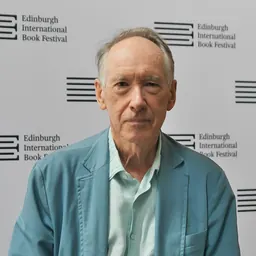


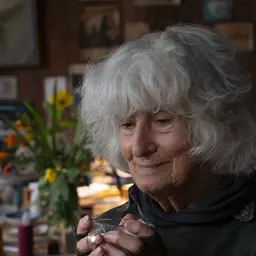




Related people
Same field, nearest in time
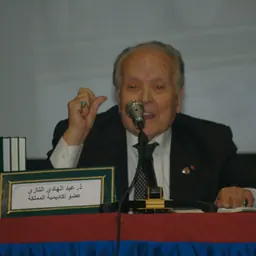
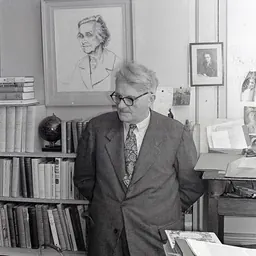


Contemporaries
People whose lives overlapped Norman Cohn's



Frequently asked questions
Who was Norman Cohn?
British historian (1915–2007)
When was Norman Cohn born?
Norman Cohn was born on 12 January 1915 in London.
When did Norman Cohn die?
Norman Cohn died on 31 July 2007 in Cambridge.
What was Norman Cohn's occupation?
Norman Cohn was a historian, screenwriter, university teacher, anthropologist, sociologist and academia.
What nationality was Norman Cohn?
Norman Cohn was British.
Sources & further reading
Cite this page
APA: Biography.guide. (2026). Norman Cohn. https://biography.guide/norman-cohn-historian/
MLA: "Norman Cohn." Biography.guide, https://biography.guide/norman-cohn-historian/.
Chicago: "Norman Cohn." Biography.guide. https://biography.guide/norman-cohn-historian/.
Data last updated: 2026-09-20 · Spot an error? Report a correction.
Page generated 2026-09-27 05:25 UTC