
About Norma Borthwick
Lived 1862 – 1934 (aged 71). Norma Borthwick was a British translator.
Mariella Norma Borthwick (25 July 1862 – 13 June 1934) was a British artist and writer and an Irish language activist.
Early life Mariella Norma Borthwick was born in Highfield, Higher Bebington, Chester, on 25 July 1862. She was one of five daughters and three sons of the merchant George Borthwick, and Mary Elizabeth Borthwick (née MacDonald). Though she was born in England, Borthwick considered herself a Scot of Gaelic descent. From an early age she displayed an interest in the culture of Ireland, and learned the Irish language at the Southwark Literary Society in London.
From May to December 1898 Borthwick served on the central council of the Gaelic League as secretary, and became a member of the executive council in 1899. The same year she was secretary to the year's Oireachtas na Gaeilge, with her "education and taste" noted as beneficial to the organisation.
Borthwick assisted Eoin MacNeill in the publication of An Claidheamh Soluis, going on to write a series in Irish for St Patrick's magazine from 1900 to 1903, under the name "Fear na Móna". In 1900, she wrote and illustrated Aigibitir na Gaeilge, and in 1902 produced a three-volume textbook Ceachta beaga Gaeilge, illustrated by Jack Butler Yeats. (There is a drawing of Borthwick by his father John Butler Yeats. )
Borthwick founded the Irish Book Company with Mairéad Ní Raghallaigh, which initially operated from O'Connell Street, and later Eccles Street in Dublin. From there, she published a number of books and pamphlets, such as seven booklets of songs under the title Ceol Sidhe. The company also published Father Peadar Ua Laoghaire's , with Borthwick preparing a dictionary for the book. She was later named as one of literary executors. In a collaboration with Osborn Bergin, she published Leourín na leanav in 1913. During one stay, she held an Irish-language Punch and Judy show with Douglas Hyde.
She taught Irish in the Dominican convent on Eccles Street, and was a private Irish tutor to numerous wealthy families.
Later life Borthwick left Ireland in 1919 to live with her sister Grace Hay Borthwick, due to her own declining health. They first lived in Newcastle upon Tyne, then Scalfay in the Shetland Islands, and finally at Kilbride House, Kilbride, Skye in the late 1920s. By this point Borthwick was paralysed and unable to speak, having contracted encephalitis lethargica or sleeping sickness in the wake of World War I. When she died at Kilbride on 13 June 1934, she had suffered from sleeping sickness for 16 years, Parkinsonism for six years, and bulbar paralysis for two years. She is buried on the island.
Don’t just read it —
keep it.
Full-length biographies made to live with: read them, listen on the way to work, watch them tonight.
- E-book
- Audio
- Video
Instant download · yours to keep · every purchase keeps this site free
Important facts
People in Norma Borthwick's life
Named in this biography and alive at the same time
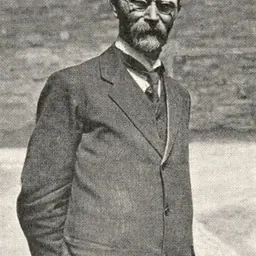



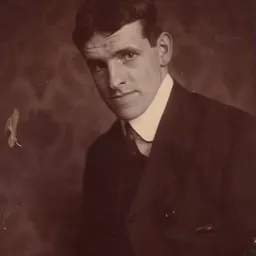


Related people
Same field, nearest in time

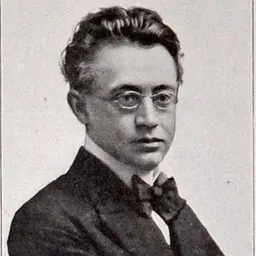

Contemporaries
People whose lives overlapped Norma Borthwick's

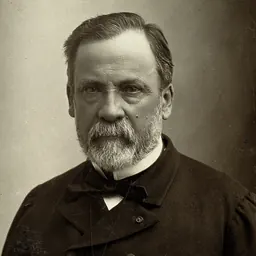



Frequently asked questions
Who was Norma Borthwick?
British artist, writer, and Irish-language activist (1862-1934)
When was Norma Borthwick born?
Norma Borthwick was born on 25 July 1862 in Chester.
When did Norma Borthwick die?
Norma Borthwick died on 13 June 1934 in Kilbride.
What was Norma Borthwick's occupation?
Norma Borthwick was a translator.
What nationality was Norma Borthwick?
Norma Borthwick was British.
Sources & further reading
Cite this page
APA: Biography.guide. (2026). Norma Borthwick. https://biography.guide/norma-borthwick/
MLA: "Norma Borthwick." Biography.guide, https://biography.guide/norma-borthwick/.
Chicago: "Norma Borthwick." Biography.guide. https://biography.guide/norma-borthwick/.
Data last updated: 2026-09-22 · Spot an error? Report a correction.
Page generated 2026-09-27 05:27 UTC