
Norborne Berkeley, 4th Baron Botetourt
British politician and courtier
About Norborne Berkeley, 4th Baron Botetourt
Lived 1717 – 1770 (aged 52–53). Norborne Berkeley, 4th Baron Botetourt was an American politician, colonial administrator and governor.
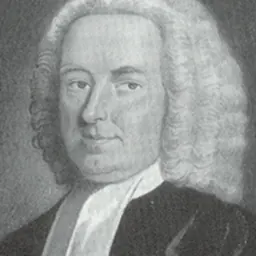
Norborne Berkeley, 4th Baron Botetourt ( – 15 October 1770) was a British Tory politician and colonial administrator who served as the governor of Virginia from 1768 to 1770, when he died in office. While serving as rector at the College of William & Mary, Berkeley endowed the creation of the Botetourt Medal, an award to incentivize student scholarship. After his death, the Virginia General Assembly commissioned Richard Hayward to produce Lord Botetourt, a marble statue depicting Berkeley that stood in the Capitol in Williamsburg. The original survives on the campus of the college, while a replica stands in front of the college's Wren Building.
Origins
Norborne Berkeley was born about 1717, the only son of John Symes Berkeley of Stoke Gifford, Gloucestershire by his second wife Elizabeth Norborne, a daughter and co-heiress of Walter Norborne of Calne, Wiltshire and the widow of Edward Devereux, 8th Viscount Hereford. The Berkeleys of Stoke Gifford were descended from Maurice de Berkeley (d.1347), who died at the Siege of Calais, who had acquired the manor of Stoke Gifford in 1337, the second son of Maurice de Berkeley, 2nd Baron Berkeley, 7th feudal baron of Berkeley (1271–1326), Maurice the Magnanimous, of Berkeley Castle. His descendant Sir Thomas Berkeley (d.1361) of Uley, Gloucestershire married Katherine Botetourt (d.1388), a daughter and co-heiress of John Botetourt, 2nd Baron Botetourt. His son and heir was Sir Maurice Berkeley (1358–1400), of Uley and Stoke Gifford, MP for Gloucestershire in 1391.
Life alt=A yellow-painted house on a large stone terrace above a grass slope. It has two prominent octagonal towers at the corners with a single-storey arcade between them. Although most details are quite plain, overall it is an early example of the Jacobethan revival style. In 1726, Berkeley was admitted to Westminster School. He succeeded his father to Stoke Park in Stoke Gifford in 1736 and remodelled both the house (now known as the Dower House) and the gardens in the 1740s and 1750s with the help of the designer Thomas Wright of Durham.
He was appointed Colonel of the newly raised South Gloucestershire Militia and commanded it from 1758 to 1766.
His political career began in 1741 when he was elected to the House of Commons as a knight of the shire for Gloucestershire, a seat he held until 1763. Considered a staunch Tory, Berkeley's fortunes were boosted considerably on the accession of George III in 1760, when he was appointed a Groom of the Bedchamber and in 1762 (until 1766) Lord Lieutenant of Gloucestershire. In 1764, almost 400 years after the title went into abeyance through lack of direct heirs, he successfully claimed the title of Baron Botetourt as the lineal descendant of Maurice de Berkeley (d. 1361) and his wife Catherine de Botetourt. He thus took a seat in the House of Lords as the 4th Baron de Botetourt, and in 1767 was appointed a Lord of the Bedchamber to George III.
The Berkeley family owned liberties in the Kingswood coalfield. When William Champion expanded his copper-smelting works at Warmley in 1761, he proposed to local coal owners, also including Charles Whittuck of Hanham Hall and Charles Bragge later Lord Bathurst, that they would supply his works with coal as a monopoly, excluding competition from the other local copper and brass makers, in exchange for partnerships in his new Warmley Company. The large coal owners took this opportunity, and construction began on the new furnaces. However the competing Brass Wire Company, the 'Old Bristol Company' was still able to obtain enough coal locally from small collieries who leased from the larger coal lords. The coal prices paid by the Old Bristol company, including advance payments, even encouraged development of these small pits, with new horse-driven winding engines and even talk of the new steam engines for mine drainage. The monopoly plan did not succeed and the market for both coal and copper was saturated. By 1765 the new company had grown in capacity, but was encountering financial difficulties.
He died in Williamsburg on 15 October 1770, after an illness lasting several weeks. Botetourt never married and left no legitimate heirs. Stoke Park passed to his sister Elizabeth, who continued his improvements.
Statues
A statue of Botetourt was placed in the Capitol in Williamsburg in 1773. The Capital of Colonial Virginia was located in Williamsburg from 1699 until 1780, but at the urging of Governor Thomas Jefferson was moved to Richmond for security reasons during the American Revolution. In 1801 the statue of Botetourt was acquired by the College of William and Mary and moved to the campus from the former Capitol building. Barring a brief period during the Civil War when it was moved to the Public Asylum for safety, it stood in the College Yard until 1958 when it was removed for protection from the elements, and then in 1966 was installed in the new Earl Gregg Swem Library, in the new Botetourt Gallery. In 1993, as the college celebrated its tercentenary, a new bronze statue of Botetourt by William and Mary alumnus Gordon Kray was installed in the College Yard in front of the Wren Building, in the place occupied for generations by the original.
Legacy Botetourt County, Virginia, was named in Botetourt's honour. Historians also believe that Berkeley County, West Virginia, and the town of Berkeley Springs, both now in West Virginia, were also named in his honour, or possibly that of another popular colonial governor, Sir William Berkeley.
Lord Botetourt High School in the town of Daleville in Botetourt County, Virginia, is also named for him, as is the Botetourt Dorm Complex at The College of William and Mary. Two statues also adorn the campus of The College of William and Mary. Gloucester County, Virginia has an elementary school named for the governor. Both Richmond, Virginia and Norfolk, Virginia have streets named in his honour.
Don’t just read it —
keep it.
Full-length biographies made to live with: read them, listen on the way to work, watch them tonight.
- E-book
- Audio
- Video
Instant download · yours to keep · every purchase keeps this site free
Important facts
Family & relationships
People in Norborne Berkeley, 4th Baron Botetourt's life
Named in this biography and alive at the same time
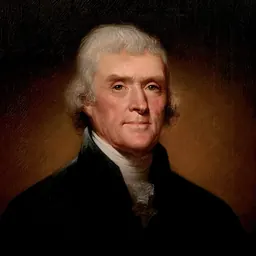
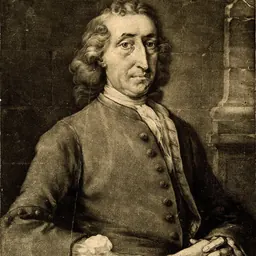


Related people
Same field, nearest in time
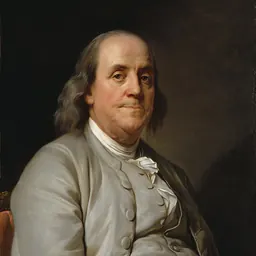


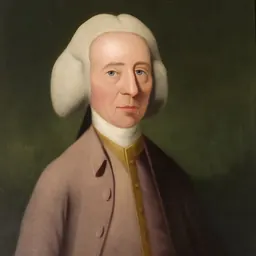


Contemporaries
People whose lives overlapped Norborne Berkeley, 4th Baron Botetourt's



Frequently asked questions
Who was Norborne Berkeley, 4th Baron Botetourt?
British politician and courtier
When was Norborne Berkeley, 4th Baron Botetourt born?
Norborne Berkeley, 4th Baron Botetourt was born in 1717 in Stoke Gifford.
When did Norborne Berkeley, 4th Baron Botetourt die?
Norborne Berkeley, 4th Baron Botetourt died on 15 October 1770 in Governor's Palace.
What was Norborne Berkeley, 4th Baron Botetourt's occupation?
Norborne Berkeley, 4th Baron Botetourt was a politician, colonial administrator and governor.
What nationality was Norborne Berkeley, 4th Baron Botetourt?
Norborne Berkeley, 4th Baron Botetourt was American.
Sources & further reading
· Wikipedia: Norborne Berkeley, 4th Baron Botetourt
· DBpedia: Norborne Berkeley, 4th Baron Botetourt
Cite this page
APA: Biography.guide. (2026). Norborne Berkeley, 4th Baron Botetourt. https://biography.guide/norborne-berkeley-4th-baron-botetourt/
MLA: "Norborne Berkeley, 4th Baron Botetourt." Biography.guide, https://biography.guide/norborne-berkeley-4th-baron-botetourt/.
Chicago: "Norborne Berkeley, 4th Baron Botetourt." Biography.guide. https://biography.guide/norborne-berkeley-4th-baron-botetourt/.
Data last updated: 2026-09-25 · Spot an error? Report a correction.
Page generated 2026-09-27 05:11 UTC