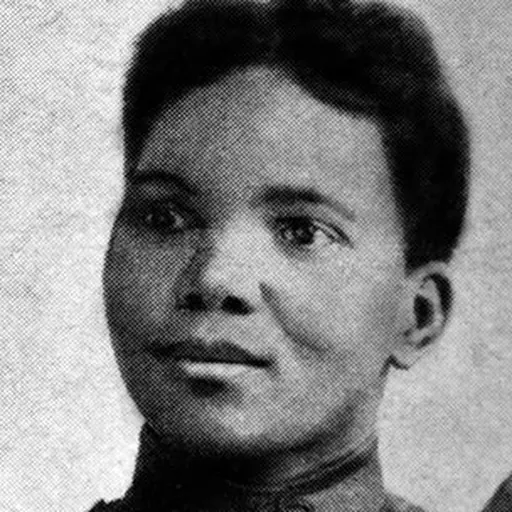
About Nokutela Dube
Lived 1873 – 1917 (aged 43–44). Nokutela Dube was a South African educator.
Nokutela Dube (1873 – 25 January 1917) They both travelled to the United States, where Nokutela was described as a "woman of note". She died while estranged from her husband, who was then president of what would become the African National Congress. From 1881, she was taught by Ida Wilcox, who was part of a husband-and-wife team running the mission. Nokutela was a star pupil and an essay she wrote was published in Ida's home town in Minnesota as part of a regular report she made to the press. Nokutela's essay was used to show how the mission was inspiring children to learn English.
After leaving Inanda Seminary School, Mdima worked as a teacher, and married John Dube in 1894 in Inanda. John was the son of James Dube who was a minister at Inanda. The couple left South Africa in April 1896 and travelled to Britain, sailing for New York from Southampton in May 1896. By November their story was being reported by the New York Tribune. Her husband was not the only black South African to visit New York, but Nokutela was unusual because she was female.
While the Dubes were in the US, they were inspired by the educator Booker T. Washington, but their main training came from the Union Missionary Training Institute, where 30 to 45 Christian missionaries from Europe, Asia, Australia, Arabia, and in this case, Africa studied. This Brooklyn establishment was able to exist because pastors and professors would volunteer their time.
Ohlange
After returning to South Africa and teaching at Dube's old school at Inanda, they set up Ohlange High School. This was the first in the country to be established by black teachers. The Dubes described these secular songs as the first to combine Zulu and European traditions for the "Black Community". The first printing of this book records both John and Nokutela as joint authors in a plural form of isiZulu. John only once steps out of this form of address in the introduction to point out that the music is Nokutela's responsibility. Nokutela had musical abilities but she had also taken singing lessons from two teachers while in America. Nokutela described this as "better singing".
In addition to his literary works, the Dubes founded the first Zulu/English newspaper
Nokutela and John Dube's failure to have children was seen to reflect badly on Nokutela and John fathered a child with one of their pupils. The couple separated in about 1914, and Nokutela moved to the Transvaal, where she preached in rural communities before becoming ill with kidney disease. She returned to live with her husband in Johannesburg, and died in 1917 at the age of 44. Her funeral was attended by Pixley ka Isaka Seme and other prominent members of what was to become the African National Congress (ANC). She was buried in an unmarked grave with a reference number starting "CK", which stood for "Christian Kaffir". The school that she co-founded with her husband was chosen by Nelson Mandela as the place where he wanted to cast his first vote in the first democratic elections in South Africa. However, Nokutela's contribution to South African education and the growth of what was to become the African National Congress was not well known. A headstone was erected on her grave
in August 2016, she was inducted into Freedom Park, the national shrine for heroes and heroines in Pretoria, South Africa.
In 2017, following Professor Keïta's campaign for her recognition, Nokutela Dube was posthumously awarded South Africa's highest honour — the Order of the Golden Baobab — 100 years after her death.
In 2021, South African editor, creative consultant and archivist Asanda Sizani researched, edited and released a book that narrates Nokutela Mdima-Dube's life in multidisciplinary forms such as essays, music, art, poetry and interviews, titled Nokutela Mdima-Dube 1873–1917. Asanda Sizani then approached four women in the Arts to collaborate on what is now a multi-pronged project titled Amagama Ka Nokutela, meaning "Nokutela's words/names". The collective of collaborators are Florence Masebe, Busi Sizani and Siphokazi Jonas. In 2022, the collective Legacy Creates produced the short film Amagama ka Nokutela, premiered at the Zeitz MOCAA (Museum of Contemporary Art Africa) on 25 January 2022, the 105th anniversary of Nokutela's death.
Don’t just read it —
keep it.
Full-length biographies made to live with: read them, listen on the way to work, watch them tonight.
- E-book
- Audio
- Video
Instant download · yours to keep · every purchase keeps this site free
Important facts
Family & relationships
People in Nokutela Dube's life
Named in this biography and alive at the same time

Related people
Same field, nearest in time




Contemporaries
People whose lives overlapped Nokutela Dube's

Frequently asked questions
Who was Nokutela Dube?
School founder in South Africa
When was Nokutela Dube born?
Nokutela Dube was born in 1873 in Inanda.
When did Nokutela Dube die?
Nokutela Dube died on 25 January 1917 in Johannesburg.
What was Nokutela Dube's occupation?
Nokutela Dube was an educator.
What nationality was Nokutela Dube?
Nokutela Dube was South African.
Sources & further reading
Cite this page
APA: Biography.guide. (2026). Nokutela Dube. https://biography.guide/nokutela-dube/
MLA: "Nokutela Dube." Biography.guide, https://biography.guide/nokutela-dube/.
Chicago: "Nokutela Dube." Biography.guide. https://biography.guide/nokutela-dube/.
Data last updated: 2026-09-22 · Spot an error? Report a correction.
Portrait: Wikimedia Commons · author & licence
Page generated 2026-09-27 04:58 UTC