
Noël Baboneau
Government administrator in North Borneo
About Noël Baboneau
Lived 1884 – 1920 (aged 35).
Biography
Early life Noël Baboneau was born in Chinsurah, Bengal, British Raj, in 1884, the son of J. T. Baboneau. In October 1903, Baboneau played half-backs in The Football League for Brighton in a losing game against the "Dolphins."
North Borneo Baboneau first arrived in North Borneo in 1910, where he entered into the Cadet Service of North Borneo as a Cadet alongside Owen Rutter and E. A. Pearson. In September 1910, they graduated from the Cadet Service and entered into the Civil Service of North Borneo, and Baboneau was made a Magistrate Third Class.
In the Charter Day celebrations for the year 1911, Baboneau was promoted to District Officer for the Mempakul District.
In August 1915, Baboneau was made District Officer for the Tambunan District.
Blayong Rebellion
The Pensiangan Station was called the "remotest outstation in North Borneo." In 1914, the Company was in the process of constructing bridle paths into the interior of Borneo. One of these saddle roads was to be constructed between Rundum and Pensiangan, which was at that time called the "remotest outpost in North Borneo." By this point, most of the government civil service officers stationed in the Interior (including Baboneau) had sent letters of concern to the Governor of North Borneo about the sheer demands that the Company was expecting in manual labour from the indigenous population to construct the network of bridle paths, telegraphy and telephone lines, and other construction projects there. Most of the local tribes were disgruntled with the tasks - the Resident at Tenom, Resident H.W.L. Bunbury, however, did not take their labour demands seriously.
In June 1914, the chief of the Tagol tribe, Blayong, launched the Blayong Rebellion. The Blayong Rebels first staged a walkout after being asked to carve their portion of the bridle path through solid rock, and then moved into the jungles to build a fort in Blayong's hometown from which to stage a rebellion.
Rundum Rebellion
By November 1914, after a long drought had broken, leaving most of the locals of the interior without food from the harvest season - many of the locals believed that the gods of the earth had become angry with the Company and were taking their revenge on them through the drought. Baboneau, touring the interior districts, had become confused at the emptied villages along his route.
In February, Baboneau was on a patrol with members of the Constabulary, and they were ambushed from all sides by sniper fire. Not knowing which direction the sniper fire was coming from, Baboneau and his men retreated to the Rundum station. This was the first moment of the Rundum Rebellion, the single-largest indigenous uprising against Company rule in the history of North Borneo. Baboneau, and his men, were then surrounded on all sides and outnumbered by several thousand indigenous soldiers and had to fight just to survive. He was entered into the Officers training Corps in 1915. In his unit, they nicknamed him Borneo.
In September 1917, Baboneau was sent to the hospital in Blighty to recover from trench fever that he'd contracted on the continent.
Baboneau returned to North Borneo in February 1918.
Death In November 1919, Baboneau took the position of District Officer for Province Clarke, which had previously been held by George Cathcart Woolley.
On 6 December 1920, Baboneau played a game of golf. After the game, he walked to the police station to make a telephone call to the station at Keningau. Either during the phone call, or shortly after the phone call, the police constable assigned to office guard duty that day - badge number P.C. 420 Lima - pulled out his service weapon and shot Baboneau in the back of the neck. He died instantaneously. The London and China Telegraph, wrote: "The cause of the murder was mutiny pure and simple. Private Lima enlisted at Tauran two years ago as a married man. He was desirous of marrying another woman of the neighbouring village, Lintun, but such a marriage would have been against all Police Regulations, and permission, therefore, was apparently refused."
Dates of rank DateRankUnitRef.8 December 19162nd LieutenantEssex Regiment 25 December 1918LieutenantEssex Regiment
Written works
A Murut Vocabulary, Journal of the Straits Branch of the Royal Asiatic Society, 86: 343-375; with an introductory note by G.C. Woolley. (Written posthumously).
Don’t just read it —
keep it.
Full-length biographies made to live with: read them, listen on the way to work, watch them tonight.
- E-book
- Audio
- Video
Instant download · yours to keep · every purchase keeps this site free
Important facts
People in Noël Baboneau's life
Named in this biography and alive at the same time
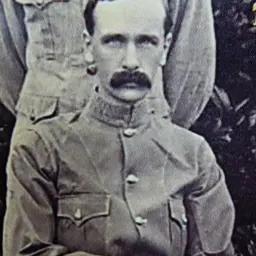
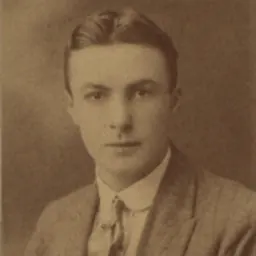
Contemporaries
People whose lives overlapped Noël Baboneau's
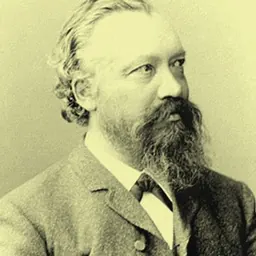
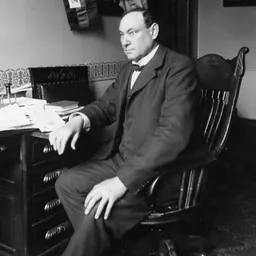

Frequently asked questions
Who was Noël Baboneau?
government administrator in North Borneo (1884–1920)
When was Noël Baboneau born?
Noël Baboneau was born on 23 December 1884.
When did Noël Baboneau die?
Noël Baboneau died on 6 December 1920.
Sources & further reading
Cite this page
APA: Biography.guide. (2026). Noël Baboneau. https://biography.guide/noel-baboneau/
MLA: "Noël Baboneau." Biography.guide, https://biography.guide/noel-baboneau/.
Chicago: "Noël Baboneau." Biography.guide. https://biography.guide/noel-baboneau/.
Data last updated: 2026-09-20 · Spot an error? Report a correction.
Page generated 2026-09-27 05:22 UTC