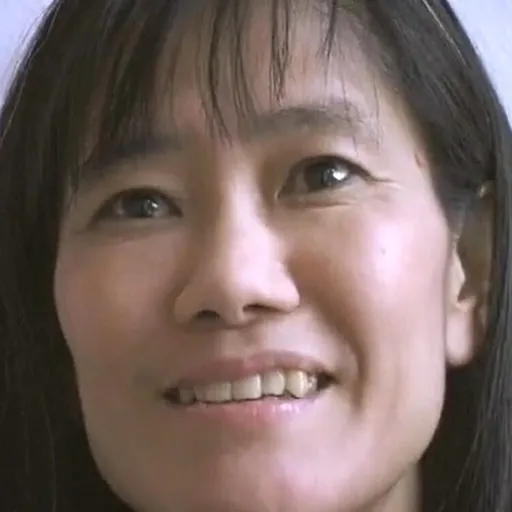
About Nobuho Nagasawa
Born 1960. Nobuho Nagasawa is a Japanese artist.
Nobuho Nagasawa (長澤伸穂, Nagasawa Nobuho; born in 1959) is a Japanese-born US-based transdisciplinary artist. Nagasawa is known for her site-specific installations involving in-depth research into the cultural history and memory, and extensive community participation. Her works were featured in international exhibitions including the Asian Art Biennial (Bangladesh, 2002), the Sharjah Biennial (United Arab Emirates, 2003), and the Echigo-Tsumari Art Triennial (Japan, 2003). She has exhibited extensively in galleries and museums in Asia, Europe, and the North America. The venues include, the Royal Garden of the Prague Castle (Czech Republic), Ludwig Museum (Hungary), Rufino Tamayo Museum (Mexico), Sharjah Art Museum (United Arab Emirates), Alexandria Library (Egypt), among others. Recipient of the 1997 Design Excellence Award for Architecture and Public Art, through the Cultural Affairs Office in Los Angeles, Nagasawa has been commissioned more than 20 public art projects, including projects in California, Washington, Texas, New York, and Japan. Nagasawa was previously Professor at the Claremont Graduate University, Scrips College, California (1992–1996) and Professor at the University of California, Santa Cruz (1996–2001), and has been Professor at the State University of New York at Stony Brook since 2001.
Biography
Early life and career in Japan, the Netherlands, and West Germany (1959–1985) Although Nagasawa was born in 1959 and raised in Tokyo, her father was on a diplomatic mission in the Netherlands, and the family lived in The Hague for four and half years. After graduating from high school in Tokyo in 1978, Nagasawa returned to the Netherlands, where she spent part of her childhood, and completed her undergraduate degree at the State Academy of Fine Arts in Maastricht. According to the art historian Midori Yoshimoto, “When [Nagasawa] visited Documenta VII (1982) in Kassel, Germany, on her graduation from Maastricht in 1982, she encountered Joseph Beuys’s tree-planting campaign, 7000 Oaks (1982–1987). Nagasawa was inspired by his philosophy that ‘everyone is an artist, and that creativity is the most important tool in effecting social transformation’, and became ‘interested in producing works on an environmental scale and engaging people throughout the creative process’.” Subsequently, Nagasawa moved to West Berlin in 1982 to pursue her Master of Fine Art at the Hochschule der Künste Berlin (currently Berlin University of the Arts). Nagasawa “considered [West Berlin] to be a ‘living example of the division between East and West’ and an ‘island floating on the “Red Sea”’. She responded to the cosmopolitan culture of Berlin and identified with being a ‘Berliner’. Nagasawa remembers visiting ‘Eastern bloc countries to experience not only the physical obstacles but also the cultural gap between East and West’. She grew aware of ‘how issues such as “self”, “other”, “gender”, “race”, and “alienation” are all intertwined on the conscious and subconscious spheres of human experiences’ and that ‘the “self” was, in part, self-constructed through interactions with others’.”
Navel of the Earth (1985) In 1985, after returning to Berlin and graduating from the Hochschule der Künste Berlin, Nagasawa decided to dig a crater-like hole 14 meters in diameter in the ruins of a Jewish synagogue in Kreuzberg, near the Berlin Wall. In 1993, Nagasawa was invited to participate in the first ever touring exhibition of Japanese contemporary art in Eastern Europe, Invisible Nature, curated by Ivona Raimanova, Director of the Art Planning Department of the Office of the President of the Czech Republic. Nagasawa was invited by the President of the Czech Republic, the first host country of the exhibition, to create her site-specific earthworks. In contrast to the huge wooden and iron works transported from Japan by Shigeo Toya and Saburo Muraoka, who participated in the same exhibition, Nagasawa preferred to create her work locally during her four-week stay in Prague, building a 28 meter long, 5 meter high bridge in the Royal Gardens of Prague Castle using thousands of sandbags.
The following year, the exhibition travelled to the Ludwig Forum for International Art in Aachen, Germany, where the octagonal dome entitled Pfalzkapelle (1994) was built to resemble the dome of Aachen Cathedral, built by Emperor Karl the Great in the 8th century.
Nagasawa participated in Peace Sculpture 1995 in Denmark, which commemorated the 50th anniversary of the end of World War II and presented her project Bunker Motel: Emergency Womb (1995) in Thyborøn. According to Nagasawa: “The Danish coast is littered with 7000 military bunkers built during World War II under Hitler’s Atlantic Wall Fortification Project. These bunkers have stood empty and without use like a painful scar on the Danish landscape for more than 50 years. For this project, I transformed several of the bunkers in the village of Thyborøn into motels for lovers. I heard that some of the bunkers were used as a secret hideaway for lovers after the war. However, the locals were not comfortable discussing the past, and I was even more troubled that some of the “living memories” of the people were not being passed down to the younger generation. I furnished several of the bunkers with military cots; pillows and blankets were made from military bags and filled with sand and sugar. The use of sugar was a symbol for the heroism of local fishermen during World War II, an example of one such living memory. At a time when sugar was a pre- cious commodity, they secretly gathered it and mixed it with the concrete. They thought that adding sugar to concrete would reduce the strength of the bunker structures. This was a highly risky attempt and a desperate act of resistance against the Nazi Germans. However, since sugar and cement have no chemical reaction, their effort was unsuccessful, and resulted in a shortage of sugar for the Danish households. For me, these stories embody a bittersweet memory of the history of this place which no one seemed to talk about or care to pass on to the younger generation. While staying in this village, I offered a workshop at the only school there and invited all 500 school children to participate in my project. They joined me in casting 500 plaster eggs, each the size of a human brain. On the anniversary of Liberation Day, children and their families gathered together at the school and I hand- ed each child a plaster egg. Together we formed a procession and placed all the eggs in the Bunker Motels.”
On the Edge of Time (2001), produced locally for the 10th Asia Art Biennial, held in Dhaka, Bangladesh in 2001–2002, involved the firing of approximately 4,700 terracotta eggs in collaboration with a local university and Hindu potters. The eggs were then stacked to form two piles, one large and one small, at the exhibition site. By asking local communities for transporting the terracotta eggs made by Hindu potters, who are a minority in the Islamic country of Bangladesh, Nagasawa's project seemed to challenge the inter-cultural strife that has come to light since 9/11, by saying that art is not bound by differences of nation or creed. “Initially, the exhibition organizer, the Sultan’s daughter, Sheikha Hoor Al-Qasimi, was concerned that her project would cause a public outcry of indecency because of the ‘contentious’ material (nylon stockings) and that it was based on ‘American feminism’, and thus was patronizing. Bravely, Nagasawa wrote a letter directly to the Sultan's daughter, primarily to stress that she is a ‘Japanese’ living in the United States and as such was a member of a ‘minority’. In addition, the letter sought to convince the Sultan's daughter that her work should not be narrowly labelled as ‘feminist’, arguing that it came from a more humanistic viewpoint and sought to connect with Muslim women. The inner thoughts she was hoping to draw upon from these women were not necessarily expected to be the ‘voices of suffering’ but rather the ‘voices of joy and dignity of being women in their own right’.30 Nagasawa's letter was effective and the project was carried out to completion. Afterwards, a number of the participating women reported that the collaboration process inspired ‘meaningful change and a real sense of possibility’. The full title, her render: she gives back naturally what is true in her nature meant ‘giving oneself to another, rendering oneself, and flowering’ or ‘what woman can offer from within herself’. The eggs covered in nylon perhaps represented Muslim women in veils. Through writing on the eggs, women's voices and inner worlds became visible and were heard. As this example demonstrates, Nagasawa's position as an outsider enables her to discover the hidden voices of those marginalized by the societies she visits and renders them into poetic form. This is an ability she has nurtured through her transnational experiences.” 2013 Setouchi Triennale, Kagawa, Japan 2019 Nakanojo Biennial, Gunma, Japan
Public art commissions Source:
2009 Metropolitan Transportation Authority, Soto Station, Los Angeles, California 2010 University of Florida Business School, Gainesville, Florida 2011 Wood Street Mon Wharf Landing Project, Pittsburgh, PA 2011 Water Resources Administrations Building, St. Petersburg Florida 2012 Columbia Street, Brooklyn, New York 2013 Metropolitan Transportation Authority, Master plan, Baltimore, Maryland 2013 Islais Creek Promenade, San Francisco, California 2013 John Jay College for Criminal Justice, New York 2014 Oregon Institute of Technology, Klamath Falls, Oregon 2014 Quinebaug Valley Middle College High School Project, Danielson, Connecticut 2018 Hunter's Point South Waterfront Park, Long Island City, New York
Don’t just read it —
keep it.
Full-length biographies made to live with: read them, listen on the way to work, watch them tonight.
- E-book
- Audio
- Video
Instant download · yours to keep · every purchase keeps this site free
Important facts
People in Nobuho Nagasawa's life
Named in this biography and alive at the same time



Related people
Same field, nearest in time



Contemporaries
People whose lives overlapped Nobuho Nagasawa's


Frequently asked questions
Who is Nobuho Nagasawa?
multidisciplinary installation artist
When was Nobuho Nagasawa born?
Nobuho Nagasawa was born in 1960.
What is Nobuho Nagasawa's occupation?
Nobuho Nagasawa is an artist.
What nationality is Nobuho Nagasawa?
Nobuho Nagasawa is Japanese.
Sources & further reading
Cite this page
APA: Biography.guide. (2026). Nobuho Nagasawa. https://biography.guide/nobuho-nagasawa/
MLA: "Nobuho Nagasawa." Biography.guide, https://biography.guide/nobuho-nagasawa/.
Chicago: "Nobuho Nagasawa." Biography.guide. https://biography.guide/nobuho-nagasawa/.
Data last updated: 2026-09-21 · Spot an error? Report a correction.
Portrait: Wikimedia Commons · author & licence
Page generated 2026-09-27 04:59 UTC