
About Nittoor Srinivasa Rau
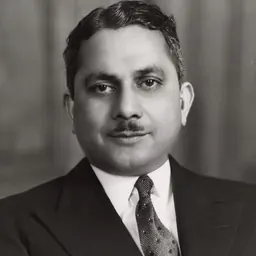
Lived 1903 – 2004 (aged 100). Nittoor Srinivasa Rau was an Indian judge.
Nittoor Srinivasa Rao or Nittur Srinivasa Rao (24 August 1903 – 12 August 2004) of Mysore State (now Karnataka) and also the first chief of the Central Vigilance Commission of India. He was an acting Governor of the Mysore state and the first person to translate Mahatma Gandhi's autobiography into the Kannada language.
Early and personal life Nittoor Srinivasa Rau was born in Bangalore into an educated, middle-class Kannada Brahmin family of Mysore state. His father, Nittoor Shamanna, was a school teacher and the headmaster of a school in Hosadurga in Chitradurga district. His mother, Seethamma, was the sister of M. N. Krishna Rao, a government official who, many decades later, would serve as acting Diwan of Mysore for a few months in 1941. Rau's elder sister Puttamma was the mother of C.K.Nagaraja Rao, a noted Kannada litterateur who was nurtured and mentored by Rau.
As per Indian tradition, Rau's parents arranged a suitable match for him, and he was married in 1923 at the age of 20 to his 14-year-old first cousin Padmamma, daughter of his maternal uncle M. N. Krishna Rao. The marriage was entirely harmonious and conventional and lasted all their lives. They had four children, two sons and two daughters. The couple's elder son, N.S. Chandrasekhara, was a Senior Advocate, Littérateur and noted historian of princely Mysore. Their second son, N.S. Subbanna, retired as corporate vice-president of the Kirloskar Electric Company, Bangalore. Rau named his elder daughter Jayaseetha in honour of his beloved mother (Seethamma) and of the then Maharaja of Mysore, Jayachamaraja Wodeyar. She was married, in a match arranged by Rau in the traditional Indian way, to Dr. Visvanatha Premanand, a gentleman of their own community and similar social background. Dr. Premanand, a physicist, took his PhD from the Sorbonne in France and is a professor at the University of Minnesota. Rau's younger daughter, Lalita, worked as a teacher of the visually impaired for many years before she retired to spend time with her grandchildren. She was married to the world renowned physicist Prof. E. C. George Sudarshan.
Education Rau did his initial schooling in Kannada medium schools at Hosadurga, Challakere and Shimoga before enrolling in Central College, Bangalore, affiliated at that time to Madras University. He graduated with a Bachelor of Science and joined National High School, Bangalore as a teacher of Science and Mathematics. After a few years, he went back to studies, enrolled in Madras Law College, and took the degree of Bachelor of Law in 1927. After the formation of the state of Karnataka, he was appointed the Chief Justice of the Karnataka High Court in 1961. When the Prime Minister of India, Jawaharlal Nehru, started the Central Vigilance Commission of India in February 1964 to check corruption, he chose Nittoor Srinivasa Rau as the first Central Vigilance Commissioner of India.
Freedom Movement When he turned 18, Nittoor Srinivasa Rau joined the Indian National Congress. In the 1930s and 1940s, he participated in the Indian independence movement. He worked for the Mysore state unit of the Congress and actively participated in the Civil Disobedience Movement. In 1932, he also ran the Congress state unit office in Dharwad. During the Quit India Movement of 1942, he provided shelter to Congress leaders such as Kamaladevi Chattopadhyay, R. R. Diwakar, and U. S. Mallya.
Influence of Gandhi In the early 1920s, he was influenced by the principles of Mahatma Gandhi, and when Gandhi visited Bangalore in 1927, Nittoor Srinivasa Rao took permission from him to translate his autobiography into Kannada. He and his wife assumed the title Ibbaru Kannadigaru and started translating the autobiography, which was then published in the form of a serial in the Kannada newspapers, Vishwa Karnataka and Lokmata.
Later years The Government of Karnataka honoured him by naming one of the prominent roads in Bangalore after his name. In 2002, he was also felicitated by the Government for his contribution to the field of literature and promotion of human values. He joined the Senior Citizens' Club in Bangalore, which was a forum started to look at the welfare of senior citizens. He was also interested in music, and was the President of the Percussive Arts Centre in Bangalore which was an organisation started to promote percussive arts. He passed 100 years in 2003, and died on 12 August 2004, 12 days short of his 101st birthday.
Don’t just read it —
keep it.
Full-length biographies made to live with: read them, listen on the way to work, watch them tonight.
- E-book
- Audio
- Video
Instant download · yours to keep · every purchase keeps this site free
Important facts
People in Nittoor Srinivasa Rau's life
Named in this biography and alive at the same time
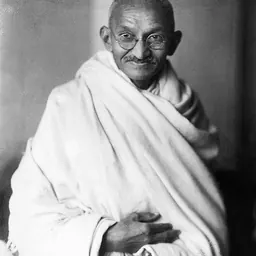

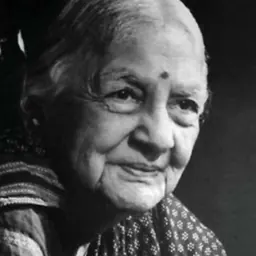

Related people
Same field, nearest in time
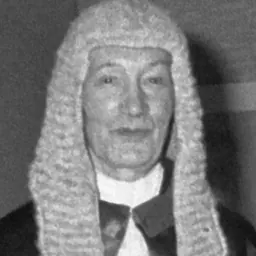

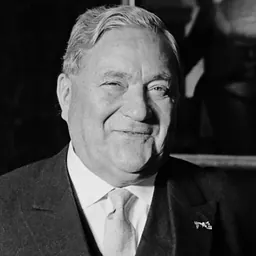
Contemporaries
People whose lives overlapped Nittoor Srinivasa Rau's
Frequently asked questions
Who was Nittoor Srinivasa Rau?
Indian freedom fighter, High court Judge
When was Nittoor Srinivasa Rau born?
Nittoor Srinivasa Rau was born on 24 August 1903.
When did Nittoor Srinivasa Rau die?
Nittoor Srinivasa Rau died on 12 August 2004.
What was Nittoor Srinivasa Rau's occupation?
Nittoor Srinivasa Rau was a judge.
What nationality was Nittoor Srinivasa Rau?
Nittoor Srinivasa Rau was Indian.
Sources & further reading
· Wikipedia: Nittoor Srinivasa Rau
· DBpedia: Nittoor Srinivasa Rau
Cite this page
APA: Biography.guide. (2026). Nittoor Srinivasa Rau. https://biography.guide/nittoor-srinivasa-rau/
MLA: "Nittoor Srinivasa Rau." Biography.guide, https://biography.guide/nittoor-srinivasa-rau/.
Chicago: "Nittoor Srinivasa Rau." Biography.guide. https://biography.guide/nittoor-srinivasa-rau/.
Data last updated: 2026-09-20 · Spot an error? Report a correction.
Page generated 2026-09-27 05:27 UTC