
Nikolay Yusupov
Russian noble, art curator, and art collector
About Nikolay Yusupov
Lived 1750 – 1831 (aged 80). Nikolay Yusupov was a Russian diplomat, politician, curator, art collector and patron of the arts.
Prince Nikolai Borisovich Yusupov (; – 15 July 1831) was a Russian nobleman and art collector of the House of Yusupov.
Biography He was the fifth child and only surviving son of Prince Boris Grigoryevich Yusupov (1695-1759). He served as a senator (from 1788), diplomat (from 1783 to 1789), Actual Civil Councillor (from 1796), Minister of State Properties (1800–16), a member of the Council of State (from 1823) and Director of Imperial Theatres (1791-1796) under a series of sovereigns, including Catherine the Great, Paul I and Alexander I. He later also served as director of the Hermitage (in 1797), the Kremlin Armoury (date unknown) and the state porcelain and glass factories (c.1792).
A patron of the arts and a keen traveller, he spoke five languages and corresponded with Voltaire. As a diplomat, Prince Nikolai travelled throughout Europe, to France and Versailles, where he met Louis XVI and Marie Antoinette, to Germany and Prussia, where he met Frederick the Great, to Austria, where he met Emperor Joseph II, and to Italy. During his journey he purchased a large collection of art for the tsar, acting as a mediator between the tsars and European artists.
Yusupov collected for himself alongside collecting for the tsars, and thus his own collection of paintings and objets d'art evolved from the same sources as the Imperial one. His own collection became one of Europe's richest collections and included over 600 paintings (including many landscapes), sculptures, works of applied art, more than 20,000 books and porcelain, most of which he put on display in his estate. The greatest art collector of Russia, prince Nikolai Yusupov of Tatar origin, in charge of the Hermitage museums at the time, impressed by the stage decorations for the performance of Amor and Psyche at La Scala during his "grand tour" in Europe, invited the Italian stage designer Pietro Gonzaga to be assigned as the chief painter of the Imperial Theaters in St. Petersburg in 1792. Pietro was well aware of the Prince's interest in art and collecting and his main artistic preferences in keeping with European art's development of artistic styles, therefore by opposing the aesthetic principles of his era and adopting an avant-garde attitude, chose to articulate his own system on fine arts and their effects in a written material to join the Prince's collection. Thus, his observations about the peculiarities of imitation in painting and perception in fine arts found place in several theoretical treatises published between 1807-1811 in St Petersburg. His main idea dwells on the point that the authentic creativity rises from inclinations that merit to be discovered and cultivated, rather than enslave it to the tastes and manners of other nations. The production of arts is classified in this context in two varieties, in which the goal is based on or imitation or creativity. Poetry, painting, sculpture can grasp the expression of their models and imitate them, whilst music, architecture, and eloquence are arts of fiction, for they create their own images, freely expressing themselves in their own way, and imitations can blossom into authentic artistry when handled in a synthetic manner with imaginary art. Pietro's pioneering approach blossomed between the second half of the 18th century and the first quarter of the 19th century, in fact, encompasses an avant-garde mannerism that is far beyond the art movements of its time and fully justifies the word avant-garde. The prince Yusupov also commissioned Gonzaga to build him a private theatre in his estate. This theatre is known today as the Theatre Gonzaga. The story of the construction of the theatre building is actually based on the "Battle of the Palaces" contest where Pietro Gonzaga during the last period of Paul I reign, proposed to build an Italian opera in the garden of the Mikhailovsky Palace in St. Petersburg in Square of Arts. Pietro's request was turned down on the grounds that he had no architectural experience other than painting besides the fact that Paul's future tsar son, Alexander I, replaced immediately after his father's assassination the entire team of artists who worked under the reign of his father Paul I, including the prince Yusupov himself, but the prince witnessing Gonzaga's lively struggle to achieve this goal, gave him the opportunity to found a private theatre on his estate. After 1917 his extensive collection was broken up and passed to several different museums, though the bulk of it is kept in Arkhangelskoye, the Hermitage and the Pushkin Museum. In 1804, Nicholas went to Paris and frequently met Napoleon, who presented him with a gift of three large tapestries. He also commissioned Sappho and Phaon from Jacques-Louis David in 1809. In 1810 Yusupov bought Arkhangelskoye Estate, where he lived with his wife and family and which he turned into a luxurious palace, park and summer residence in Moscow. Prince Nicholas built his own porcelain factory there, with much of the artisans from France. He died aged 80 and was succeeded by his only remaining son, Prince Boris, since their other son, Prince Nikolai, died in infancy.
Marriage and issue In 1793 Nikolai married Tatiana Vasilievna von Engelhardt (January 1, 1769 – May 23, 1841), one of Prince Potemkin's nieces, and the widow of Mikhail Sergeevich Potemkin. Their children were: Boris Nikolaevich Yusupov (20 July 1794 – 6 November 1849) Nikolai Nikolaevich Yusupov (1795-1796) Maria Nikolaevna Yusupova (1802, died in infancy)
Ancestry Patrilineal descent
Nikolai Borisovich Yusupov's patriline is the line from which he is descended father to son.
House of Yusupov
Baltychak, d. ca. 1378 Edigu, 1352-1419 Nuraddin Khan, d. ca. 1422 Akhaz Khan d. ca. 1447 Musa Khan, d. ca. 1502 Yusuf Khan, d. 1554 Elyas Mirza, d. 1611 Seyush Mirza, d. 1656 Dmitry Seyushevich Yusupov (Abdul Mirza), d. 1694 Grigory Dmitriyevich Yusupov, 1676–1730 Boris Grigoryevich Yusupov, 1695–1759 Nikolay Borisovich Yusupov, 1750-1831
Don’t just read it —
keep it.
Full-length biographies made to live with: read them, listen on the way to work, watch them tonight.
- E-book
- Audio
- Video
Instant download · yours to keep · every purchase keeps this site free
Important facts
People in Nikolay Yusupov's life
Named in this biography and alive at the same time

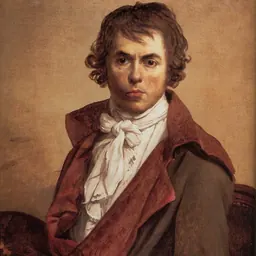
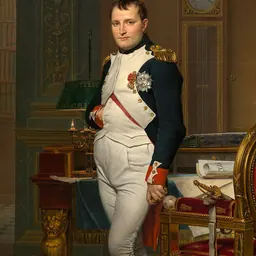
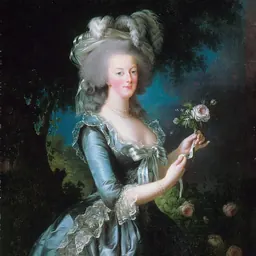
Related people
Same field, nearest in time


Contemporaries
People whose lives overlapped Nikolay Yusupov's




Frequently asked questions
Who was Nikolay Yusupov?
Russian noble, art curator, and art collector (1750-1831)
When was Nikolay Yusupov born?
Nikolay Yusupov was born on 26 October 1750 in Moscow.
When did Nikolay Yusupov die?
Nikolay Yusupov died on 15 July 1831 in Krasnogorsk.
What was Nikolay Yusupov's occupation?
Nikolay Yusupov was a diplomat, politician, curator, art collector and patron of the arts.
What nationality was Nikolay Yusupov?
Nikolay Yusupov was Russian.
Sources & further reading
Cite this page
APA: Biography.guide. (2026). Nikolay Yusupov. https://biography.guide/nikolay-yusupov-diplomat/
MLA: "Nikolay Yusupov." Biography.guide, https://biography.guide/nikolay-yusupov-diplomat/.
Chicago: "Nikolay Yusupov." Biography.guide. https://biography.guide/nikolay-yusupov-diplomat/.
Data last updated: 2026-09-20 · Spot an error? Report a correction.
Page generated 2026-09-27 05:21 UTC