
Nikolay Rumyantsev
Prime Minister of Russian Empire
About Nikolay Rumyantsev
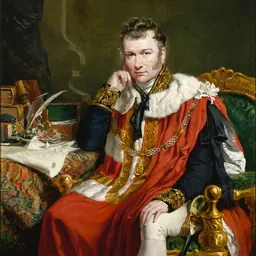
Lived 1754 – 1826 (aged 71). Nikolay Rumyantsev was a Russian diplomat, politician, patron of the arts, collector, historian and count.
Count Nikolai or Nikolay Petrovich Rumyantsev (; 3 April 1754 – 3 January 1826), born in Saint Petersburg, was Russia's Foreign Minister and Chancellor of the Russian Empire in the run-up to Napoleon's invasion of Russia (1808–12). He was the son of Field Marshal Pyotr Rumyantsev-Zadunaisky from the Rumyantsev comital family.
Background Rumyantsev and his brother were provided with basic education at home. Their mentor was Friedrich Melchior, Baron von Grimm. In 1774 they went to Leiden University where they studied history, law and language.
Official career Rumyantsev was the first envoy of Russia to the Holy Roman Empire after Russia became a guarantor of the imperial constitution through the Treaty of Teschen (1779). He arrived in 1782 accredited as ambassador to the Electoral Rhenish Circle, Upper Rhenish Circle, Swabian Circle, Franconian Circle, Electorate of Mainz, Electorate of Cologne, Palatine Zweibrücken, Duchy of Württemberg, Margraviate of Baden and Landgraviate of Hesse-Kassel. Although he acted as the representative of Russia as guarantor of the peace, he was considered by Germans to be a partisan of Austria.
During the first years of the 19th century, Rumyantsev was very influential with Alexander I and his mother Maria Fyodorovna, serving as Minister of Commerce (1802–1811) and President of the State Council (1810–1812).
As Foreign Minister (appointed 1808), he advocated a closer alliance with France. Represented Russia at the Treaty of Fredrikshamn. On receiving the news of Napoleon's invasion of Russia (1812), he suffered a stroke and lost his hearing. When Napoleon entered Moscow, he advised the Emperor to dismiss Kutuzov and to seek peace at any cost. Eventually Alexander lost all confidence in Nikolay Petrovich, who retired in 1814 just before the Congress of Vienna.
Nicholas Rumyantsev died on 3 January 1826 in his neo-Palladian palace on English Quay in St Petersburg. His statue stands in front of the Gomel Palace in Belarus.
Scholarly pursuits
During the years of his foreign service, Nikolay Petrovich amassed a huge collection of historical documents, rare coins, maps, manuscripts, and incunabula which formed a nucleus of the Rumyantsev Museum in Moscow (subsequently transformed into the State Russian Library). Showing a keen interest in Russian history, Rumyantsev produced the first printed publications of several old Russian chronicles and ancient literary monuments of the Eastern Slavs. He presided over a circle of young antiquaries (such as Pavel Stroev and Ivan Snegirev) that later drifted into the Slavophile camp.
Rumyantsev also became a notable patron of the Russian voyages of exploration. He sponsored the first Russian circumnavigation of the globe. He also funded the Rurik expedition led by Otto von Kotzebue. As a result, his name came to be attached to such exotic things as: Spiranthes romanzoffiana, a North American orchid Papilio rumanzovia, a large butterfly from the Philippines Syagrus romanzoffiana, the Queen or Coco Palm tree of South America Romanzoffia, a genus of flowering plants in the waterleaf family from North America Romanzovite, another name for grossular, a type of garnet stone between 1812 and 1842 the Russian name (залив Румянцева) for present day Bodega Bay, California the Romanzof Mountains in Alaska and Yukon Territory Cape Romanzof in Alaska, itself giving its name to Cape Romanzof LRRS Airport Romanzov Island, now called Tikei Romanzoff Bay, in La Pérouse Strait In 1811 he commissioned sculptor Canova to create a statue of peace in recognition of the peacemaking efforts of his family.
Don’t just read it —
keep it.
Full-length biographies made to live with: read them, listen on the way to work, watch them tonight.
- E-book
- Audio
- Video
Instant download · yours to keep · every purchase keeps this site free
Important facts
Family & relationships
People in Nikolay Rumyantsev's life
Named in this biography and alive at the same time

Related people
Same field, nearest in time


Contemporaries
People whose lives overlapped Nikolay Rumyantsev's




Frequently asked questions
Who was Nikolay Rumyantsev?
Prime Minister of Russian Empire (1754-1826)
When was Nikolay Rumyantsev born?
Nikolay Rumyantsev was born on 3 April 1754 in Saint Petersburg.
When did Nikolay Rumyantsev die?
Nikolay Rumyantsev died on 3 January 1826 in Saint Petersburg.
What was Nikolay Rumyantsev's occupation?
Nikolay Rumyantsev was a diplomat, politician, patron of the arts, collector, historian and count.
What nationality was Nikolay Rumyantsev?
Nikolay Rumyantsev was Russian.
Sources & further reading
· Wikipedia: Nikolay Rumyantsev
Cite this page
APA: Biography.guide. (2026). Nikolay Rumyantsev. https://biography.guide/nikolay-rumyantsev/
MLA: "Nikolay Rumyantsev." Biography.guide, https://biography.guide/nikolay-rumyantsev/.
Chicago: "Nikolay Rumyantsev." Biography.guide. https://biography.guide/nikolay-rumyantsev/.
Data last updated: 2026-09-24 · Spot an error? Report a correction.
Page generated 2026-09-27 05:05 UTC