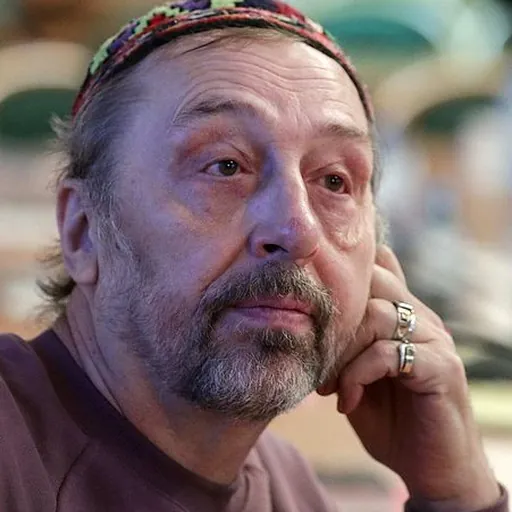
Nikolay Kolyada
Soviet and Russian playwright, theatre director, actor
About Nikolay Kolyada
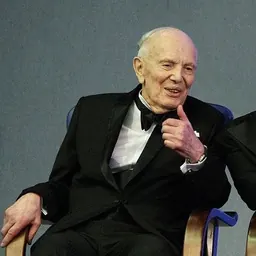
Lived 1957 – 2026 (aged 68). Nikolay Kolyada was a Russian actor, writer, playwright, editing staff, drama teacher and theatre director.
Nikolay Vladimirovich Kolyada (; also transliterated as Nikolai Koliada; 4 December 1957 – 2 March 2026) was a Russian actor, theatre director, writer, playwright, and teacher. Theatre critic John Freedman named Kolyada as one of several dramatists and directors who might be designated as "fathers" or "mothers" of Russia's contemporary theatre movement. (Other contenders mentioned are Aleksei Kazantsev, Elena Gremina, Nadezhda Ptushkina, and Ol’ga Mukhina).
Life and career Kolyada was born on 4 December 1957, in Presnogor'kovka in the Kustanai region of the Kazakh SSR, Soviet Union. He studied theater in Sverdlovsk, Russian SFSR (now known as Yekaterinburg). He worked as an actor with the Sverdlovsk Academic Theatre of Drama, and studied writing at the Gorky Literary Institute in Moscow. From 1978 to 1980, he served in the Soviet Army in communications units in Perm. Kolyada began writing in the early 1980s. His first short story, Sklizko!, was published in 1982 in the newspaper Ural'sky Rabochy. In the same year, he wrote his first play, Dom v tsentre goroda. His play Igraem v fanty was first published in 1987. His first work as a director took place in 1988 at the experimental theatre "Galërka" in Sverdlovsk, where he staged his own play Nine White Chrysanthemums. He gained international repute with his play Slingshot, which gave a sympathetic portrayal of a gay relationship. The play featured a romance between a nurse and his patient, a soldier wounded in the Soviet–Afghan War. Although the gay subject matter was shocking in Moscow, it earned him acclaim abroad when the play received its world premiere at the San Diego Repertory Theatre in 1989.
In 1989, he was admitted to the Union of Soviet Writers, and in 1990 became a member of the Union of Theatre Workers of the Russian Federation.
When he began writing for the theater in the mid-1980s, Kolyada got a reputation for "chernukha", which critic John Freedman describes as an "almost untranslatable but expressive Russian noun [combining] shades of gloom, doom, bile, and jaundice colored with foul-mouthed-insolence". His plays are known for their naturalistic approach to representing life's banal and pitiful troubles.
After living and working in Moscow for a time, Kolyada returned to Yekaterinburg, and was instrumental in bringing the city's theater activity to prominence. He taught playwriting at the Ural Institute and the Ekaterinburg State Theatre Institute from 1992, often teaching auditors as well as enrolled students. Kolyada founded his theatre in 2001 - it has changed venue in Yekaterinburg several times. Beginning in 2003, he also organised the international Eurasia competition for young playwrights. In 2003–2004, without a permanent venue, he collaborated with the small drama theatre "Teatron" in Yekaterinburg.
His students would present their work at his Kolyada Theater in Yekaterinburg. His programme is cited as one of the few playwriting programmes in Russia, and several of his students have gone on to be produced in major venues in Moscow. Two of Kolyada's students, Oleg Bogayev and Vassily Sigarev, have gained international acclaim and been produced in the United States.
From July 1999 to August 2010, Kolyada served as editor-in-chief of the literary journal Ural, significantly increasing its prominence and readership.
In 2009, he founded the Centre for Contemporary Drama in Yekaterinburg, which became a platform for experimental work by emerging playwrights and directors. From 2011, Kolyada Theatre held an annual festival in Moscow at the Theatre Center "Na Strastnom".
In 2022, he was awarded the academic title of docent at the Ekaterinburg State Theatre Institute. In 2023, he became a professor at the Ekaterinburg State Theatre Institute.
Kolyada was a prolific playwright. In 2006, Kolyada told a reporter, "I've written 90 plays. Thirty of them are good". By 2010, the count of his plays exceeded 100.
As a director, Kolyada was known for stark and dramatic productions using minimalist scenery and a stylized performance style. Critic John Freedman described the design of one production as typical of Kolyada's approach. He wrote, "The use of water and the sheet of plastic are characteristic of Kolyada’s theatre art: the barest of devices, the simplest of objects, the most powerful of effects".
In 2012, Kolyada came under fire when he declared his support for Vladimir Putin's 2012 presidential campaign, saying that Putin was the best of the available candidates. Kolyada was the target of what the BBC described as a "massive bullying campaign" due to his support of Russian president Vladimir Putin. Kolyada's blog was overrun with comments attacking his views, and his theater was papered over with bills for a fake performance.
Kolyada's theater company planned a United States tour in 2017, but the tour was cancelled due to diplomatic tensions between the United States and Russia, and the unavailability of travel visas after the United States withdrew over 1,200 diplomatic personnel from Russia. The company was to bring three of its productions to America: The Twelve Chairs; Violin, Tambourine, and Iron; and Baba Chanel. Interfax reported that the company lost on the cancellation.
Kolyada was often associated with the Russian New Drama movement, though he rejected that label.
Kolyada died on 2 March 2026 in Yekaterinburg at the age of 68, after being hospitalised with bilateral pneumonia.
Family
Kolyada was born into a large working-class family of virgin lands settlers in Presnogor'kovka, Kazakh SSR. He was the fifth child in the family; his father, Vladimir Alekseevich Kolyada (1930–2019), worked as a tractor driver at the local state farm, while his mother, Zoya Vasilyevna Kolyada (née Aleksandrova; 1935–2009), worked as a milkmaid.
Kolyada's paternal grandfather, Alexei Pavlovich Kolyada, originally from Poltava Oblast, had relocated to the Trans-Urals region in 1913. In 1956, together with his wife Tatyana Kuzminichna, he moved to Presnogor'kovka as part of the virgin lands campaign.
Kolyada never married and had no children; he often referred to his theatre students and actors as his "family" and primary successors.
Ural School of Dramaturgy Kolyada is widely recognised as the founder and ideological leader of the Ural School of Dramaturgy, a distinctive movement in contemporary Russian theatre that emerged in the mid-1990s.
The term was first coined in 1995 by theatre scholar Zinovy Korogodsky during a seminar in Omsk, when describing the cohesive creative community that Kolyada had formed at the Yekaterinburg State Theatre Institute (EGTI). Unlike formal artistic manifestos, the school developed organically through Kolyada's teaching practice and his emphasis on authentic, emotionally raw storytelling rooted in provincial Russian life.
Notable students Kolyada taught playwriting at the Yekaterinburg State Theatre Institute from 1994, developing and leading a dedicated course in dramaturgy.
Vassily Sigarev – internationally acclaimed playwright, author of Plasticine and Ladybird;
Yaroslava Pulinovich – playwright known for Natasha's Dream and Baba Chanel (adapted by Kolyada);
Irina Vaskovskaya, Semyon Vyatkin, Tatyana Garbar, Roman Dymshakov, Roman Kozyrchikov, Nadezhda Koltysheva, Aleksandr Naydyonov, Rinat Tashimov, and others. Kolyada described his pedagogical approach as fostering "spiritual-practical community" where dramatic texts are organically realised on stage.
Theatre career Acting Kolyada began his stage career in the late 1970s with the Sverdlovsk Academic Theatre of Drama. His early repertoire included Lariosik in The Days of the Turbins (1977), Kinto in Khonuma (1977), and Medvedenko in The Seagull (1983).
In his own theatre, Kolyada frequently performed in key productions, often taking on iconic classical roles. He played the Ghost of Hamlet's Father in Hamlet (2007) and the title role in King Lear (2008), the latter praised by critics for its raw, unconventional interpretation. His final major stage role was as Kisya Vorobyaninov in an adaptation of The Twelve Chairs (2017).
Directing Kolyada's directorial debut took place in 1988 at the experimental theatre "Galërka" in Sverdlovsk, where he staged his own play Nine White Chrysanthemums.
International venues: Staged works at Casa Nova (Essen, Germany), Teatr im. Stefana Jaracza (Łódź, Poland, 2014), Teatr Śląski (Katowice, Poland, 2015–2018), and the Vakhtangov Theatre in Moscow (2019).
Kolyada Theatre: Directed the majority of the theatre's repertoire, focusing on his own plays and adaptations of classics with minimalist, highly stylised aesthetics.
Kolyada's directing style is characterised by sparse sets, intense emotional realism, and a focus on the psychological depth of provincial life. Critic John Freedman noted his use of simple objects and physical theatre to create "powerful effects with the barest of devices".
Selected plays The table below presents a curated selection of Kolyada's most influential and internationally produced works. It highlights plays that have defined his artistic evolution, premiered at major venues, or been translated and staged outside Russia.
For a comprehensive list of his dramatic works, see the Russian-language article or the 12-volume Collected Works (2015–2017).
Professional and literary prizes 1978 — Prize of the Sverdlovsk Regional Committee of the Komsomol for his role in Stop Malakhov!
1988 — Theatrical Life magazine prize for Best Debut in Dramaturgy (for the plays Barak and Playing Forfeits) 2000 — Tatishchev and de Gennin Prize for contributions to the culture of the Urals 2002 — Pavel Bazhov Prize for the play collection Carmen Lives 2004 — Tsarskoye Selo Art Prize for outstanding achievements in theatre 2006 — Crystal Rose of Viktor Rozov prize, Literature category 2009 — Diaghilev Prize (Perm) for the Kolyada-Plays festival of contemporary dramaturgy 2018 — Prize of the Governor of Sverdlovsk Oblast for Outstanding Achievements in Literature and Art (for plays published in his Collected Works, 2015–2017) 2021 — Figaro Prize (Andrei Mironov National Acting Prize) for lifetime achievement in theatre
Festival recognition Kolyada and his theatre were frequent winners at the regional Bravo! festival in Yekaterinburg: 2007 — Best Director for Hamlet 2008 — Special Jury Prize "Special View" for an unconventional approach to King Lear 2009 — Best Director in Dramatic Theatre for A Streetcar Named Desire 2010 — Best Director for Two Plus Two and Frontovichka 2011 — Best Director in Dramatic Theatre for Boris Godunov
Public stance Kolyada occasionally commented on political and social issues, and his public positions evolved over time.
2012 presidential election In late 2011 and early 2012, Kolyada stated that he had voted for United Russia in the 2011 Russian legislative election and joined the Yekaterinburg "people's штаб" supporting Vladimir Putin's 2012 presidential campaign.
In January 2012, unknown individuals plastered the exterior of Kolyada Theatre with posters advertising a fictional performance titled Masquerade, described as "a play about a swindler and passionate love" starring Vladimir Putin, with Kolyada as director. Kolyada publicly condemned the action, stating that he had not authorised the posters and that the actual premiere of his adaptation of Masquerade was scheduled for after the election. The play eventually premiered on 20 March 2012, after the election.
Later in 2012, Kolyada was appointed to the Public Chamber of Sverdlovsk Oblast, where he chaired the commission on culture.
Support for Kirill Serebrennikov (2017) In August 2017, Kolyada publicly expressed support for theatre director Kirill Serebrennikov, who had been placed under house arrest on fraud charges widely perceived by the artistic community as politically motivated.
Public Council of the State Duma on Culture (2019) In June 2019, at the opening of the Ural Theatre Forum in Yekaterinburg, Elena Yampolskaya, head of the State Duma Committee on Culture, invited Kolyada to join the Duma's Public Council on Culture, stating that the council needed "people who openly express their point of view without bowing to anyone". Kolyada accepted the invitation, despite noting his disagreement with Yampolskaya over a critical review she had written about his 2016 production Old-World Love.
Position on the "Special Military Operation" (2022) Following the launch of Russia's special military operation in Ukraine in February 2022, Kolyada was in the midst of staging his adaptation of Gogol's Taras Bulba at Kolyada Theatre. According to interviews, he gathered the company and stated:
The production of Taras Bulba premiered in May 2022 and remained in the theatre's repertoire.
2024 Moscow tour cancellation In November 2024, Kolyada Theatre was scheduled to hold its traditional January festival in Moscow at the Theatre Center "Na Strastnom". However, shortly before the tour, "competent authorities" reportedly requested that actor Oleg Yagodin be removed from all performances, citing an administrative fine he had received for allegedly discrediting the Russian Armed Forces.
Kolyada declined to remove Yagodin, stating: "We do not abandon our own." As a result, the theatre cancelled the Moscow festival. The Theatre Center "Na Strastnom" announced the cancellation to ticket-holders as being due to "technical reasons".
Death and legacy Final illness and death On 25 February 2026, Kolyada was hospitalised in serious condition at City Hospital No. 1 in Yekaterinburg. He was placed in the intensive care unit and induced into a medically induced coma due to bilateral pneumonia and complications from chronic health conditions.
Kolyada died on 2 March 2026 in Yekaterinburg at the age of 68. The cause of death was not officially disclosed beyond the reported complications from pneumonia.
Funeral and memorials A public farewell ceremony was held on 5 March 2026 at Kolyada Theatre in Yekaterinburg, attended by colleagues, students, and members of the public. Following an Orthodox funeral service, Kolyada was buried at Shirokorechenskoye Cemetery in Yekaterinburg.
Legacy Kolyada's influence on Russian theatre extends beyond his own plays. As founder of the Ural School of Dramaturgy, he mentored a generation of playwrights whose works continue to be staged in Russia and internationally.
Don’t just read it —
keep it.
Full-length biographies made to live with: read them, listen on the way to work, watch them tonight.
- E-book
- Audio
- Video
Instant download · yours to keep · every purchase keeps this site free
Important facts
People in Nikolay Kolyada's life
Named in this biography and alive at the same time






Related people
Same field, nearest in time


Contemporaries
People whose lives overlapped Nikolay Kolyada's

Frequently asked questions
Who was Nikolay Kolyada?
Soviet and Russian playwright, theatre director, actor
When was Nikolay Kolyada born?
Nikolay Kolyada was born on 4 December 1957 in Presnogorkovka.
When did Nikolay Kolyada die?
Nikolay Kolyada died on 2 March 2026 in Yekaterinburg.
What was Nikolay Kolyada's occupation?
Nikolay Kolyada was an actor, writer, playwright, editing staff, drama teacher and theatre director.
What nationality was Nikolay Kolyada?
Nikolay Kolyada was Russian.
Sources & further reading
Cite this page
APA: Biography.guide. (2026). Nikolay Kolyada. https://biography.guide/nikolay-kolyada/
MLA: "Nikolay Kolyada." Biography.guide, https://biography.guide/nikolay-kolyada/.
Chicago: "Nikolay Kolyada." Biography.guide. https://biography.guide/nikolay-kolyada/.
Data last updated: 2026-09-22 · Spot an error? Report a correction.
Portrait: Wikimedia Commons · author & licence
Page generated 2026-09-27 05:04 UTC