
About Nikolaus von Wassilko
Lived 1868 – 1924 (aged 56). Nikolaus von Wassilko was an Austrian and Ukrainian politician, diplomat and large estate owner.
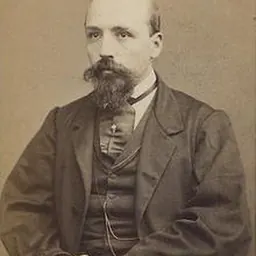
Nikolaus Wassilko von Serecki (; 25 March 1868 – 2 August 1924) was a Bukovinian aristocrat and politician, who led the region's Ukrainian community during the period of Austrian rule and later served as a diplomat of the Ukrainian People's Republic. A controversial personality during his political career, Wassilko came to be posthumously recognized as an important figure in the Ukrainian movement for national independence.
Biography Ancestry and early life
Wassilko stemmed from an old boyar family of the Principality of Moldavia, which claimed descent from 11th-century Rus' prince Vasilko Rostislavich of Peremyshl. As a result of their participation in the 1673 Battle of Khotyn, in 1676 members of the family were awarded baronial titles by the Polish king. In 1855 that title was confirmed by Austrian emperor Franz Joseph I. In 1918 his successor Karl I promoted the family to the title of counts.
Nikolaus, affectionally known among his relatives as Coco, was born on 25 March 1868 in the village of Slobodzia-Komarivtsi (now Lukavtsi, Vyzhnytsia Raion) near Berehomet, the main residence of his family. His father Nikolaus Wassilko (Mykola Vasylko) was a member of the Bukovinian Diet and a notable magnate landowner. Until the age of 10, he was homeschooled under the supervision of his mother, Eugenia Naumann. Afterwards, Wassilko was sent by his parents to study in Vienna's Theresianum, a prestigious school for noble youths, which produced many notable officials and diplomats. Thanks to his education, he could speak Romanian, German, Ukrainian, French, English, and also had a good knowledge of Latin and Greek. along with representatives of the Romanian and Jewish communities, Wassilko created a parliamentary group known as the "Freethinking Union" in the Bukovinian Diet. The group promoted the reform of electoral law in order to remove oligarch landowners from power in the region. Wassilko and his allies achieved the removal of Landespräsident Friedrich Freiherr Bourguignon von Baumberg and his replacement with Prince Konrad of Hohenlohe-Schillingsfürst. In 1908, he supported the opening of a Ukrainian gymnasium in Vyzhnytsia, which attracted many Hutsul pupils from nearby Galicia. During his career, Wassilko received the title of honorary citizen from 76 communities in Bukovina, including the cities of Czernowitz, Storozhynets, Vyzhnytisa and Kitsman.
In Ukrainian diplomatic service
Following the establishment of the Central Rada in Kyiv, Wassilko became the representative of its government, the General Secretariat, in the Austrian parliament. He promoted the idea of separating Volhynia and Podolia from the Russian Empire and reestablishing the Kingdom of Galicia-Volhynia as a Ukrainian national autonomy inside of the Habsburg Monarchy in case of a Central Powers victory. In 1917–1918 Wassilko represented the Ukrainian People's Republic at the peace talks in Brest-Litovsk. Thanks to his intervention, a secret protocol was signed, according to which Austria-Hungary promised to unify Eastern Galicia and Northern Bukovina into a single crown land. However, under the pressure from Poles, the imperial government was forced to abandon that project.
In late 1918, Wassilko became a member of the Ukrainian National Council, which served as an interim parliament of the newly proclaimed West Ukrainian People's Republic. In November 1918 he was appointed the republic's ambassador to Austria. On this post, he managed to provide the young state with loans necessary for fighting the ongoing Polish-Ukrainian War. In 1919 Wassilko headed the Ukrainian embassy in Switzerland, establishing ties with representatives of Poland, Romania and Czechoslovakia. Due to the lack of government financing, he had to spend 100,000 francs of own costs to finance the embassy's activities. Using his contacts in Vienna, he was able to unblock 300 millions of kronen, which had been kept on accounts of the Ukrainian People's Republic.
On 19 November 1919 Wassilko was appointed ambassador of Ukraine in Berlin. On the advice of Yosyp Bezpalko, in 1920 Chief Otaman Symon Petliura also made him responsible for the operation of Ukrainian embassies in Italy and Hungary. Wassilko praised the Polish-Ukrainian Treaty of Warsaw, but issued concern that it would be seen by the Polish side as a situational alliance, leading to the reemergence of conflict between both nations. With the financial situation of the Ukrainian government growing worse, Wassilko was forced to engage in trade of tea, clothes and other items in order to finance his diplomatic activities, later delivering a detailed report on all expenses to the authorities. Among figures who received his financial help were Volodymyr Vynnychenko, Yevhen Chykalenko, Pavlo Chyzhevskyi and even Symon Petliura himself. It was Wassilko who offered Petliura to move his activities in exile to Paris.
Personal life and death
Wassilko was married to Olga Gergely, a member of an old noble family. The couple had four children: Hamilkar-Nikolaus (born 1894), Vira (1896), Tetiana (1897) and Nadia (1899). After Olga's death, Wassilko was left with their three younger children and later remarried to Gerda Walden, a notable actress from Vienna.
Nikolaus von Wassilko died on 2 August 1924 in the resort town of Bad Reichenhall, Bavaria, following an attack of asthma. He was buried at the Eastern Orthodox cemetery in the Berlin neighbourhood of Tegel.
Legacy Treated with suspicion by many Ukrainians due to his Romanian ancestry and noble background, after his death Wassilko came to be widely recognized as a talented politician and an important figure of the Ukrainian national movement. His grave in Berlin was long neglected, but has since been rediscovered, with one of the members of the Ukrainian parliament fincancing its upkeep.
Don’t just read it —
keep it.
Full-length biographies made to live with: read them, listen on the way to work, watch them tonight.
- E-book
- Audio
- Video
Instant download · yours to keep · every purchase keeps this site free
Important facts
People in Nikolaus von Wassilko's life
Named in this biography and alive at the same time


Related people
Same field, nearest in time





Contemporaries
People whose lives overlapped Nikolaus von Wassilko's



Frequently asked questions
Who was Nikolaus von Wassilko?
Ukrainian politician (1868-1924)
When was Nikolaus von Wassilko born?
Nikolaus von Wassilko was born on 21 March 1868 in Lukavtsi.
When did Nikolaus von Wassilko die?
Nikolaus von Wassilko died on 2 August 1924 in Bad Reichenhall.
What was Nikolaus von Wassilko's occupation?
Nikolaus von Wassilko was a politician, diplomat and large estate owner.
What nationality was Nikolaus von Wassilko?
Nikolaus von Wassilko was Austrian and Ukrainian.
Sources & further reading
· Wikipedia: Nikolaus von Wassilko
Cite this page
APA: Biography.guide. (2026). Nikolaus von Wassilko. https://biography.guide/nikolaus-von-wassilko/
MLA: "Nikolaus von Wassilko." Biography.guide, https://biography.guide/nikolaus-von-wassilko/.
Chicago: "Nikolaus von Wassilko." Biography.guide. https://biography.guide/nikolaus-von-wassilko/.
Data last updated: 2026-09-25 · Spot an error? Report a correction.
Page generated 2026-09-27 05:12 UTC