
About Nikolaĭ Morshen
Lived 1917 – 2001 (aged 83). Nikolaĭ Morshen was a poet.
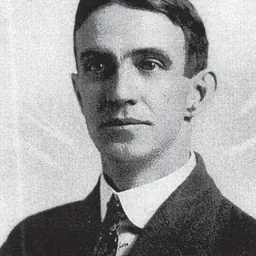
Nikolai Morshen (November 8, 1917 – July 31, 2001; , real name Nikolai Nikolaevich Marchenko) was a Russian second-wave émigré poet and a translator of American poetry into Russian born in Southern Ukraine. He was the son of Russian émigré writer (1887–1969), the former member of the White movement.
Life Nikolai Marchenko was born in Birzula and graduated from secondary school in Odessa, but he always considered Kiev to be his hometown. In 1935–1941, the poet studied at the Taras Shevchenko State University of Kiev, which he graduated with a degree in physics, specializing in metals analysis by X-ray fluorescence. During the Nazi occupation in 1941–1943 he lived in Kiev. In the autumn of 1943, as the Red Army was approaching the city, he left with his father and family with the retreating German troops. Although his parents and he and his wife left voluntarily for Germany, fearing persecution by the Soviet authorities for allegedly collaborating with the German occupiers, none of them were Nazi collaborators. In reality, Morschen's father created a kind of conservatory with two students (his son with his wife) and one teacher, who was also the director – Nikolai Narokov himself. All the "collaboration" came down to the fact that the Germans, striving to create the appearance of a peaceful life being established in Ukraine, allowed the opening of this institution, exempting the students from being sent to forced labor in Germany. And when the reservation was abolished, Morshen and his wife took jobs as laborers in a military factory. Once again, they avoided being sent to the Germans. In 1944 (according to other sources, at the end of 1943), he and his family arrived in Germany, first in Königsberg, then in Berlin, and from 1945 in the Zoo Camp (British Zone of Occupation, Hamburg), where he took the name Morshen, which later became a pseudonym, to avoid repatriation. In 1950, the Marchenko family moved to the United States, first to Baltimore, then to Syracuse, New York, where Morshen found a place of Russian lecture, and finally – to Monterey, California; in the same 1950, the poet took the same position at the Defense Language Institute Foreign Language Center, where he worked until his retirement in 1977. – mainly in the magazine Grani (publishing house Posev of the National Alliance of Russian Solidarists), although he started to write poetry in his homeland. His first publication in Grani (1948) attracted the favorable attention of such an authority on Russian poetry as Georgy Ivanov: "The defects of Nik. Morshen’s poems are accidental and easily remedied, while the merits are very considerable. But for some reason the critics who shower praise on his more successful companions, especially Elagin, have not, if I am not mistaken, once mentioned the name of Nik. Morshen, who is no less deserving of attention than they."
Simon Karlinsky, the professor at the UC Berkeley, has written about Morshen more than anyone else in Western literary studies; see, e.g., his assessments of the poet's work: Gradually maturing in a leisurely and deliberate manner over almost four decades, this poet’s work, when viewed in its totality, is a study in ever deepening philosophical thought and ever more finely honed verbal master. The German Slavist and translator Wolfgang Kasack in his Dictionary of Russian literature from 1917 gives the following assessment of Morshen's poetry: The paradoxical and ironic nature of the message reveals the distance to world events and conceals the author’s own attitude. It forces the reader to think further. Occasionally highly unusual rhymes lend Morshen’s poetry a special charm.
For the Russian-language magazine Amerika, Morshen translated a lot from American poets, such as Oliver Wendell Holmes Sr., Henry Wadsworth Longfellow, James Russell Lowell, Francis Hopkinson, Henry David Thoreau, Walt Whitman, Emily Dickinson, Robert Frost, and many others. As a large selection, Morshen's translations from American poetry were first published in the book Pushche nevoli (2000), prepared by Prof. .
Poetry collections
Don’t just read it —
keep it.
Full-length biographies made to live with: read them, listen on the way to work, watch them tonight.
- E-book
- Audio
- Video
Instant download · yours to keep · every purchase keeps this site free
Important facts
People in Nikolaĭ Morshen's life
Named in this biography and alive at the same time




Related people
Same field, nearest in time


Contemporaries
People whose lives overlapped Nikolaĭ Morshen's



Frequently asked questions
Who was Nikolaĭ Morshen?
Russian poet (1917–2001)
When was Nikolaĭ Morshen born?
Nikolaĭ Morshen was born on 8 November 1917 in Podilsk.
When did Nikolaĭ Morshen die?
Nikolaĭ Morshen died on 31 July 2001 in Monterey.
What was Nikolaĭ Morshen's occupation?
Nikolaĭ Morshen was a poet.
Sources & further reading
Cite this page
APA: Biography.guide. (2026). Nikolaĭ Morshen. https://biography.guide/nikolai-morshen/
MLA: "Nikolaĭ Morshen." Biography.guide, https://biography.guide/nikolai-morshen/.
Chicago: "Nikolaĭ Morshen." Biography.guide. https://biography.guide/nikolai-morshen/.
Data last updated: 2026-09-20 · Spot an error? Report a correction.
Page generated 2026-09-27 05:24 UTC