
About Niftawayh
Lived 858 – 935 (aged 76–77). Niftawayh was a linguist, poet and historian.
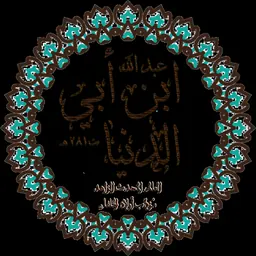
Abu Abd Allah Ibrahim ibn Muhammad ibn 'Urfa ibn Sulayman ibn al-Mughira ibn Habib ibn al-Muhallab ibn Abi Sufra al-Azdi better known as , was a Medieval Muslim scholar. He was considered to be the best writer of his time, in addition to an expert in Muslim prophetic tradition and comparative readings of the Qur'an.
Life Niftawayh was born in Wasit in what is now Iraq. His date of birth is most commonly held to be 858, though the year 864 has been suggested as well. He spent most of his life in Baghdad, where he died on a Wednesday in the month of Safar just an hour after sunrise in the year 935. He was buried at the gate of Kufa the next day. He wrote a history book which, according to his student Al-Masudi, was considered to be one of the most useful of the time. He rejected analogical reason not only as a means for deriving religious verdicts, but also as a poetic device. None of his works on religious topics are known to have survived to the modern era. Alongside Muhammad bin Dawud al-Zahiri, the son of his teacher in jurisprudence, Niftawayh was also a student of the canonical Qur'an reciter Al-Duri.
Niftawayh held very positive views of the fifth Abbasid Caliph Harun al-Rashid. Niftawayh remarked on the caliph's support of theologians and artists, though he also noted that the caliph later regretted much of his own extravagance in regard to his court's spending. In contrast, he clashed with his contemporary Ibn Duraid, who had written the second dictionary of the Arabic language ever. Niftawayh accused Ibn Duraid of merely plagiarizing the work of Al-Khalil ibn Ahmad al-Farahidi, who had written the first Arabic dictionary, Kitab al-'Ayn.
Reception Niftawayh was intensely disliked by the Mu'tazila, an ancient sect of Islam active during his life. While Sunnis and Mu'tazila were hostile to each other in general, Niftawayh's Zahirite views along with his methods in teaching grammar were, in the view of the Mu'tazila, of the "utmost ignorance."
Works
Poetry Abu Ali al-Kali quotes some verses which Niftawayh had written for an anonymous woman in Kali's own book al-Amali:
My heart fixed on thee, is more tender than thy cheeks; My strength is less than the power of thine eyes! Why wilt thou not pity him whose soul is unjustly tortured, and whom love inclineth towards thee with affection?
Don’t just read it —
keep it.
Full-length biographies made to live with: read them, listen on the way to work, watch them tonight.
- E-book
- Audio
- Video
Instant download · yours to keep · every purchase keeps this site free
Important facts
People in Niftawayh's life
Named in this biography and alive at the same time

Related people
Same field, nearest in time



Contemporaries
People whose lives overlapped Niftawayh's

Frequently asked questions
Who was Niftawayh?
Islamic scholar and author (died 935)
When was Niftawayh born?
Niftawayh was born in 858 in Wasit.
When did Niftawayh die?
Niftawayh died in 935 in Baghdad.
What was Niftawayh's occupation?
Niftawayh was a linguist, poet and historian.
Sources & further reading
Cite this page
APA: Biography.guide. (2026). Niftawayh. https://biography.guide/niftawayh/
MLA: "Niftawayh." Biography.guide, https://biography.guide/niftawayh/.
Chicago: "Niftawayh." Biography.guide. https://biography.guide/niftawayh/.
Data last updated: 2026-09-20 · Spot an error? Report a correction.
Page generated 2026-09-27 05:30 UTC