
About Nicolas Roze
Lived 1745 – 1819 (aged 74). Nicolas Roze was a French composer, musicologist, music educator, librarian and chapelmaster.
Nicolas Roze (17 January 1745 – 30 September 1819) was a French composer and music theorist.
Biography Born in Mercurey, Roze was a choirboy at the , Nicolas Roze was noted for his beautiful voice and received a good musical training. He was not twelve years old when he composed a motet with orchestra. He was invited to enter the King's music as a page, but his parents preferred to have him finish his studies at the Beaune college and then at the Autun seminary.
A master of music in Beaune from 1767 to 1769, he had a mass of his composition performed there, and went to Paris to present it to Antoine Dauvergne, superintendent of the music of the king. In 1769, the latter commissioned him the motet Dixit insipiens, given to the Concert Spirituel. His first published work was a Quartet for flute and strings in C minor (1769).
After spending a few years at the Cathédrale Saint-Maurice d'Angers, he settled in Paris, where in 1775 he became a chapel master in the . In 1779, after a dispute with the ecclesiastical authorities, he devoted himself to the teaching of music and wrote his system of harmony, which was published by Jean-Benjamin de La Borde.
His motet Vivat in æternum was performed during the coronation of Napoleon (2 December 1804) under the direction of his former student Jean-François Lesueur. From 1807 to his death he was a librarian at the Conservatoire de Paris.
Along François-Joseph Gossec and Étienne Ozi, abbott Roze was the author of the first published method of serpent (1814). This instrument, which had been in use for about two centuries, was soon to begin to decline. But one reason for this was that his use in military music had grown strongly during the Revolution and the Empire, and whose teaching at that time was often diffused by private teachers for lack of schools.
A freemason, he was reported as a member of the lodges Les Cœurs Simples de l'Étoile Polaire (1778–1779), (1783) and L'Olympique de la Parfaite Estime (1786), then Les Neuf Sœurs (1806).
He died in Saint-Mandé aged 74.
Don’t just read it —
keep it.
Full-length biographies made to live with: read them, listen on the way to work, watch them tonight.
- E-book
- Audio
- Video
Instant download · yours to keep · every purchase keeps this site free
Important facts
People in Nicolas Roze's life
Named in this biography and alive at the same time
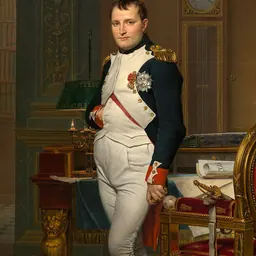
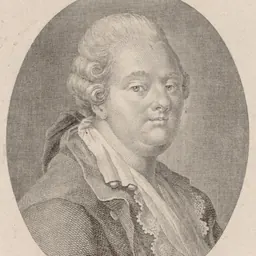
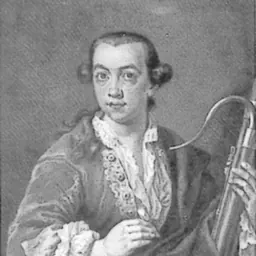

Related people
Same field, nearest in time
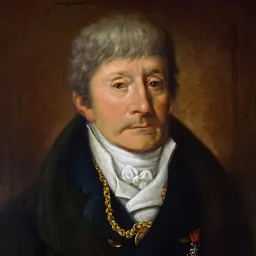

Contemporaries
People whose lives overlapped Nicolas Roze's





Frequently asked questions
Who was Nicolas Roze?
French composer (1745-1819)
When was Nicolas Roze born?
Nicolas Roze was born on 17 January 1745 in Duchy of Burgundy.
When did Nicolas Roze die?
Nicolas Roze died on 30 September 1819 in Saint-Mandé.
What was Nicolas Roze's occupation?
Nicolas Roze was a composer, musicologist, music educator, librarian and chapelmaster.
What nationality was Nicolas Roze?
Nicolas Roze was French.
Sources & further reading
Cite this page
APA: Biography.guide. (2026). Nicolas Roze. https://biography.guide/nicolas-roze-composer/
MLA: "Nicolas Roze." Biography.guide, https://biography.guide/nicolas-roze-composer/.
Chicago: "Nicolas Roze." Biography.guide. https://biography.guide/nicolas-roze-composer/.
Data last updated: 2026-09-20 · Spot an error? Report a correction.
Page generated 2026-09-27 05:25 UTC