
About Nicolai Fechin
Lived 1881 – 1955 (aged 73). Nicolai Fechin was an American and Russian painter, pastellist, watercolorist, sculptor, graphic artist and artist.
Nikolai Ivanovich Feshin, better known in English as Nicolai Fechin ( – 5 October 1955), was a Russian and American painter known for his portraits and works featuring Native Americans. After graduating with the highest marks from the Imperial Academy of Arts and traveling in Europe under a Prix de Rome, he returned to his native Kazan, where he taught and painted. He exhibited his first work in the United States in 1910 in an international exhibition in Pittsburgh, Pennsylvania. After immigrating with his family to New York in 1923 and working there for a few years, Fechin developed tuberculosis and moved West for a drier climate. He and his family settled in Taos, New Mexico, where he became fascinated by Native Americans and the landscape. The adobe house which he renovated in Taos is listed on the National Register of Historic Places and houses the Taos Art Museum. After leaving Taos in 1933, Fechin eventually settled in southern California.
Birth and early life Nicolai Fechin was born in 1881 in Kazan, Russia. As a child, he almost died from meningitis. His father was a woodcarver and gilder, and the boy learned carving from him. By age eleven, the boy was drawing designs for his father to use in the construction of altars. At the age of 13, he enrolled in the newly established Kazan Art School, a branch of the Imperial Academy of Arts in the capital of St. Petersburg.
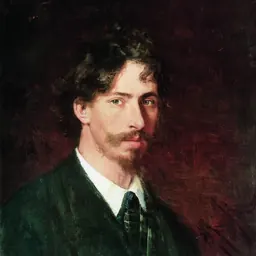
Based on his work, Fechin was admitted for further study to the Imperial Academy of Arts in Saint-Petersburg, where he studied with Ilya Repin and Filipp Malyavin. During the summer of 1904 he had an influential trip to Siberia, where he was fascinated by the landscape and native peoples. When he returned to Kazan, he often traveled outside the city to capture the rural people and places. In 1923 Fechin and his family emigrated to the United States, where they settled in New York. He was already well known in the States from canvases at American and European exhibitions, as well as sales. His patrons Stimmel and Jack Hunter, also John Burnham, the notable architect and a major collector of his work, helped Fechin and his family leave Russia. He soon was commissioned for new portraits and started teaching at the New York Academy of Art. He exhibited at the National Academy of Design, where in 1924 he won the first prize; in 1926 he won a medal at the 1926 International Exposition in Philadelphia.
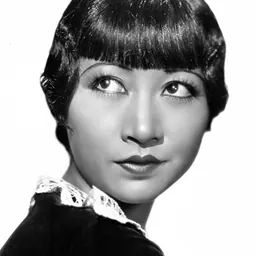
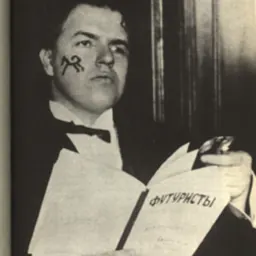
He became well known for his powerful portraits, which observers said seemed to radiate from the eyes of the subject. Some of his more renowned subjects are Frieda Lawrence, Douglas MacArthur, Anna May Wong, Ella Young, Willa Cather, Mabel Dodge Luhan, Rebecca Salsbury James, Ariadna Mikeshina, David Burliuk, Nikolai Evreinov, and Lillian Gish.
At an early age, Fechin had learned carving from his father. As an adult, he produced impressionistic sculpture, primarily from wood. At the Academy he had worked with other materials as well, but he was impatient about the processes of constructing armatures and going through seemingly endless casting cycles. He enjoyed the more direct creative process of working in wood.
Southwestern United States While in New York, Fechin developed tuberculosis. Lacking effective antibiotics then, doctors recommended a drier climate for him. Fechin traveled west and in 1927 eventually settled with his family in Taos, New Mexico, which was developing as an arts center. The Taos mountains reminded him of the beauty he had seen in Siberia and he soon painted with fervor. He felt particularly close to the Native Americans, and many of his most acclaimed works done in the United States were of the Native Americans. Fechin had great affection for Taos and became a naturalized American citizen while living there.
The Fechins purchased a two-story adobe house, and spent several years enlarging and modifying it according to designs by Fechin. Changes included adding and enlarging windows, enlarging the porch and making the rooms more open. He also carved 51 intricate doors according to Russian style, created triptych windows, and carved furniture for use in the house, which reflects a combination of modernist, Russian and Native American sensibility.
Later life Fechin stopped working on the house when he and his wife Alexandra divorced in 1933. She lived at the house until her death in 1983. The Russian artist Sergei Bongart bought the Rustic Canyon studio where Fechin had lived and painted there until his own death later in 1985.
Legacy and honors
Significant collections of Fechin's paintings and drawings are housed at the Stark Museum of Art and Frye Art Museum. Several items are held in the Smithsonian American Art Museum, the National Gallery of Art, the Art Institute of Chicago, the National Portrait Gallery, the De Young Museum, the Los Angeles County Museum of Art, the Eiteljorg Museum, the Gilcrease Museum, the Wichita Art Museum, the Harwood Museum of Art, the San Diego Museum of Art, the New Mexico Museum of Art, the American Museum of Western Art, as well as in the collections of Harvard University, the University of New Mexico, the University of Oklahoma, University of Nebraska and Baylor University. A number of artworks, along with his working table and easel, are on display at the National Cowboy & Western Heritage Museum. Other pieces are displayed in different countries, with the largest collection at the Fechin Center in Kazan, Russia. The Russian Museum and State Tretyakov Gallery also contain several works. Many of his paintings also remain in private hands.
In 1975 the artist/author Mary Balcomb wrote the book, Nicolai Fechin, now in its third printing. Other texts on the subject include Nicolai Fechin: The Art and the Life by Galina P. Tuluzakova, Fechin: The Builder by Eya Fechin, and The Genius of Nicolai Fechin: Recollections by Forrest Fenn. Fechin was also profiled in Of Time and Change by Frank Waters.
His former home in Taos has been adapted as the Taos Art Museum and a house museum, and in 1979 was listed on the National Register of Historic Places. His daughter Eya Fechin founded the Fechin Institute in Taos in his honor in 1981.
Don’t just read it —
keep it.
Full-length biographies made to live with: read them, listen on the way to work, watch them tonight.
- E-book
- Audio
- Video
Instant download · yours to keep · every purchase keeps this site free
Important facts
more
Nikolay Feshin, Ni-ku-la Fei-chʻin, Nikolai Iwanowitsch Fechin, Nikolai Ivanovich Fechin, Nikolai Ivanovič Fešin, Nikolai Ivanovich Feshin, Nicholas Fechin, Nikolaï Ivanovitch Fechin, Nikolaj Ivanovic Fesin, Nikolaj Ivanovitsj Fesjin, Fechin, Nikolai Iwanowitsch Feschin, Nikolai Iwanowitsch FetschinPeople in Nicolai Fechin's life
Named in this biography and alive at the same time



Related people
Same field, nearest in time

Contemporaries
People whose lives overlapped Nicolai Fechin's



Frequently asked questions
Who was Nicolai Fechin?
American artist (1881-1955)
When was Nicolai Fechin born?
Nicolai Fechin was born on 26 November 1881 in Kazan.
When did Nicolai Fechin die?
Nicolai Fechin died on 5 October 1955 in Santa Monica.
What was Nicolai Fechin's occupation?
Nicolai Fechin was a painter, pastellist, watercolorist, sculptor, graphic artist and artist.
What nationality was Nicolai Fechin?
Nicolai Fechin was American and Russian.
Sources & further reading
Cite this page
APA: Biography.guide. (2026). Nicolai Fechin. https://biography.guide/nicolai-fechin/
MLA: "Nicolai Fechin." Biography.guide, https://biography.guide/nicolai-fechin/.
Chicago: "Nicolai Fechin." Biography.guide. https://biography.guide/nicolai-fechin/.
Data last updated: 2026-09-20 · Spot an error? Report a correction.
Page generated 2026-09-27 05:00 UTC