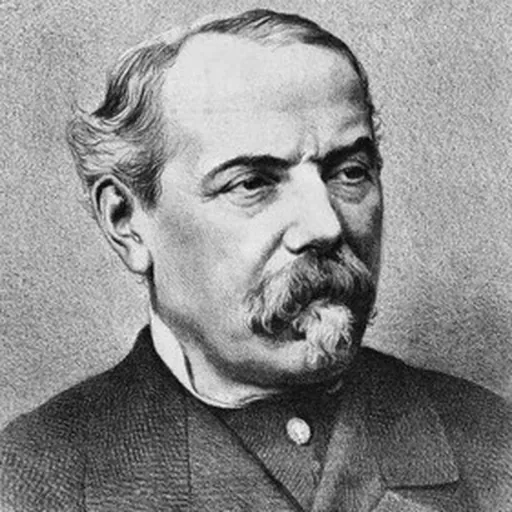
About Nicola De Giosa
Lived 1819 – 1885 (aged 66). Nicola De Giosa was an Italian composer and conductor.
Nicola De Giosa (3 May 1819 – 7 July 1885) was an Italian composer and conductor active in Naples. He composed numerous operas, the most successful of which, Don Checco and Napoli di carnevale, were in the Neapolitan opera buffa genre. His other works included sacred music and art songs. His songs were particularly popular, bringing him fame as a salon composer both in Italy and abroad. De Giosa died in Bari, the city of his birth, at the age of 66.
Life and career De Giosa was born in Bari to Angelantonio and Lucia (née Favia) De Giosa. He initially trained to be a flautist, first in Bari with his elder brother Giuseppe and then with Errico Daniele. Daniele recognized his talent and persuaded De Giosa's father to enroll him at the Conservatory of San Pietro a Majella in Naples. He passed the entrance examination at age 14 with sufficient merit to be awarded free tuition at the conservatory and continued his flute studies there with Pasquale Bongiorno. He also studied composition with Francesco Ruggi, Niccolò Zingarelli, and later with Gaetano Donizetti. According to contemporary accounts, he was one of Donizetti's favourite pupils. In 1839, while still a student, two of his compositions for soloists, chorus and orchestra were performed at the conservatory in honour of Count Wenzel Robert von Gallenberg who had died in March of that year. However, in 1841 he left San Pietro a Majella without completing his studies following a series of disputes with the Saverio Mercadante who succeeded Zingarelli as the conservatory's director in 1840.
In 1842 De Giosa made his debut as an opera composer with the premiere of his opera buffa, La casa di tre artisti, at the Teatro Nuovo. It was well received in Naples and replicated in Turin, Genoa and Milan in 1846 under the title L'arrivo del signor zio. While it was a success with the audiences of Genoa and Turin, the Milan reception suffered from a poor production and arguments between supporters of the old Neapolitan school exemplified by De Giosa and those of the new style exemplified by Verdi whose Due Foscari was also playing in city. He produced 14 more operas between 1845 and 1882, most of which were in the opera buffa and opera semiseria genres and premiered in Naples. He also composed in the opera seria genre, but they were not nearly as successful and considered "pale imitations" of Donizetti. De Giosa's masterpiece and one of the last great successes in the history of Neapolitan opera buffa was Don Checco. It had a run of 98 consecutive performances at the Teatro Nuovo where it premiered in 1850 and was regularly produced in numerous opera houses in Italy and abroad over the next 40 years. It was produced in Naples as late as 1902 and was revived in 2014 in a co-production by the Teatro San Carlo and the Festival della Valle d'Itria.
In middle age, De Giosa began an active conducting career. According to musicologist Andrea Lanza, as a conductor he was "particularly admired for the scrupulousness of his orchestral balance and ensemble." and the 1873 season at the Teatro Colón in Buenos Aires. De Giosa's biographer, Alfredo Giovine, wrote that during this period he suffered two painful setbacks. He lost most of his savings when several Neapolitan banks failed, and later many of his manuscript scores disappeared while he was on one of his absences from Naples. He returned home to find that his maid had sold the scores for a pittance to the proprietor of a local delicatessen who used them for wrapping food. According to Giovine, De Giosa eventually replaced his lost savings with the money he earned from his successful conducting career.
Despite his concentration on conducting after 1860, De Giosa continued to compose operas, although several of them were revisions of earlier works. The most successful of these later works was Napoli di carnovale. The project was a protest against the "invasion" of Neapolitan opera stages by French operetta at the expense of the city's native musical culture. Set in a working-class neighbourhood of Naples at Carnival time, it recounts the ultimately successful campaign by Temostocle, nephew of the wealthy and pretentious Don Gasperone, to marry the daughter of a shoemaker. Napoli di carnovale premiered to great success at the Teatro Nuovo in 1876. It ran for 85 performances there and was subsequently performed in multiple Italian and foreign theatres over the next ten years. During this time De Giosa was also active as a teacher at the Conservatory of San Pietro a Majella and in organizations dedicated to the encouragement of young musicians and composers.
Works
Operas La casa di tre artisti (opera buffa in 3 acts); libretto by Andrea Passaro; premiered Teatro Nuovo, Naples, 1842 Elvina (opera semiseria in 3 acts); libretto by Almerindo Spadetta; premiered Teatro Nuovo, Naples, 1845 Ascanio il gioielliere (opera semiseria in 3 acts); libretto by Giuseppe Sesto Giannini; premiered Teatro d'Angennes, Turin, 1847 Le due guide (melodramma in 4 acts); libretto by Marco D'Arienzo, premiered Teatro degli Armeni, Livorno, 1848 Don Checco (opera buffa in 2 acts); libretto by Almerindo Spadetta; premiered Teatro Nuovo, Naples, 1850 Folco d'Arles (melodramma tragico in 3 acts); libretto by Salvadore Cammarano after Victor Hugo; premiered Teatro San Carlo, Naples, 1851 Guido Colmar (opera seria in 3 acts); libretto by Domenico Bolognese; premiered Teatro San Carlo, Naples, 1852 (Performed in a revised version under the title Silvia, Teatro San Carlo, 1864.)
Other vocal De Giosa composed over 400 art songs and pieces of salon music. Many of these pieces were published in 26 collections of his work—10 in Milan and 16 in Naples. He also wrote several longer pieces of vocal music for specific occasions: Una lagrima sulla tomba del Conte Gallenberg (A Tear on the Tomb of Count Gallenberg), prayer for soloist, chorus, and orchestra (1839) Inno funebre, funeral hymn (also for Count Gallenberg) for four soloists, chorus and orchestra (1839) Cantata for the dedication of the marble bust of Ferdinand II in the Acquaviva delle Fonti Cathedral (1853)
Don’t just read it —
keep it.
Full-length biographies made to live with: read them, listen on the way to work, watch them tonight.
- E-book
- Audio
- Video
Instant download · yours to keep · every purchase keeps this site free
Important facts
People in Nicola De Giosa's life
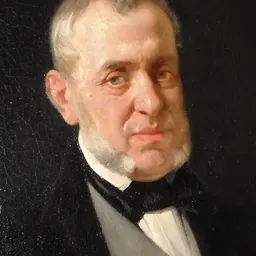
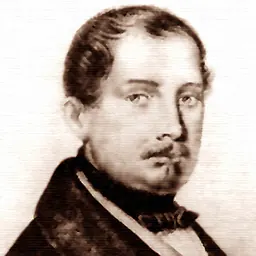
Named in this biography and alive at the same time





Related people
Same field, nearest in time

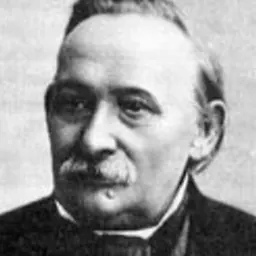

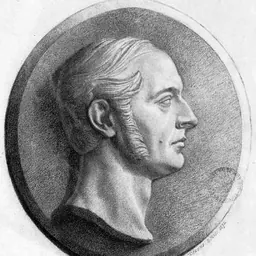
Contemporaries
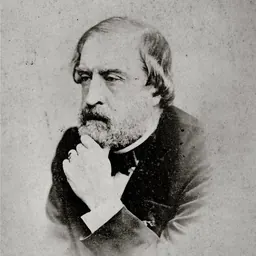
People whose lives overlapped Nicola De Giosa's


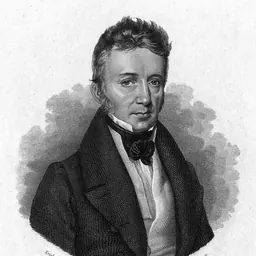

Frequently asked questions
Who was Nicola De Giosa?
Italian composer (1819–1885)
When was Nicola De Giosa born?
Nicola De Giosa was born on 15 May 1819 in Bari.
When did Nicola De Giosa die?
Nicola De Giosa died on 7 July 1885 in Bari.
What was Nicola De Giosa's occupation?
Nicola De Giosa was a composer and conductor.
What nationality was Nicola De Giosa?
Nicola De Giosa was Italian.
Sources & further reading
Cite this page
APA: Biography.guide. (2026). Nicola De Giosa. https://biography.guide/nicola-de-giosa/
MLA: "Nicola De Giosa." Biography.guide, https://biography.guide/nicola-de-giosa/.
Chicago: "Nicola De Giosa." Biography.guide. https://biography.guide/nicola-de-giosa/.
Data last updated: 2026-09-22 · Spot an error? Report a correction.
Portrait: Wikimedia Commons · author & licence
Page generated 2026-09-27 05:02 UTC