
About Nicky Barr
Lived 1915 – 2006 (aged 90). Nicky Barr was an Australian and New Zealand rugby union player and aircraft pilot.
Andrew William "Nicky" Barr, (10 December 1915 – 12 June 2006) was a member of the Australian national rugby union team, who became a fighter ace in the Royal Australian Air Force (RAAF) during World War II. He was credited with 12 aerial victories, all scored flying the Curtiss P-40 fighter. Born in New Zealand, Barr was raised in Victoria and first represented the state in rugby in 1936. Selected to play for Australia in the United Kingdom in 1939, he had just arrived in England when the tour was cancelled following the outbreak of war. He joined the RAAF in 1940 and was posted to North Africa with No. 3 Squadron in September 1941. The squadron's highest-scoring ace, he attained his first three victories in the P-40 Tomahawk and the remainder in the P-40 Kittyhawk.
Barr's achievements as a combat pilot earned him the Distinguished Flying Cross and Bar. Shortly after taking command of No. 3 Squadron in May 1942, he was shot down and captured by Axis forces, and incarcerated in Italy. He escaped and assisted other Allied fugitives to safety, receiving for his efforts the Military Cross, a rare honour for an RAAF pilot. Repatriated to England, he saw action during the invasion of Normandy in June 1944 before returning to Australia as chief instructor with No. 2 Operational Training Unit. After the war he became a company director, and rejoined the RAAF as an active reserve officer from 1951 to 1953. From the early 1960s he was heavily involved in the oilseed industry, for which he was appointed an Officer of the Order of the British Empire in 1983. He died in 2006, aged 90.
Early career Andrew Barr was born in Wellington, New Zealand, on 10 December 1915; he had a twin brother, Jack. The family moved to Australia when the boys were six. Growing up in Melbourne, Andrew attended Kew Public School and played Australian rules football. He was also the Victorian Schoolboys' 100 yards athletics champion three years in succession, from 1926 to 1928. In 1931, aged fifteen, he began his association with the Lord Somers Camp and Power House social and sporting organisations located at Western Port.
After leaving school, Barr studied construction at Swinburne Technical College, but later took a diploma course in accountancy and made it his profession. He started playing rugby union in 1935 through a friend in the Power House club. Weighing and just under tall, Barr gained selection for Victoria as a hooker in 1936. In 1939, he was chosen to play in the United Kingdom with the Australian national team, the Wallabies. The tour was cancelled less than a day after the team arrived in the UK on 2 September, due to the outbreak of World War II. Keen to serve as a fighter pilot, Barr initially tried to enlist in the Royal Air Force, but withdrew his application when told that it was unlikely he would fly anytime in the near future, and that he could expect only administrative duties in the interim.
Returning to Australia on the RMS Strathaird, Barr joined the Royal Australian Air Force as an air cadet on 4 March 1940. After undergoing instruction on Tiger Moths at No. 3 Elementary Flying Training School, Essendon, and on Hawker Demons and Avro Ansons at No. 1 Service Flying Training School, Point Cook, he was commissioned as a pilot officer on 24 September. He gained a reputation as something of a rebel during training, and became forever known as "Nicky", for "Old Nick", or the Devil. He was promoted to flying officer on 24 March 1941. He converted to P-40 Tomahawk fighters at an RAF operational training unit in Khartoum. There he also received his "goolie chit", a piece of paper to be shown to local tribesmen in the event he was shot down, reading in Arabic: "don't kill the bearer, feed him and protect him, take him to the English and you will be rewarded. Peace be upon you."
Returning to North Africa, Barr achieved his first aerial victory, over a Messerschmitt Bf 110, on 12 December. He followed this up with a Junkers Ju 88 and a Messerschmitt Bf 109 the next day. The squadron then re-equipped with P-40 Kittyhawks; Barr was flying the new model when he became an ace on New Year's Day 1942, shooting down two Junkers Ju 87 Stukas. On 8 March, he led a flight of six Kittyhawks to intercept a raid on Tobruk by twelve Ju 87s escorted by ten Macchi C. 202s and two Bf 109s. The Australians destroyed six Macchis and three Ju 87s without loss, Barr personally accounting for one of the Macchis.
Eventually credited with victories over twelve enemy aircraft, plus two probables and eight damaged, Barr became No. 3 Squadron's highest-scoring member. He flew a total of eighty-four combat sorties, twenty of them in one fortnight, and six on 16 June 1942 alone. His philosophy was that the P-40 was not a top-class fighter, but that its shortcomings "could be offset by unbridled aggression", so he resolved to treat aerial combat as he would a boxing match and "overcome much better opponents by simply going for them". Promoted to flight lieutenant on 1 April, Barr was raised to acting squadron leader and appointed to command the unit in May, barely six months after he commenced operations, following Gibbes's hospitalisation with a broken ankle. Barr had never sought leadership of the squadron, and felt that others were just as well qualified for the role. As a commander he delegated most administrative tasks to his adjutant but, contrary to normal practice, wrote letters to the next-of-kin of casualties himself.
As Otto Schulz came in low to strafe the downed Kittyhawk, Barr ran straight at it in an attempt to throw the pilot off his aim, and was injured by fragments of rock sent airborne by the impact of cannon shells. A tribe of friendly Senussi Arabs found him, dressed his wounds, and helped him return to Allied lines. For his exploit, and his earlier successes, Barr was awarded the Distinguished Flying Cross (DFC), the complete citation being published in the London Gazette on 20 February 1942:
Barr has his temperature taken by a medical officer following his return to base three days after being shot down behind enemy lines, January 1942.
On 25 May 1942, Barr had to land in the desert when his engine overheated. Having just taken off the engine cowling, he spotted enemy tanks approaching and immediately took off with the engine exposed to the elements, safely landing back at base.
On 26 June, after being attacked by two Bf 109s and bailing out of his burning Kittyhawk, he was captured by Italian soldiers and taken as a prisoner-of-war, first to Tobruk, and then to Italy, where he received hospital treatment for serious wounds. He later learned that the pilot who shot him down was Oberleutnant Werner Schroer, a Luftwaffe ace credited with sixty-one victories in North Africa. Bobby Gibbes, having recovered from his own injuries, again took command of No. 3 Squadron. During his incarceration, on 5 February 1943, Barr was awarded a Bar to his DFC for "destroying further enemy aircraft".
Barr tried to escape from his confinement four times. By November 1942 he had recovered sufficiently from the injuries he received in June to break out of the hospital where he was being held in Bergamo, northern Italy. He made his way to the Swiss border, but was challenged by an Italian customs official, whom he struck with a rock before being recaptured. Court-martialled on a charge of murder, he only avoided a death sentence when the Swiss Red Cross colonel representing him located the official and proved that he had not died. Barr was instead sentenced to ninety days solitary confinement in Gavi Prison Camp, Genoa.
In August 1943, with Italy on the verge of surrender, prisoners of war were rounded up for transport to Germany. Barr jumped from a moving train bound for the Brenner Pass and joined a group of Italian partisans in Pontremoli, remaining at large for two months before again being captured. Taken to a transit camp just over the Austrian border, Barr and fourteen other prisoners escaped by tunnelling under the barbed wire. Eventually he managed to link up with an Allied special operations unit, which was gathering intelligence behind enemy lines, sabotaging Axis infrastructure, and helping Allied prisoners and Italian refugees escape over the Apennine Mountains along the so-called "Alpine Route".
He was recaptured and escaped again before making it through the Alpine crossing himself, leading a group of more than twenty. After reaching friendly lines in March 1944, he was sent to a military hospital in Vasto, weighing only and in poor health, suffering malaria, malnutrition, and blood poisoning. The assistance he rendered to fellow Allied fugitives earned him the Military Cross (MC) for "Exceptional courage in organising escapes"; the award was gazetted on 1 December 1944. He is thought to be one of only five or six RAAF pilots to receive the MC during World War II. After his return to Australia on 11 September, Barr was promoted to acting wing commander and appointed chief instructor at No. 2 Operational Training Unit in Mildura, Victoria, taking over from Bobby Gibbes. He also went to New Guinea and flew some ground-attack missions in the Kittyhawk to gain experience in the South West Pacific theatre. Following the end of hostilities in August 1945, Barr was treated for recurring fever and underwent two operations on his limbs in No. 6 RAAF Hospital, Heidelberg. He was discharged from the Air Force on 8 October.
Later life
I was not very proud of the things that I was called upon to do. Nonetheless, I accepted the fact that some people have to do the killing. But when you are recruited, it's not sold to you that way and you find out that after they teach you to fly they then teach you to kill. And, uh, I didn't like it at all, but I did it – that was my job. — Nicky Barr, Australian Story, 2002 The couple had two sons, born in 1945 and 1947. Barr's injuries prevented him from returning to a rugby career, and he took up yachting as a sport. He also briefly assisted fellow No. 3 Squadron veteran Bobby Gibbes in an airline venture in New Guinea, before going into business as a company manager and director with civil engineering and pharmaceutical firms.
In 1961, Barr became General Manager of Meggitt Ltd, an oilseed-crushing firm; he eventually rose to become Executive Chairman. The firm's board was joined in 1971 by the recently retired Chief of the Air Staff, Air Marshal Sir Alister Murdoch. The same year, he became Australian representative and Chairman of the International Oil Seed Group. Generally reluctant to talk publicly about the war, he agreed to discuss his experiences during an episode of the television series Australian Story in 2002, appearing with his biographer Peter Dornan, and Bobby Gibbes. By this time Barr was said to be receiving daily treatment for the injuries he had suffered in combat. On 14 September 2006, No. 3 Squadron dedicated a stone memorial in Barr's honour; the unveiling was attended by his sons Bob and Brian.
Don’t just read it —
keep it.
Full-length biographies made to live with: read them, listen on the way to work, watch them tonight.
- E-book
- Audio
- Video
Instant download · yours to keep · every purchase keeps this site free
Important facts
People in Nicky Barr's life
Named in this biography and alive at the same time

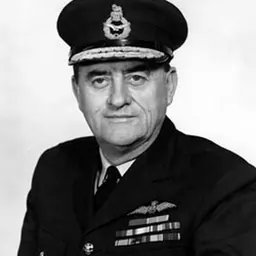




Related people
Same field, nearest in time
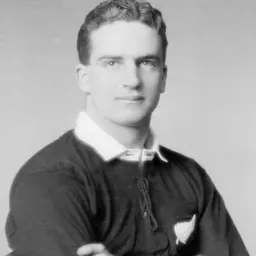

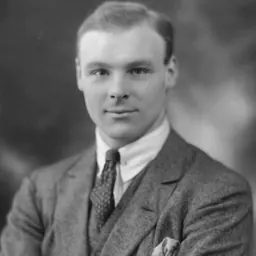
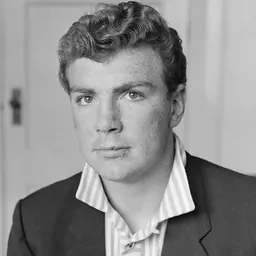
Contemporaries
People whose lives overlapped Nicky Barr's




Frequently asked questions
Who was Nicky Barr?
RAAF pilot
When was Nicky Barr born?
Nicky Barr was born on 10 December 1915 in Wellington.
When did Nicky Barr die?
Nicky Barr died on 12 June 2006 in Gold Coast.
What was Nicky Barr's occupation?
Nicky Barr was a rugby union player and aircraft pilot.
What nationality was Nicky Barr?
Nicky Barr was Australian and New Zealand.
Sources & further reading
Cite this page
APA: Biography.guide. (2026). Nicky Barr. https://biography.guide/nicky-barr/
MLA: "Nicky Barr." Biography.guide, https://biography.guide/nicky-barr/.
Chicago: "Nicky Barr." Biography.guide. https://biography.guide/nicky-barr/.
Data last updated: 2026-09-27 · Spot an error? Report a correction.
Page generated 2026-09-27 05:16 UTC