
About Nicholas Russo
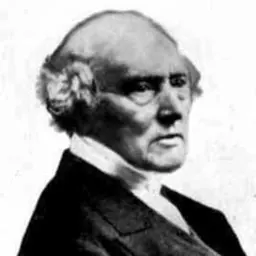
Lived 1845 – 1902 (aged 56). Nicholas Russo was an American and French catholic priest, missionary, teacher, academic administrator, philosopher and academic librarian.
Nicholas Russo (April 24, 1845 – April 1, 1902) was an Italian Catholic priest, Jesuit, philosopher, and missionary.
Born in Italy, he ran away from his family and joined the Society of Jesus in France in 1862, where he was educated and began teaching. In 1875, Russo was sent to the United States to study at Woodstock College. For ten years, he was a professor and the chair of philosophy at Boston College and became its first faculty member to publish a book. Specializing in Thomism, he was regarded as a successful professor. He served as president of the college from 1887 to 1888.
In the 1890s, Russo left a successful career in academia to minister for more than ten years to the Italian immigrants in New York City's Lower East Side, who faced poverty and discrimination by local priests. He founded the Church of Our Lady of Loreto in 1891, which grew to 3,000 weekly parishioners, as well as schools for boys and girls and parochial clubs and sodalities.
Early life
Nicholas Russo was born on April 24, 1845, in Ascoli Piceno in the United Provinces of Central Italy, today located in the Marche region of central Italy. at the Church of St. Lawrence O'Toole (later known as the Church of St. Ignatius Loyola). On February 19, 1891, Russo presided over a conference at St. Patrick's Cathedral of all priests of the archdiocese, which discussed canon law, dogmatic theology, and moral theology.
Church of Our Lady of Loreto
As hundreds of thousands of Italian immigrants arrived in New York City, many settled in Little Italy in Lower Manhattan. The Jesuit Superior General urged Archbishop Corrigan to tend to their spiritual needs,
With that, Russo gave up a successful career in academia and spent the rest of his life ministering to poor Italian immigrants in New York City, As one biographer noted, "It must have been, humanly speaking, no small sacrifice...for he had held high positions in Boston and New York and his work had lain almost entirely among the better instructed and wealthy."
When Russo arrived in New York, tensions between Italian immigrants and the city's predominantly Irish clergy had been building for some time, At St. Patrick's Old Cathedral, the pastor, John F. Kearney, created an Italian sub-congregation in 1882 that was almost entirely segregated from the rest of the parish. Italians were relegated to the basement to celebrate Mass and other sacraments, and Kearney eventually expelled the Italians from the church entirely. Russo first visited St. Patrick's in 1889, and Kearney refused to permit him to celebrate Mass in the main church for "reasons which a priest should feel ashamed to give," according to Russo.
Russo and another Italian Jesuit, Aloysius Romano, physically converted a rented barroom on Elizabeth Street it into a chapel holding about 150 people. They built an altar and two confessionals, cleaned the walls, painted, and named the chapel . The first Mass was held in the chapel on August 16, 1891, the Feast of San Rocco, with Russo delivering the sermon in Italian and the provincial superior being the main celebrant. Tensions persisted, with Russo writing to Archbishop Corrigan about Kearney's continued hostility. With his congregation shrinking, Kearney reopened St. Patrick's to Italians, who became the majority of parishioners, depleting funds from Russo's indebted church.
Russo's parish soon outgrew its makeshift chapel, and in 1892, he purchased two tenement buildings across the street. After renovations, the new church was dedicated by Corrigan on September 27 under the name Our Lady of Loretto. The church, located at 303 and 305 Elizabeth Street, contained three altars. It accommodated 500 people seated and an additional 200 people standing.
Russo divided the basement of the church into classrooms, opening a school for 200 children. Due to poor conditions in the basement, after two months, he purchased two houses adjoining the church for $35,000 (equivalent to approximately $ in ), and renovated them for another $8,000. A new parochial school for girls opened in October 1895 and one for boys opened in 1898. By 1895, the schools enrolled 700 students. Eventually, a third Jesuit from Sicily became a curate at the church.
On Easter in 1902, Russo's health deteriorated and he was taken to St. Vincent's Hospital, where it was found he had pneumonia with complications. He died on April 1, 1902, by which time the church drew 3,000 parishioners each Sunday. While it was intended that a Neapolitan Jesuit working in the Rocky Mountains replace Russo at Our Lady of Loreto, he was succeeded by William H. Walsh. Russo's funeral was held at Our Lady of Loreto, with the Mass celebrated by the provincial superior and the absolution of the dead prayed by Archbishop Corrigan.
Published works
Don’t just read it —
keep it.
Full-length biographies made to live with: read them, listen on the way to work, watch them tonight.
- E-book
- Audio
- Video
Instant download · yours to keep · every purchase keeps this site free
Important facts
People in Nicholas Russo's life
Named in this biography and alive at the same time

Related people
Same field, nearest in time

Contemporaries
People whose lives overlapped Nicholas Russo's


Frequently asked questions
Who was Nicholas Russo?
Italian Jesuit educator and missionary
When was Nicholas Russo born?
Nicholas Russo was born on 24 April 1845 in Ascoli Piceno.
When did Nicholas Russo die?
Nicholas Russo died on 1 April 1902 in Manhattan.
What was Nicholas Russo's occupation?
Nicholas Russo was a catholic priest, missionary, teacher, academic administrator, philosopher and academic librarian.
What nationality was Nicholas Russo?
Nicholas Russo was American and French.
Sources & further reading
Cite this page
APA: Biography.guide. (2026). Nicholas Russo. https://biography.guide/nicholas-russo/
MLA: "Nicholas Russo." Biography.guide, https://biography.guide/nicholas-russo/.
Chicago: "Nicholas Russo." Biography.guide. https://biography.guide/nicholas-russo/.
Data last updated: 2026-09-20 · Spot an error? Report a correction.
Page generated 2026-09-27 05:30 UTC