
About Nicholas Mesarites
Lived 1163 – 1216 (aged 52–53). Nicholas Mesarites was a Byzantine theologian, writer, historian, eastern Orthodox priest and deacon.
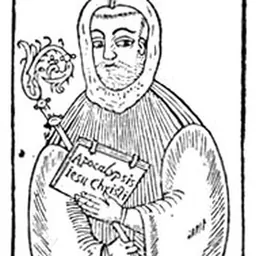
Nicholas Mesarites (; ca. 1163/4 – after 1216) was a Byzantine Greek churchman and writer, who eventually rose to the office of Metropolitan of Ephesus in the Empire of Nicaea.
Life Born ca. 1163/4, Mesarites is first recorded in 1200, during the attempted coup of John Komnenos the Fat. At the time, Mesarites was skeuophylax of the Church of the Pharos in the Great Palace of Constantinople, and wrote an eyewitness account of the events.
After the capture of Constantinople by the Fourth Crusade in 1204, he initially remained in the city. In late 1206, along with his brother John he participated in discussions between the Greek Orthodox clergy and the new Latin authorities, represented by the Latin Patriarch of Constantinople Thomas Morosini and the papal legate, Cardinal Benedict of Santa Susanna. The discussion failed to breach the rift between the two parties, as the Greeks refused to subordinate themselves to the Latin clergy. Following the death of his brother in February 1207, Mesarites left for the Empire of Nicaea, where he was appointed Metropolitan of Ephesus soon after.
As Metropolitan of Ephesus, he headed a mission in 1214/5 to Constantinople for discussions with the new papal envoy, Cardinal Pelagius of Albano. Mesarites wrote a report of his discussions with Pelagius, where he highlights his intransigence, intolerance towards the Greek Orthodox clergy and insistence on Papal primacy. In 1216 he officiated at the marriage of Irene Laskarina, the eldest daughter of the Nicaean emperor Theodore I Laskaris, and Andronikos Palaiologos.
Writings Mesarites' writing style, distinguished by "his interest in vivid details and in his own role in the events" (A. Kazhdan), marks a conscious departure from the conventions of Byzantine literature, which he on occasion mocks. This is particularly evident in his description of the 1200 coup, which is far more vivid and immediate than the far more stylized and abstract treatments of the same event by other contemporary writers. The epitaph he composed for his brother contains also an eyewitness account of the fall of Constantinople and contemporary events. Mesarites also left a valuable description of the Church of the Holy Apostles, and of the school that functioned in its premises.
Editions August Heisenberg, Nikolaos Mesarites. Die Palastrevolution des Johannes Komnenos, Würzburg, 1907. August Heisenberg, Der Epitaphios des Nikolaos Mesarites auf seinen Bruder Johannes, in Neue Quellen zur Geschichte des lateinischen Kaisertums und der Kirchenunion I, Sitzungsberichte der bayerischen Akademie der Wissenschaften, Munich, 1922. August Heisenberg, Die Unionsverhandlungen von 30. August 1206. Patriarchenwahl und Kaiserkrönung in Nikaia 1208, in Neue Quellen zur Geschichte des lateinischen Kaisertums und der Kirchenunion II, Munich, 1923. August Heisenberg, Der Bericht des Nikolaos Mesarites über die politischen und kirchlichen Ereignisse des Jahres 1214, in Neue Quellen zur Geschichte des lateinischen Kaisertums und der Kirchenunion III, Munich, 1923. Glanville Downey, Nikolaos Mesarites. Description of the Church of the Holy Apostles at Constantinople, Philadelphia, American Philosophical Society, 1957.
Don’t just read it —
keep it.
Full-length biographies made to live with: read them, listen on the way to work, watch them tonight.
- E-book
- Audio
- Video
Instant download · yours to keep · every purchase keeps this site free
Important facts
People in Nicholas Mesarites's life
Named in this biography and alive at the same time




Related people
Same field, nearest in time

Contemporaries
People whose lives overlapped Nicholas Mesarites's




Frequently asked questions
Who was Nicholas Mesarites?
Byzantine churchman and writer
When was Nicholas Mesarites born?
Nicholas Mesarites was born in 1163 in Constantinople.
When did Nicholas Mesarites die?
Nicholas Mesarites died in 1216 in Constantinople.
What was Nicholas Mesarites's occupation?
Nicholas Mesarites was a theologian, writer, historian, eastern Orthodox priest and deacon.
What nationality was Nicholas Mesarites?
Nicholas Mesarites was Byzantine.
Sources & further reading
· Wikipedia: Nicholas Mesarites
Cite this page
APA: Biography.guide. (2026). Nicholas Mesarites. https://biography.guide/nicholas-mesarites/
MLA: "Nicholas Mesarites." Biography.guide, https://biography.guide/nicholas-mesarites/.
Chicago: "Nicholas Mesarites." Biography.guide. https://biography.guide/nicholas-mesarites/.
Data last updated: 2026-09-20 · Spot an error? Report a correction.
Page generated 2026-09-27 04:59 UTC