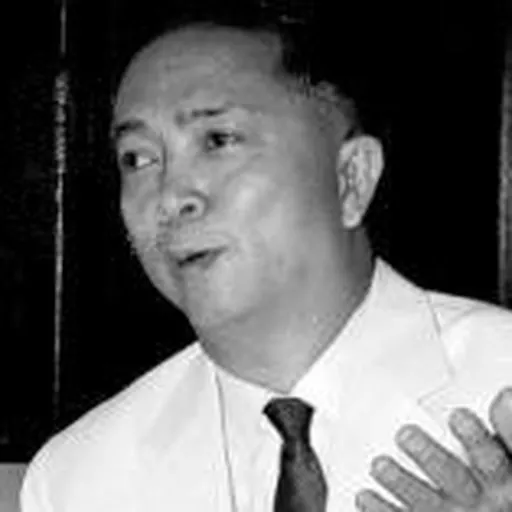
About Nguyen Ngoc Tho
Lived 1908 – 1976 (aged 68). Nguyen Ngoc Tho was a Vietnamese politician.
Nguyễn Ngọc Thơ (; 26 May 190812 June 1976) was a South Vietnamese politician who was the first vice president of South Vietnam, serving under President Ngô Đình Diệm from 1956 until Diệm's overthrow and assassination in 1963. He also served as the first prime minister of South Vietnam, serving from November 1963 to late January 1964. Thơ was appointed to head a civilian cabinet by the military junta of General Dương Văn Minh, which came to power after overthrowing and assassinating Diệm, the nation's first president. Thơ's rule was marked by a period of confusion and weak government, as the Military Revolutionary Council (MRC) and the civilian cabinet vied for power. Thơ lost his job and retired from politics when Minh's junta was deposed in a January 1964 coup by General Nguyễn Khánh.
The son of a wealthy Mekong Delta landowner, Thơ rose through the ranks as a low-profile provincial chief under French colonial rule, and he was briefly imprisoned by Imperial Japan when they invaded and deposed the French during World War II. During this time he met Minh for the first time as they shared a cell. Following World War II, he became the interior minister in the French-backed State of Vietnam, an associated state in the French Union. After the establishment of the Republic of Vietnam in 1955 following the partition in 1954, Thơ was sent to Japan as ambassador and secured war reparations. Recalled to Vietnam within a year, he helped to dismantle the private armies of the Hòa Hảo religious sect in the mid-1950s. Thơ led the political efforts to weaken the Hòa Hảo leadership. While Minh led the military effort, Thơ tried to buy off Hòa Hảo leaders. One commander, Ba Cụt, was personally hostile to Thơ, whose father had confiscated the land of Ba Cụt's family decades earlier. The stand-off could not be ended peacefully in this case, and Ba Cụt was captured and executed.
This success earned Thơ the vice presidential slot in December 1956 to widen the popular appeal of Diệm's nepotistic and sectarian regime. It was reasoned that Thơ's southern heritage would broaden the regime's political appeal—Diệm's family was from central Vietnam and most administrators were not from South Vietnam. Thơ was not allowed to take part in policy decisions and had little meaningful power, as Diệm's brothers, Nhu and Cẩn, commanded their own private armies and secret police, and ruled arbitrarily. Thơ oversaw South Vietnam's failed land reform policy, and was accused of lacking vigour in implementing the program as he was himself a large landowner. He was noted for his faithful support of Diệm during the Buddhist crisis that ended the rule of the Ngô family. Despite nominally being a Buddhist, Thơ defended the regime's pro–Roman Catholic policies and its violent actions against the Buddhist majority.
Thơ turned against Diệm and played a passive role in the coup. Upon the formation of the new government, he struggled to keep the nation under control as the MRC and civilian cabinet often gave contradictory orders. Media freedom and political debate were increased, but this backfired as Saigon became engulfed in infighting, and Thơ had a series of newspapers shut down after they used the new-found freedom to attack him. During that time, South Vietnam's military situation deteriorated as the consequences of Diệm's falsification of military statistics and the misguided policies that resulted were exposed. Minh and Thơ had a plan to try to end the war by winning over non-communist members of the insurgency, believing that they constituted the majority of the opposition and could be coaxed away, weakening the communists. As part of this policy, which the US opposed, the government chose to take a low-key military approach in an attempt to portray themselves to the Vietnamese public as peacemakers. However, they were deposed in Khánh's US-backed coup before they could pursue their strategy.
Early career The son of a wealthy southern landowner, Thơ was born in the province of Long Xuyên in the Mekong Delta. He began his bureaucratic career in 1930, serving the French colonial authorities as a low-profile provincial chief. During World War II, the Japanese invaded Vietnam but left a Vichy regime in place. Thơ rose to become the first secretary of the Resident Superior of Annam, the French governor of the central region of Vietnam. During this time, he crossed paths with Ngô Đình Diệm, a former interior minister under the French regime in the 1930s. The French thought that Diệm was working with Imperial Japan and tried to have him arrested, but Thơ tipped off Diệm and the Kempeitai, resulting in their escape.
In March 1945, Japan, which had invaded and occupied French Indochina in 1941 during World War II, decided to take direct control and overthrew the French colonial regime. Thơ was thrown into a crowded cell with several other prisoners that had no light or toilet and filled with their own excrement. Cụt was eventually surrounded and sought to make a peace deal so he sent a message to Thơ asking for negotiations so that his men could be integrated into mainstream society and the nation's armed forces. Thơ agreed to meet Ba Cụt alone in the jungle, and despite fears the meeting was a Hòa Hảo trap, he was not ambushed. However, Cụt began asking for additional concessions and the meeting ended in a stalemate. Cụt was captured on 13 April 1956 and guillotined after a brief trial and his remaining forces were defeated in battle.
During this period, Thơ was the Secretary of State for the National Economy. The move was widely seen as an attempt to use Thơ's Mekong Delta roots to increase the government's popular appeal among southern peasants, because Diệm's regime was dominated by family members, Catholics from central Vietnam.
Diệm era
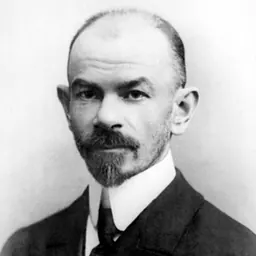
alt=A portrait of a middle-aged man, looking to the left in a half-portrait/profile. He has chubby cheeks, parts his hair to the side and wears a suit and tie. Despite the importance of his title, Thơ rarely appeared with Diệm in public and was a figurehead with little influence. The real power lay with Diệm's younger brothers, Nhu and Cẩn, who commanded private armies and secret police, as well as giving orders directly to ARVN generals. Nhu reportedly once ordered a bodyguard to slap Thơ because he felt Thơ had shown him a lack of respect. Thơ had a rapport with the military officers, having befriended Minh years earlier.
Thơ also retained a degree of influence over domestic economic policies, which ran far behind Diệm's priorities of absolute control over the military and other apparatus through which he maintained his rule. Despite never having been trained in economic matters, Thơ had a prominent hand in the administration of the Commodity Import Program, an American initiative akin to the Marshall Plan, whereby aid was funnelled into the economy through importing licenses rather than money, in order to avoid inflation. However, Thơ's administration of the program led to the vast majority of the imports being consumer goods for the upper classes, rather than capital goods to develop South Vietnam's economic capacity. Under Thơ's watch, the foreign trade deficit hovered between 150 and 200%, and the gap between the urban elite and the peasant majority grew. American advisers thought Thơ and the Ngô brothers continually went against their counsel because they were either incompetent or simply distrustful and thus did the opposite of what was recommended.
Thơ also clashed with Interior Minister Nguyễn Hữu Châu over economic strategy. Châu was married to Madame Nhu's sister and appointed due to nepotism, but was later expelled from the Ngô family due to his dissent. In mid-1961, after a visit by US Vice President Lyndon B. Johnson and pressure from leading American officials, Diệm relieved Thơ of his economic duties.
Thơ then began to put try to put pressure on the Americans to influence Diệm. During a fact-finding mission by General Maxwell Taylor, the chief of the US military, and Walt Rostow, Thơ and Minh complained of Diệm's autocratic ways and religious favoritism towards his fellow Catholics to the disadvantage of the majority Buddhist populace. In 1962, he told senior US Embassy official Joseph Mendenhall that Diệm's military subordinates invented arbitrary and falsely inflated figures of Viet Cong fighters.
Role in Buddhist crisis
Despite being a Buddhist, Thơ had a reputation for heaping praise on Diệm's Roman Catholic government. On Diệm's 62nd birthday, Thơ paid tribute, saying, "thanks to the Almighty for having given the country a leader whose genius was outweighed only by his virtue".
In another project, the village of La Vang in Quảng Trị Province near the border with North Vietnam, was the scene of a female apparition in the late 19th century. Buddhists claimed that the bodhisattva Avalokiteshvara (also known as Kuanyin; Vietnamese: Quan Âm) performed the miracle. Diệm's brother, Ngô Đình Thục, was the Roman Catholic Archbishop of Huế and the foremost religious figure in South Vietnam's nepotistic regime. Thục declared that the apparition was the Virgin Mary, and ordered that a cathedral be built in place of the makeshift Buddhist pagoda that occupied the site. Thơ made notable financial donations to the project for political reasons.
In June, as the Buddhist crisis escalated, Diệm appointed Thơ to lead a government committee to deal with grievances raised by the Buddhist community following the Huế Vesak shootings in which eight Buddhists were killed by government forces while protesting a ban on the flying of Buddhist flags. The committee concluded the Việt Cộng was responsible for the deaths, despite eyewitness accounts and amateur video showing that the government had fired directly at protesters. The committee's whitewash caused Buddhist protests to escalate. When de facto First Lady Madame Nhu (herself a Buddhist convert to Catholicism) mockingly described the self-immolation of Buddhist monk Thích Quảng Đức as a "barbecue", Thơ refused to condemn her remarks, saying they were "personal opinions".
Thơ was part of an Interministerial Committee, a group of government officials that negotiated a Joint Communique with the Buddhists to end the civil disobedience. An agreement was signed, but never implemented. Thơ was later criticised by the Nhus through their English language mouthpiece, the Times of Vietnam, for the deal. Despite the general amnesty granted to arrested Buddhist activists, on 13 August, Thơ gave a press conference during which he vowed to prosecute the Buddhist victims of the Huế Vesak shootings, and revoking the amnesty and vowing to jail Buddhist demonstrators.
At a farewell dinner for US ambassador Frederick Nolting in July, Thơ called for the Buddhists to be "crushed without pity". He derisively said that Buddhism was not a religion and further claimed that while anybody could become a Buddhist monk, it took years of training to become a Catholic priest. When the Thai ambassador disagreed, citing his own previous monastic training, Thơ taunted him in front of other diplomats.
With the pressure on the Diệm regime increasing during the Buddhist crisis, Nhu and Diệm began to shun their cabinet members because they presented arguments contrary to the thinking of the Ngô family. Many ministers attempted to resign, but Thơ was credited with persuading them to stay in office. Finding the situation increasingly intolerable, Thơ also considered resigning but the dissident generals urged him to remain. They were worried that mass resignations would arouse suspicion of a coup plot.
Prime minister
alt=Middle-aged black-haired man lies face half-down on the floor, covered on his face and dark suit and trousers with blood. His hands are behind his back. In private, Thơ expressed his displeasure with Diệm's rule to US officials. He complained of Diệm's reliance on Nhu in the running of the country, Nhu's attempt to run a police state through his secret Cần Lao apparatus and the lack of success against the Việt Cộng. He privately revealed his belief that of the thousands of fortified settlements built under Nhu's Strategic Hamlet Program, fewer than thirty were functional. Years after, Tho stated that neither Diem and Nhu, nor the American political figures that made policy on Vietnam, understood one another.
Joseph Mendenhall, a senior Vietnam adviser in the US State Department, advocated the removal of Diệm in a military coup and his replacement with Thơ. Thơ was privately aware that he was the choice of the generals to run the government after the planned overthrow of Diệm. By this time, Diệm and Nhu realized a plot was afoot against them, but did not know that General Tôn Thất Đính, a palace favourite was involved. Nhu ordered Đính and Colonel Lê Quang Tung, the ARVN Special Forces commander, to plan a fake coup against the Ngô family.
One of Nhu's objectives was to trick dissidents into joining the false uprising so that they could be identified and eliminated. Another objective of the public relations stunt was to give a false impression of the strength of the regime. A "revolutionary government" consisting of opposition activists who had not consented to being named in the regime would be announced, while Diệm and Nhu would pretend to be on the run. During the orchestrated chaos of the first coup, the loyalists and Nhu's underworld contacts would kill the leading plotting generals and their assistants, such as Thơ, CIA officer Lucien Conein, and US Ambassador Henry Cabot Lodge Jr. A fake "counter-coup" was to follow, whereupon the loyalists would triumphantly re-enter Saigon to restore the Diệm regime. However, the plot failed because Đính was part of the coup plot and sent the loyalist forces out of the capital to open the door for the rebels.
After the coup on 1 November 1963, in which Diệm and Nhu were killed the following day, Thơ was appointed prime minister by Minh's military junta five days later, on 6 November 1963. He was the leading civilian in the provisional government overseen by the Military Revolutionary Council (MRC). Minh had earlier promised US officials that the civilians would be above the generals in the hierarchy. In addition, he was minister for finance and the economy. Thơ's appointment was not universally popular, with some leading figures privately lobbying for a clean break from the Diệm era.
Relationship with junta Thơ's civilian government was plagued by infighting. According to Thơ's assistant, Nguyễn Ngọc Huy, the presence of Generals Trần Văn Đôn and Tôn Thất Đính in both the civilian cabinet and the MRC paralysed the governance process. Đính and Đôn were subordinate to Thơ in the civilian government, but as members of the MRC they were superior to him. Whenever Thơ gave an order in the civilian hierarchy with which the generals disagreed, they would go to the MRC and countermand it. The press, which was liberalised following the downfall of Diệm, strongly attacked Thơ, accusing his government of being "tools" of the MRC.
At one point in December, Thơ could no longer withstand what the free media were publishing about him and called around 100 journalists into his office. An angry Thơ shouted at the writers and banged his fist on the table, assailing them for what he regarded as inaccurate, irresponsible and disloyal reporting. Thơ claimed the media were lying in saying that he and his civilian cabinet were puppets of the generals, and claimed that one of the journalists was a communist while another was a drug addict.
Policies With the fall of Diệm, various American sanctions that were implemented against South Vietnam in response to the repression of the Buddhist crisis and Nhu's Special Forces' Xá Lợi Pagoda raids, were lifted. The freeze on US economic aid, the suspension of the Commercial Import Program and various capital works initiatives were lifted. The United States quickly moved to recognise Thơ and Minh.
Thơ's approach to removing Diệm supporters from positions of influence drew criticism from both supporters and opponents of the deposed president. Some felt he was not vigorous enough in removing pro-Diệm elements from authority, whereas others felt that the magnitude of the turnover of public servants was excessive and bordering on vengeance. A number of officials suspected of having engaged in corruption or Diệmist oppression were indiscriminately arrested without charge, most of whom were later released. Đính and the new national police chief, General Mai Hữu Xuân, were given control of the interior ministry. The pair were accused of arresting people en masse, before releasing them in return for bribes and pledges of loyalty. Thơ recalled in later years that his government's plan was to generate support among the Cao Đài, Hòa Hảo and ethnic Cambodian minorities, elements of which were in the NLF and bring them back into the mainstream fold out of the insurgency into a non-communist pro-West political system. He thought that it was possible to sideline the communists as he described them as "still having no dominance and only a minor position" within the NLF. According to Thơ, this plan was not a deal with the communists or the NLF as his group saw it as a political attempt to coax back non-communist dissidents and isolate those that were communists.
The government rebuffed American proposals to bomb North Vietnam on the grounds that such actions would cede the moral high ground, which they claimed on the basis of fighting purely for self-defense. Minh and Thơ explicitly and bluntly turned down the bombing proposal in a 21 January meeting with US officials. Australian historian Anne E. Blair identified this exchange as sealing the regime's "death warrant". The Americans became increasingly concerned with Saigon's reluctance to intensify the war effort, and bombing rebuff was regarded as a critical point.
Downfall
The provisional government lacked direction in policy and planning, resulting in its quick collapse. The number of rural attacks instigated by the Viet Cong surged in the wake of Diệm's deposal, due to the displacement of troops into urban areas for the coup. The increasingly free discussion generated from the surfacing of new and accurate data following the coup revealed that the military situation was far worse than what was reported by Diệm. The incidence of Việt Cộng attacks continued to increase as it had done during the summer of 1963, the weapons loss ratio worsened and the rate of Viet Cong defections fell. The units that participated in the coup were returned to the field to guard against a possible major communist offensive in the countryside. The falsification of military statistics by Diệm's officials had led to miscalculations, which manifested themselves in military setbacks after Diệm's death. Aside from battlefield setbacks, something that was outside his remit, Thơ was also becoming unpopular in the military establishment. One of the goals of the various anti-Minh coup plots at the time was to remove Thơ, and the prime minister's unpopularity helped to distract some of the incumbent officers from the fact that they were the primary target; at that time, the MRC was moving toward removing Thơ, and Minh was the only senior general to retain confidence in him.
On 29 January, General Nguyễn Khánh ousted Minh's MRC in a bloodless pre-dawn coup; although Khánh accused the junta of intending to make a deal with the communists and claimed to have proof, he was actually motivated by personal ambition. After Khánh was deposed a year later, he admitted that the allegations against Minh's group were false. In later years, Khánh, Thơ and Minh's generals all agreed that the coup was strongly encouraged by the Americans and could not have occurred without their backing.
Thơ was apprehended during the coup and put under house arrest while the plotters consolidated their grip on power; he was then removed from the political scene. The civilian arm of the government was replaced with Khánh appointees, and Thơ left politics, having personally enriched himself during his period in government. His activities after leaving politics are not known. He died in 1976 in Saigon – Gia Dinh.
Don’t just read it —
keep it.
Full-length biographies made to live with: read them, listen on the way to work, watch them tonight.
- E-book
- Audio
- Video
Instant download · yours to keep · every purchase keeps this site free
Important facts
People in Nguyen Ngoc Tho's life
Named in this biography and alive at the same time




Related people
Same field, nearest in time




Contemporaries
People whose lives overlapped Nguyen Ngoc Tho's


Frequently asked questions
Who was Nguyen Ngoc Tho?
Vietnamese politician, first Prime Minister of South Vietnam (1908-1976)
When was Nguyen Ngoc Tho born?
Nguyen Ngoc Tho was born on 26 May 1908 in Long Xuyên.
When did Nguyen Ngoc Tho die?
Nguyen Ngoc Tho died on 12 June 1976 in Ho Chi Minh City.
What was Nguyen Ngoc Tho's occupation?
Nguyen Ngoc Tho was a politician.
What nationality was Nguyen Ngoc Tho?
Nguyen Ngoc Tho was Vietnamese.
Sources & further reading
Cite this page
APA: Biography.guide. (2026). Nguyen Ngoc Tho. https://biography.guide/nguyen-ngoc-tho/
MLA: "Nguyen Ngoc Tho." Biography.guide, https://biography.guide/nguyen-ngoc-tho/.
Chicago: "Nguyen Ngoc Tho." Biography.guide. https://biography.guide/nguyen-ngoc-tho/.
Data last updated: 2026-09-21 · Spot an error? Report a correction.
Portrait: Wikimedia Commons · author & licence
Page generated 2026-09-27 05:01 UTC