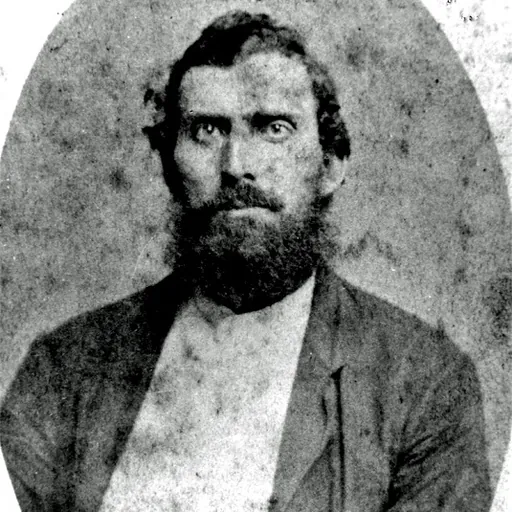
About Newton Knight
Lived 1829 – 1922 (aged 92). Newton Knight was an American politician.
Newton Knight was born near the Leaf River in Jones County, Mississippi, most likely in November 1837, to Albert Knight and his wife. His birth year has been recorded by his son, Tom Knight, in a biography as 1830, and his grandniece, Ethel Knight, wrote that he was born in 1829. His gravestone has his full name as "Capt. Newton Knight", born November 10, 1829, died February 16, 1922. But the 1900 census records that Knight was born in November 1837, likely from his testimony. This date is consistent with census records from other years. However, it is possible Knight gave the wrong year of his birth to the census takers to hide his family origin. He was probably taught to read and write by his mother, as there were no public schools for yeomen children. Newton Knight never owned slaves.
Newton Knight married Serena Turner in 1858, and the two established a small farm just across the county line in southwest Jasper County, Mississippi.
Knight joined the Confederate Army in July 1861, enlisting in the 8th Mississippi Infantry Regiment. Six months later, he was given leave to return home and tend to his ailing father. In May 1862, Knight, along with several friends and neighbors, enlisted in Company F of the 7th Mississippi Infantry Battalion. They preferred to serve together in the same company rather than with strangers.
Knight was reported absent without leave in October 1862. He later defended his desertion, arguing, "If they had a right to conscript me when I didn't want to fight the Union, I had a right to quit when I got ready." They burned his homestead and farm as an example to others, leaving his family destitute.
As the ranks of deserters swelled after the Union was victorious in the siege of Vicksburg, Confederate authorities began receiving reports that deserters in the Jones County area were looting and burning houses. A local quartermaster, Captain W. J. Bryant, reported that "the deserters have overrun and taken possession of the country, in many cases exiling the good and loyal citizens or shooting them in cold blood on their own door-sills." General Braxton Bragg dispatched Major Amos McLemore to Jones County to investigate and round up deserters and stragglers. On October 5, 1863, McLemore was shot and killed in the Ellisville home of Amos Deason; Knight is believed to have killed him. The company's main hideout, known as "Devils Den," was located along the Leaf River at the Jones-Covington county line. Local women and slaves provided food and other aid to the men. Women blew cattlehorns to signal the approach of Confederate authorities to their farms. The exact number is still a matter of debate, in light of an interview Knight gave after the war stating, "There was about 125 of us, never any more."
By the spring of 1864, the Confederate government in the county had been effectively overthrown. On March 29, 1864, Confederate Captain Wirt Thomson wrote to James Seddon, Confederate Secretary of War, claiming the Knight Company had captured Ellisville and raised the U.S. flag over the courthouse in Jones County. He further reported, "The country is entirely at their mercy." General William Tecumseh Sherman received a letter from a local group declaring its independence from the Confederacy. Using bloodhounds to track down guerillas in the swamps, Lowry rounded up and executed ten members of the Knight Company, including Newton's cousins, Benjamin Franklin Knight and Sil Coleman. Newton Knight, however, evaded capture. He later stated his company had unsuccessfully attempted to break through Confederate lines to join the Union Army.
Knight supported the Reconstruction administration of Republican Governor Adelbert Ames. In 1872, he was appointed deputy U.S. Marshal for the Southern District. As conflict mounted between white paramilitary insurgents and the Republican Reconstruction government, in 1875, Ames appointed Knight as colonel of the First Infantry Regiment of Jasper County, an otherwise all-black regiment defending residents against insurgent activity. White Democrats regained control of the state government later that year and forced Ames out of office. Reconstruction ended officially in 1877. Knight withdrew from politics. he was buried at his request in what is now called the Knight Family Cemetery, next to Rachel on a hill in Jones County overlooking their farm.
In 1964, the great-great-grandchildren of Newton Knight and Rachel, 9-year-old Edgar and 8-year-old Randy Williamson, had never attended a day of school because local school authorities, fearing violence and opposition from residents, refused their admittance to a white school. However being only 1/16 or 1/32 African American, they were considered white and consequently barred from being admitted to a black school as well. In 1965, with assistance from Jasper County, the children were admitted to the Stringer School. The children enrolled in the first grade at 10 and 11 years old, and despite their advanced age, did well socially.
Legacy Early accounts of Knight and his followers were published by descendants of him and other local figures of the Civil War years. In 1935, Knight's son, Thomas Jefferson "Tom" Knight, published a book about his father, The Life and Activities of Captain Newton Knight. Tom Knight portrayed his father as a Civil War-era Robin Hood who refused to fight for a cause with which he disagreed. The book notably omits Newton Knight's post-war marriage to Rachel. Ethel Knight portrayed Newton as a backward, ignorant, murderous traitor. She argued that most members of the Knight Company were not Unionists but had been manipulated by Knight into joining his cause. Leverett wrote that while "few of these people had any real stake in the great economic and political issues that precipitated the war and that most of them opposed the political policy of secession [of the South from the Union], the threat of coercion of the South by the North galvanized the loyalties of Jones Countians to their region and their way of life [The Confederacy]. And for most of them, that loyalty never wavered." Leverett notes a "Union raiding party entering the county in June of 1863 was captured in part by civilians or the Ellisville 'Home Guard,' and the Union prisoners had to be protected from the local citizens."
Bynum explored the regional history beyond the War, examining the common-law marriages of Newton Knight and Rachel, a freedwoman, and of two pairs of their grown children, forming three interracial families. She traces their legacy into the twentieth century, including a case that reached the Mississippi Supreme Court.
Sally Jenkins and John Stauffer wrote a popular account, 'The State of Jones', that expands marginally on Leverett's and Bynum's research. The authors emphasize the extent to which Knight and his close allies ended Confederate control of Jones County during the war and continued to express anti-racist, pro-Unionist sympathies during Reconstruction.
In popular culture James H. Street's 1942 novel, Tap Roots, is very loosely based on the Knight Company's actions. The novel's protagonist, Hoab Dabney, was inspired by Newton Knight. The film closely follows Knight's life.
Don’t just read it —
keep it.
Full-length biographies made to live with: read them, listen on the way to work, watch them tonight.
- E-book
- Audio
- Video
Instant download · yours to keep · every purchase keeps this site free
Important facts
Family & relationships
People in Newton Knight's life
Named in this biography and alive at the same time



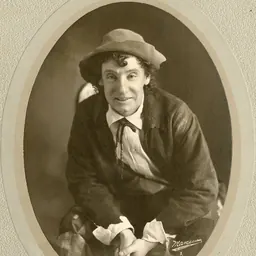

Related people
Same field, nearest in time
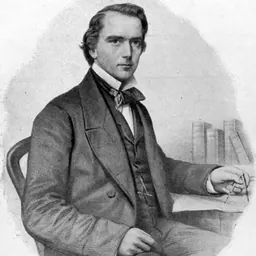




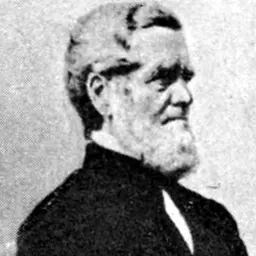
Contemporaries
People whose lives overlapped Newton Knight's




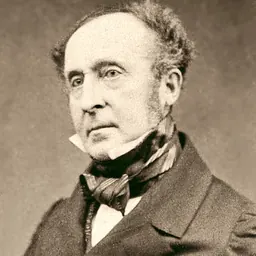
Frequently asked questions
Who was Newton Knight?
American Civil War guerilla
When was Newton Knight born?
Newton Knight was born on 10 November 1829 in Jones County.
When did Newton Knight die?
Newton Knight died on 16 February 1922 in Jasper County.
What was Newton Knight's occupation?
Newton Knight was a politician.
What nationality was Newton Knight?
Newton Knight was American.
Sources & further reading
Cite this page
APA: Biography.guide. (2026). Newton Knight. https://biography.guide/newton-knight/
MLA: "Newton Knight." Biography.guide, https://biography.guide/newton-knight/.
Chicago: "Newton Knight." Biography.guide. https://biography.guide/newton-knight/.
Data last updated: 2026-09-20 · Spot an error? Report a correction.
Page generated 2026-09-27 05:10 UTC