
About Newton Jenkins
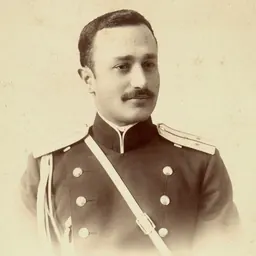
Lived 1887 – 1942 (aged 54–55). Newton Jenkins was a military personnel and politician.
Isaac Newton Jenkins (August 19, 1887 – October 16, 1942) was an American attorney, soldier, and political candidate. A perennial candidate for political office, Jenkins ran for office in Illinois many times. He originally ran as a Robert La Follette-aligned progressive member of the Republican Party in the 1920s. Beginning in the mid-1930s, Jenkins publicly espoused antisemitic and fascist views and aligned himself with Adolf Hitler and other Nazis. He associated with other American pro-fascists. He was a figure in the short-lived Union Party, and served as the director of William Lemke's 1936 campaign as the party's presidential nominee.
Military career During World War I, Jenkins served in the 5th Regiment of the United States Marines as a lieutenant. He later served with France's 5th Army. He was the attorney for the Pure Milk association (a dairy cooperative selling organization) since its inception. He was also a member of the Cook County Farm Bureau. He was, at one time, president of the Jefferson Park Business Men's Association.
Early (progressive) political career 1920 Chicago aldermanic candidacy Jenkins made his first run for political office in 1920, when he ran to be Chicago alderman of the 27th Ward.
1924, 1930, and 1932 U.S. Senate candidacies
Jenkins thrice ran in Illinois for the United States Senate. He first ran in the Republican Party's primary for the 1924 United States Senate election in Illinois on a Robert La Follette-aligned platform. Samuel George Blythe described Jenkins as having run on a, "farmer-labor near bolshevik platform." While Jenkins ran a left-wing campaign, he performed his strongest in downstate Illinois than in Cook County, Illinois, despite Cook County being home to a more traditionally left-wing constituency. This was an indicator that his platform had appealed to downstate farmers. Jenkins placed third in the primary, receiving 114,239 votes. This gave him 13.32% of the vote, compared to Charles S. Deneen's 41.70% and incumbent Medill McCormick's 41.01%.
During the 1930 Illinois U.S. Senate race again ran for U.S. Senate, challenging incumbent Charles S. Deneen for the Republican Party nomination. He and Deneen both lost to Ruth Hanna McCormick. Jenkins received 161,261 votes. This gave him 11.43% of the vote, compared to McCormick's 50.66% and Deneen's 35.19%.
Jenkins ran a third time for U.S. Senate in the Republican primary of the 1932 United States Senate election in Illinois.
During these campaigns, Jenkins built a sizable base of support in organizations for famers and organizations for retired military servicemen. However, he adopted outright fascist and antisemitic politics and now stood in fierce opposition to such progressive causes as labor movements. The party, which intended to use "U.S., Unite" as its national slogan and utilize the buffalo as its mascot, sought to use Jenkins' candidacy as a national launchpad. However, Third Party was regarded to be "openly fascist". During his campaign, Jenkins published antisemitic literature.
The platform of the Third Party-backed slate of independent candidates in the 1935 Chicago municipal election was to create a city manager position in the city, to adopt the city commission-style of government in Chicago, to create jobs for the head of family of 100,000 households, to eliminate taxes in the city, and to end "corrupt elections".
Jenkins placed third of three candidates in the mayoral election with 87,726 votes. He received 8.34% of the vote, to incumbent Democrat Edward Joseph Kelly's 75.84% and Republican nominee Emil C. Wetten's 15.83%.
Union Party and 1936 U.S. Senate candidacy
Soon after the mayoral election, in March 1936 Jenkins declared his intention to run in the 1936 United States presidential election as the Third Party's nominee. However, the Third Party merged into the Union Party, which was backing William Lemke's presidential candidacy. Jenkins became the leader of the Illinois state chapter of the Union Party - the Union Progressive Party - and served as the director of Lemke's Union Party candidacy in the presidential election. Jenkins also ran as the party's nominee in the 1936 U.S. Senate election in Illinois.
Continued fascist activism
Jenkins endorsed the political views of Adolf Hitler, the dictator of Germany and leader of the Nazi Party.
Jenkins' pro-Nazi work received attention from Chicago Times reporters-investigators James J. Metcalfe, John C. Metcalfe, and William Mueller: all of whom went undercover in the American Nazi groups to report on their activities, particularly focusing on the German American Bund. The article reported that Jenkins was, "attempting to united 'nationalist' groups in the third party", and that he was being heralded by attendees at Bund meetings as a "great American", as well as referred to with the honorific "Der Führer der Dritten Partei" for the Nazi political movement in the United States (translating to "leader of the Third party" in the German language).
In 1938, Jenkins self-published a book titled The Republic Reclaimed which presented his views that Jewish people were at fault for most of the world's problems. The book praised Mussolini and Italian fascists as well as Hitler and German Nazi fascists, containing a chapter on Adolf Hitler titled "Hitler Greatest German in All History". The book predicted that there would be a "man hunt" against the "traitors" he alleged were "selling the Republic to Jew power".
1938 U.S Senate candidacy
In 1938, Jenkins ran unsuccessfully in the Democratic Party's U.S. Senate primary. He placed a distant third, receiving 32,808 votes. He received 2.04% of the vote to Scott W. Lucas's 49.92% and Michael L. Igoe's 45.23%.
Later activities
Among the American fascists that Jenkins associated himself with was Francis Parker Yockey.
By 1941, Jenkins worked with Elizabeth Dilling to run what the Anti-Defamation League (ADL) described in a memorandum as a "clearinghouse for anti-Semitic material". Through this operation, in 1941, they anonymously distributed in numerous cities a printing that the ADL dubbed the "Uncle Sam crucifixion circular" or the "new pro-Nazi circular" which portrayed several prominent Jewish figures as being among those involved in a conspiracy to bring the United States into World War II, and urged the United States to remain neutral. Per the findings of Maurice Fagan, the executive director of the Philadelphia Anti-Defamation Committee, the circular was the "brainchild" of Jenkins. ADL investigators found that John Winter of Chicago had printed the circular for them. A second circular surfaced soon after. Evidence found by ADL investigators indicated that the artwork featured in both circulars were likely created by artist Gustave A. Brand, who was the former city treasurer of Chicago.
Death Jenkins died of a heart ailment on October 16, 1942, at the age of 55.
Mayor
Don’t just read it —
keep it.
Full-length biographies made to live with: read them, listen on the way to work, watch them tonight.
- E-book
- Audio
- Video
Instant download · yours to keep · every purchase keeps this site free
Important facts
People in Newton Jenkins's life
Named in this biography and alive at the same time





Related people
Same field, nearest in time


Contemporaries
People whose lives overlapped Newton Jenkins's



Frequently asked questions
Who was Newton Jenkins?
American attorney (d.1942)
When was Newton Jenkins born?
Newton Jenkins was born on 19 August 1887.
When did Newton Jenkins die?
Newton Jenkins died in 1942.
What was Newton Jenkins's occupation?
Newton Jenkins was a military personnel and politician.
Sources & further reading
Cite this page
APA: Biography.guide. (2026). Newton Jenkins. https://biography.guide/newton-jenkins/
MLA: "Newton Jenkins." Biography.guide, https://biography.guide/newton-jenkins/.
Chicago: "Newton Jenkins." Biography.guide. https://biography.guide/newton-jenkins/.
Data last updated: 2026-09-25 · Spot an error? Report a correction.
Page generated 2026-09-27 05:10 UTC