
Nestor Principe
Filipino activist, writer and martial arts instructor
About Nestor Principe
Lived 1945 – 1973 (aged 28).
In the years after Marcos's removal, on November 30, 2018, Principe's name was engraved on the Wall of Remembrance of the Bantayog ng mga Bayani, which honors the martyrs and heroes that fought against the Martial Law regime of Ferdinand Marcos.
Early life and Sikaran practice Although Principe was born in Tagbilaran in the province of Bohol in the Visayas, his family soon settled in Caloocan in Metro Manila, where the young Nestor went to school. The part of Caloocan where the Principe family had settled was one ruled by gangs and rogue police officers, so he became interested in martial arts. He soon earned a black belt in Sikaran, a Filipino kickfighting style akin to Shotokan-style Karate.
At a 1965 International Martial Arts Exhibition, Principe was recruited by a Malaysian government minister to serve as a bodyguard and martial arts instructor. Principe accepted, and, along with three other Filipino practitioners became responsible for introducing the art of Sikaran to Malaysia.
Life overseas After working in Malaysia, Principe went on to travel throughout the world, visiting Thailand, India, Nepal and Pakistan, the Middle East, North Africa and Europe. He is reported to have claimed working to clear land mines in Israel. He travelled with hippie friends, taking odd jobs as a worker or as a martial arts instructor, and was at a protest rally in Trafalgar Square when he heard about the events of the First Quarter Storm. This inspired him to hitchhike his way back to the Philippines, where he went back to college and became a student activist.
Activist work Principe went to the Lyceum of the Philippines to take up a second undergraduate degree, choosing to enrol in journalism. He wrote literary pieces during this time, two of which – “Goodbye Manuel” and “Wadi is also a river” – were published in the Philippines Free Press.
Death and legacy On May 7, 1973, Principe was killed in Kabayan, Benguet by elements of the Philippine Constabulary, who removed his head from his body and presented it to their commanding officer. The officer ordered them to return the head to be buried with the body, but no witnesses have confirmed whether this order was indeed followed. The residents of Kabayan were so aghast at the atrocity that they performed a ritual to cleanse their community of the desecration before they buried Principe's body in the mountains of Benguet.
On November 30, 2018, Principe's name was engraved on the Wall of Remembrrance of the Bantayog ng mga Bayani, which honors the martyrs and heroes that fought against the Martial Law regime of Ferdinand Marcos.
Don’t just read it —
keep it.
Full-length biographies made to live with: read them, listen on the way to work, watch them tonight.
- E-book
- Audio
- Video
Instant download · yours to keep · every purchase keeps this site free
Important facts
People in Nestor Principe's life
Named in this biography and alive at the same time
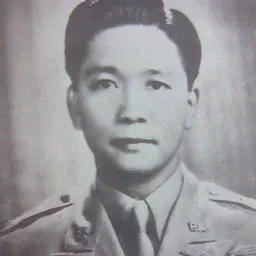
Contemporaries
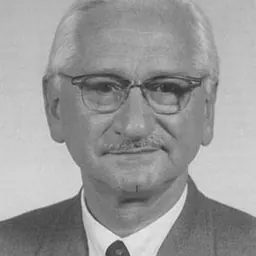
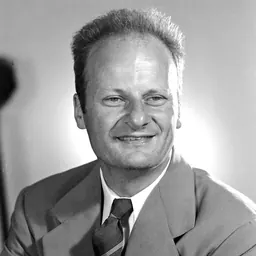
People whose lives overlapped Nestor Principe's



Frequently asked questions
Who was Nestor Principe?
Filipino activist, writer and martial arts instructor
When was Nestor Principe born?
Nestor Principe was born on 15 March 1945.
When did Nestor Principe die?
Nestor Principe died on 7 May 1973.
Sources & further reading
Cite this page
APA: Biography.guide. (2026). Nestor Principe. https://biography.guide/nestor-principe/
MLA: "Nestor Principe." Biography.guide, https://biography.guide/nestor-principe/.
Chicago: "Nestor Principe." Biography.guide. https://biography.guide/nestor-principe/.
Data last updated: 2026-09-22 · Spot an error? Report a correction.
Page generated 2026-09-27 05:23 UTC