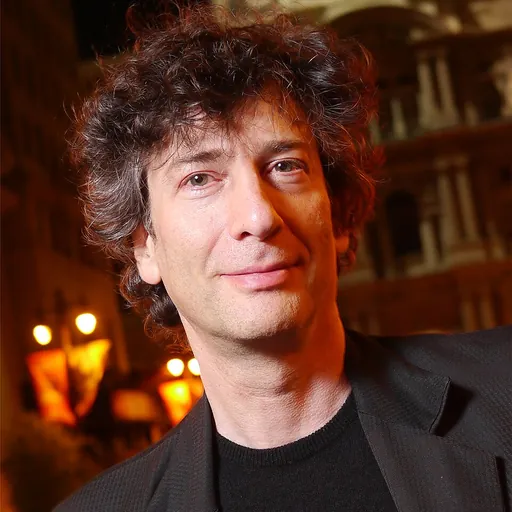
About Neil Gaiman
Born 1960. Neil Gaiman is a British beekeeper, comics writer, novelist, journalist, blogger and film producer.
Neil Richard MacKinnon Gaiman (; born Neil Richard Gaiman; 10 November 1960) is an English author of short fiction, novels, comic books, audio theatre, and screenplays. His works include the comic series The Sandman (1989–1996) and the novels Good Omens, Stardust (1999), American Gods (2001), Coraline (2002), Anansi Boys (2005), The Graveyard Book (2008) and The Ocean at the End of the Lane (2013). He co-created the TV adaptations of Good Omens and The Sandman.
Gaiman's awards include Hugo, Nebula, and Bram Stoker awards and Newbery and Carnegie medals. He is the first author to win the Newbery and the Carnegie medals for the same work, The Graveyard Book. The Ocean at the End of the Lane was voted Book of the Year in the British National Book Awards, and it was adapted into an acclaimed stage play at the Royal National Theatre in London.
Beginning in 2024, news outlets published sexual assault accusations against Gaiman by numerous women. This affected or halted production on several adaptations of his work. One accuser sued Gaiman and his estranged wife Amanda Palmer for rape and human trafficking. was born on 10 November 1960 in Portchester, Hampshire. Gaiman's family is of Polish-Jewish and other Ashkenazi origins. His great-grandfather emigrated to England from Antwerp before 1914 and his grandfather settled in Portsmouth and established a chain of grocery stores, changing the family name from Chaiman to Gaiman. His father, David Bernard Gaiman, worked in the same chain of stores; his mother, Sheila Gaiman (née Goldman), was a pharmacist. Neil has two younger sisters, Claire and Lizzy.
The Gaimans moved in 1965 to the West Sussex town of East Grinstead, where his parents studied Dianetics at the Scientology centre in the town; one of Gaiman's sisters works for the Church of Scientology in Los Angeles. His other sister, Lizzy Calcioli, has said, "Most of our social activities were involved with Scientology or our Jewish family. It would get very confusing when people would ask my religion as a kid. I'd say, 'I'm a Jewish Scientologist. Gaiman says that he is not a Scientologist, and that like Judaism, Scientology is his family's religion. About his personal views, Gaiman has stated, "I think we can say that God exists in the DC Universe. I would not stand up and beat the drum for the existence of God in this universe. I don't know, I think there's probably a 50/50 chance. It doesn't really matter to me."
Gaiman was able to read at the age of four. He said, "I was a reader. I loved reading. Reading things gave me pleasure. I was very good at most subjects in school, not because I had any particular aptitude in them, but because normally on the first day of school, they'd hand out schoolbooks, and I'd read them—which would mean that I'd know what was coming up because I'd read it." When he was about 10 years old, he read his way through the works of Dennis Wheatley; The Ka of Gifford Hillary and The Haunting of Toby Jugg made a special impact on him.
Another work that made a particular impression was J. R. R. Tolkien's The Lord of the Rings, which he got from his school library. Although they only had the first two of the novel's three volumes, Gaiman consistently checked them out and read them. He later won the school English prize and the school reading prize, enabling him to finally acquire the third volume. and "if you can make yourself aged seven happy, you're really doing well – it's like writing a letter to yourself aged seven." Lewis Carroll's Alice's Adventures in Wonderland was another childhood favourite, and "a favourite forever. Alice was default reading to the point where I knew it by heart." He also enjoyed Batman comics. His father's position as a public relations official of the Church of Scientology was the cause of the seven-year-old Gaiman being forced to withdraw from Fonthill School and return to the school which he had previously attended. He lived in East Grinstead for many years, from 1965 to 1980 and again from 1984 to 1987.
In the 1970s, he spent three years as an auditor for the Church of Scientology, an unusually high-ranking position given his age.
He met his first wife, Mary McGrath, while she was studying Scientology and living in a house in East Grinstead that was owned by his father. The couple were married in 1985 after having their first child. He was close friends with fellow author Terry Pratchett until the latter's death in 2015. Gaiman met Amanda Palmer in 2008, and the two entered a relationship in 2009, marrying in 2011. They have one son together. and encouraged one another to have other partners, Gaiman published an apology on his website, saying he had endangered the local community. After Gaiman's departure, Palmer announced on Patreon that she and Gaiman had separated. reconciled in 2021, but confirmed they would divorce in a November 2022 joint statement. , in the fifth year of proceedings, negotiations had become "ugly", with Palmer moving in with her parents due to financial difficulties. Gaiman generally posts to the blog describing the day-to-day process of being Neil Gaiman and writing, revising, publishing, or promoting whatever the current project is. He also posts reader emails and answers questions, which gives him unusually direct and immediate interaction with fans. One of his answers on why he writes the blog is "because writing is, like death, a lonely business." The original American Gods blog was extracted for publication in the NESFA Press collection of Gaiman miscellany, Adventures in the Dream Trade. To celebrate the seventh anniversary of the blog, the novel American Gods was provided free of charge online for a month.
Gaiman joined Twitter in 2008. In 2013, Gaiman was named by IGN as one of "The Best Tweeters in Comics", describing his posts as "sublime".
Other personal relationships Gaiman is godfather to Tori Amos's daughter Tash, and wrote a poem called "Blueberry Girl" for Tori and Tash. The poem was adapted into a book by illustrator Charles Vess. Gaiman read the poem aloud to an audience at the Sundance Kabuki Theater in San Francisco on 5 October 2008 during his book reading tour for The Graveyard Book. It was published in March 2009 with the title Blueberry Girl.
Advocacy In 2016, Gaiman, along with several other celebrities, appeared in the video "What They Took With Them", from the United Nations High Commissioner for Refugees, to help raise awareness of the issue of global refugees.
Gaiman is a supporter of the Comic Book Legal Defense Fund and has served on its board of directors. In 2013, Gaiman was named co-chair of the organization's newly formed advisory board.
In 2022, during the Russian invasion of Ukraine, Gaiman supported Ukraine by announcing on Twitter that he does not want to renew contracts with Russian publishers. Gaiman also encouraged donating to Ukrainian refugees.
In 2023, Gaiman signed an open letter addressed to Russian president Vladimir Putin, alongside over 100 other public figures, calling for the release of Russian prisoner Alexei Navalny.
Career Journalism, early writings, and literary influences Gaiman has mentioned several writers who have influenced his work, including Mary Shelley, Rudyard Kipling, Edgar Allan Poe, Michael Moorcock, Dave Sim, Alan Moore, Steve Ditko, Will Eisner, Ursula K. Le Guin, Harlan Ellison, John Crowley, Lord Dunsany, G. K. Chesterton and Gene Wolfe. During a trip to France when he was 13, Gaiman became fascinated with the visually fantastic world in the stories of Métal Hurlant, even though he could not understand the words. When he was 19 or 20 years old, he contacted his favourite science fiction writer, R. A. Lafferty, requesting advice on becoming an author and including a Lafferty pastiche he had written. Lafferty sent Gaiman an encouraging and informative letter back, along with literary advice.
Gaiman has named Roger Zelazny as the author who influenced him the most. Gaiman claims that other authors such as Samuel R. Delany and Angela Carter "furnished the inside of my mind and set me to writing".
In the early 1980s, Gaiman pursued journalism, conducting interviews and writing book reviews, as a means to learn about the world and to make connections that he hoped would later assist him in getting published. His first professional short story publication was "Featherquest", a fantasy story, in Imagine magazine in May 1984. After this, he was offered a job by Penthouse. He refused the offer. Gaiman has said he ended his journalism career in 1987 because British newspapers regularly publish untruths as fact. In the late 1980s, he wrote Don't Panic: The Official Hitchhiker's Guide to the Galaxy Companion in what he calls a "classic English humour" style.
Following this, he wrote the opening of what became his collaboration with Terry Pratchett on the comic novel Good Omens, about the impending apocalypse.
Comics
After forming a friendship with Alan Moore, who taught him how to write comic scripts, Gaiman started writing comic books and picked up Miracleman after Moore finished his run on the series. He continued his professional relationship with Moore by contributing quotations for the supplemental materials in the Watchmen comic book series. and he wrote the limited series Black Orchid. Karen Berger, who later became head of DC Comics's Vertigo, read Black Orchid and offered Gaiman a job: to re-write an old character, the Sandman, but to put his own spin on him. The various artists who contributed to the series include Sam Kieth, Mike Dringenberg, Jill Thompson, Shawn McManus, Marc Hempel, and Michael Zulli, with lettering by Todd Klein, colours by Daniel Vozzo, and covers by Dave McKean. The 75 issues of the regular series, along with an illustrated prose text and a special containing seven short stories, have been collected into 12 volumes that remain in print.
In the eighth issue of The Sandman, Gaiman and artist Mike Dringenberg introduced Death, the older sister of Dream, who became as popular as the series' title character. The limited series Death: The High Cost of Living launched DC's Vertigo line in 1993.
Comics historian Les Daniels called Gaiman's work "astonishing" and noted that The Sandman was "a mixture of fantasy, horror, and ironic humor such as comic books had never seen before". DC Comics writer and executive Paul Levitz observed that "The Sandman became the first extraordinary success as a series of graphic novel collections, reaching out and converting new readers to the medium, particularly young women on college campuses, and making Gaiman himself into an iconic cultural figure."
Gaiman and Jamie Delano were to become co-writers of the Swamp Thing series following Rick Veitch. An editorial decision by DC to censor Veitch's final storyline caused both Gaiman and Delano to withdraw from the title.
Gaiman produced two stories for DC's Secret Origins series in 1989: a Poison Ivy tale drawn by Mark Buckingham and a Riddler story illustrated by Bernie Mireault and Matt Wagner. A story that Gaiman originally wrote for Action Comics Weekly in 1989 was shelved due to editorial concerns but it was finally published in 2000 as Green Lantern/Superman: Legend of the Green Flame.
In 1990, Gaiman wrote The Books of Magic, a four-part mini-series that provided a tour of the mythological and magical parts of the DC Universe through a frame story about an English teenager who discovers that he is destined to be the world's greatest wizard. The miniseries was popular, and sired an ongoing series written by John Ney Rieber.
Gaiman's adaptation of Sweeney Todd, illustrated by Michael Zulli for Stephen R. Bissette's publication Taboo, was stopped when the anthology itself was discontinued.
In the mid-1990s, he also created a number of new characters and a setting that was to be featured in a title published by Tekno Comix. The concepts were then altered and split between three titles set in the same continuity: Lady Justice, Mr. Hero the Newmatic Man, and Teknophage, and tie-ins. Because the publisher aimed to expand their characters into other media such as television, Gaiman designed his concepts with potential TV and computer game adaptations in mind. Although his name appeared prominently as the creator of the characters, he was not involved in writing any of the above-mentioned books.
Gaiman wrote a semi-autobiographical story about a boy's fascination with Michael Moorcock's anti-hero Elric of Melniboné for Ed Kramer's anthology Tales of the White Wolf. In 1996, Gaiman and Kramer co-edited The Sandman: Book of Dreams. Nominated for the British Fantasy Award, the original fiction anthology featured stories and contributions by Tori Amos, Clive Barker, Gene Wolfe, Caitlín R. Kiernan, Tad Williams, and others.
Asked why he likes comics more than other forms of storytelling, Gaiman said:
Gaiman wrote two series for Marvel Comics. Marvel 1602 was an eight-issue limited series published from November 2003 to June 2004 with art by Andy Kubert and Richard Isanove. The Eternals was a seven-issue limited series drawn by John Romita Jr., which was published from August 2006 to March 2007.
In 2009, Gaiman wrote a two-part Batman story for DC Comics to follow Batman R.I.P. titled "Whatever Happened to the Caped Crusader?" a play-off of the classic Superman story "Whatever Happened to the Man of Tomorrow?" by Alan Moore. He contributed a twelve-part Metamorpho serial drawn by Mike Allred for Wednesday Comics, a weekly newspaper-style series. Gaiman and Paul Cornell co-wrote Action Comics #894 (December 2010), which featured an appearance by Death. In October 2013, DC Comics released The Sandman: Overture with art by J. H. Williams III. Gaiman's Angela character was introduced into the Marvel Universe in the last issue of the Age of Ultron miniseries in 2013.
Gaiman oversaw The Sandman Universe, a line of comic books published by Vertigo. The four series — House of Whispers, Lucifer, The Books of Magic, and The Dreaming — were written by new creative teams. The line launched on 8 August 2018.
After teaming with Colleen Doran for a series of graphic novel adaptations based on his short stories "Troll Bridge", "Chivalry", and "Snow, Glass, Apples", Gaiman and the Terry Pratchett estate chose Doran to adapt Good Omens into graphic novel form, and to self publish the work via the Pratchett estate's Dunmanifestin label. It was financed on Kickstarter where it became a record-setter in less than a week as the top fan-supported and top-earning comics project in the history of the platform.
Novels
Neil Gaiman and Roz Kaveney discuss Why We Need Fantasy at the British Library on 20 November 2023.
In a collaboration with author Terry Pratchett, best known for his series of Discworld novels, Gaiman's first novel Good Omens was published in 1990. In 2011, Pratchett said that while the entire novel was a collaborative effort and most of the ideas could be credited to both of them, Pratchett did a larger portion of writing and editing if for no other reason than Gaiman's scheduled involvement with Sandman.
The 1996 novelisation of Gaiman's teleplay for the BBC mini-series Neverwhere was his first solo novel. The novel was released in tandem with the television series, though it presents some notable differences from the television series. Gaiman has since revised the novel twice, the first time for an American audience unfamiliar with the London Underground, the second time because he felt unsatisfied with the originals.
In 1999, the first printings of his fantasy novel Stardust were released. The novel has been released both as a standard novel and in an illustrated text edition. This novel was highly influenced by Victorian fairytales and culture.
American Gods became one of Gaiman's best-selling and multi-award-winning novels upon its release in 2001. A special 10th Anniversary edition was released, with the "author's preferred text" 12,000 words longer than the original mass-market editions. Gaiman has not written a direct sequel to American Gods but he has revisited the characters. A glimpse at Shadow's travels in Europe is found in a short story which finds him in Scotland, applying the same concepts developed in American Gods to the story of Beowulf. The 2005 novel Anansi Boys deals with Anansi ('Mr. Nancy'), tracing the relationship of his two sons, one semi-divine and the other an unassuming bookkeeper, as they explore their common heritage. It debuted at number one on The New York Times Best Seller list.
In 2002, Gaiman entered the world of children's books with the dark fairy tale Coraline. In 2008 he released a young adult novel, The Graveyard Book. It follows the adventures of a boy named Bod after his family is murdered and he is left to be brought up by a graveyard. It is heavily influenced by Rudyard Kipling's The Jungle Book and H. P. Lovecraft’s The Dream-Quest of Unknown Kadath. Literary critic Danel Olson defended it as one of the first canonical novels of 21st century Gothic literature. , it had been on The New York Times Bestseller children's list for fifteen weeks.
In 2013, The Ocean at the End of the Lane was voted Book of the Year in the British National Book Awards. The novel follows an unnamed man who returns to his hometown for a funeral and remembers events that began forty years earlier. Themes include the search for self-identity and the "disconnect between childhood and adulthood". It was later adapted into a critically acclaimed stage play at the Royal National Theatre in London.
In September 2016, Neil Gaiman announced that he had been working for some years on retellings of Norse mythology. Norse Mythology was released in February 2017.
Several of his novels have been published as paperbacks with retro covers by artist Robert McGinnis.
Film and screenwriting
Gaiman wrote the 1996 BBC dark fantasy television series Neverwhere. He co-wrote the screenplay for the movie MirrorMask with his old friend Dave McKean for McKean to direct. In addition, he wrote the localised English language script for the anime movie Princess Mononoke, based on a translation of the Japanese script.
After his disappointment with the production limitations of Neverwhere, Gaiman asked his agent to pull him out of an (unnamed) UK television series that was to begin production immediately afterwards. "I didn't want to do it unless I had more control than you get as a writer: in fantasy, the tone of voice, the look and feel, the way something is shot and edited is vital, and I wanted to be in charge of that." Gaiman has expressed interest in collaborating on a film adaptation of the Epic of Gilgamesh.
He was the only person other than J. Michael Straczynski to write a Babylon 5 script in the series' last three seasons, contributing to the season five episode "Day of the Dead". although the project was stalled while Zemeckis made The Polar Express and the Gaiman-Roger Avary-penned Beowulf film.
Neil Gaiman was featured in the History Channel documentary Comic Book Superheroes Unmasked.
Several of Gaiman's original works have been optioned or greenlighted for film adaptation, most notably Stardust, which premiered in August 2007 and stars Charlie Cox, Robert De Niro, Michelle Pfeiffer, Claire Danes and Mark Strong, directed by Matthew Vaughn. A stop-motion version of Coraline was released on 6 February 2009, directed by Henry Selick and starring the voices of Dakota Fanning and Teri Hatcher. Don Murphy and Susan Montford were named as producers, and Guillermo del Toro was named as the film's executive producer. By 2010, it had been reported that the film was no longer in production.
Seeing Ear Theatre performed two of Gaiman's audio theatre plays, "Snow, Glass, Apples", Gaiman's retelling of Snow White, and "Murder Mysteries", a story of heaven before the Fall in which the first crime is committed. Both audio plays were published in the collection Smoke and Mirrors in 1998.
At Guillermo del Toro's request, he rewrote the opening of Hellboy II: The Golden Army to make it look more like a fairy tale.
Gaiman's 2009 Newbery Medal winning book The Graveyard Book will be made into a movie, with Ron Howard as the director.
Gaiman wrote an episode of the long-running BBC science fiction series Doctor Who, broadcast in 2011 during Matt Smith's second series as the Doctor. Shooting began in August 2010 for this episode, the original title of which was "The House of Nothing" but which was eventually transmitted as "The Doctor's Wife". The episode won the 2012 Hugo Award for Best Dramatic Presentation (Short Form). Gaiman made his return to Doctor Who with an episode titled "Nightmare in Silver", broadcast on 11 May 2013. Gaiman returned to the Whoniverse in 2020 for the web series Doctor Who: Lockdown; he wrote the mini-episode "Rory's Story" which saw Arthur Darvill reprise his role of Rory Williams. Also in 2011, it was announced that Gaiman would be writing the script to a new film version of Journey to the West. Gaiman appeared as himself on The Simpsons episode "The Book Job", which was broadcast on 20 November 2011.
In 2015, Starz greenlighted a series adaptation of Gaiman's novel American Gods. Bryan Fuller and Michael Green wrote and were showrunners for the series. Gaiman received a Best Dramatic Presentation, Long Form Hugo Award in 2020 for the TV miniseries adaptation of Good Omens, for which he wrote the screenplay. He voiced Gef in the black comedy film Nandor Fodor and the Talking Mongoose, one of the film's titular characters, in 2023.
Radio A six-part radio play of Neverwhere was broadcast in March 2013, adapted by Dirk Maggs for BBC Radio 4 and Radio 4 Extra. The performance featured James McAvoy as Richard, Natalie Dormer, Benedict Cumberbatch, Christopher Lee, Bernard Cribbens, and Johnny Vegas.
In September 2014, Gaiman and Terry Pratchett joined forces with BBC Radio 4 to make the first-ever dramatisation of their co-penned novel Good Omens, which was broadcast in December in five half-hour episodes and culminated in an hour-long final apocalyptic showdown.
Public performances Gaiman frequently performs public readings from his stories and poetry, and has toured with his wife, musician Amanda Palmer. In some of these performances he has also sung songs, in "a novelist's version of singing", despite having "no kind of singing voice".
In 2015, Gaiman delivered a 100-minute lecture for the Long Now Foundation entitled How Stories Last about the nature of storytelling and how stories persist in human culture. In April 2018, Gaiman made a guest appearance on the television show The Big Bang Theory, and his tweet about the show's fictional comic book store became the central theme of the episode "The Comet Polarization".
Intellectual property disputes In 1993, Gaiman was contracted by Todd McFarlane to write a single issue of Spawn, for Image Comics, which McFarlane had recently co-founded. McFarlane was promoting his new title by having guest authors Gaiman, Alan Moore, Frank Miller, and Dave Sim each write a single issue.
In issue No. 9 of the series, Gaiman introduced the characters Angela, Cogliostro, and Medieval Spawn. Prior to this issue, Spawn was an assassin who worked for the government and came back as a reluctant agent of Hell but had no real direction in his actions. In Angela, a cruel and malicious angel, Gaiman introduced a character who threatened Spawn's existence, as well as providing a moral opposite. Cogliostro was introduced as a mentor character for exposition and instruction, providing guidance. Medieval Spawn introduced a history and precedent that not all Spawns were self-serving or evil, giving additional character development to Malebolgia, the demon that creates Hellspawn. In papers filed by Gaiman in early 2002, however, he claimed that the characters were jointly owned by their scripter (himself) and artist (McFarlane), not merely by McFarlane in his role as the creator of the series. As McFarlane used the characters without Gaiman's permission or royalty payments, Gaiman believed his copyrighted work was being infringed upon, which violated their original oral agreement. McFarlane initially agreed that Gaiman had not signed away any rights to the characters, and negotiated with Gaiman to effectively "swap" McFarlane's interest in the character Marvelman. McFarlane had purchased an interest in the character when Eclipse Comics was liquidated while Gaiman was interested in being able to continue his aborted run of the Marvelman title. McFarlane later changed his initial position, claiming that Gaiman's work had only been work-for-hire and that McFarlane owned all of Gaiman's creations entirely. The presiding judge, however, ruled against their agreement being work for hire, based in large part on the legal requirement that "copyright assignments must be in writing."
The Seventh Circuit Court of Appeals upheld the district court ruling in February 2004 granting joint ownership of the characters to Gaiman and McFarlane. On the specific issue of Cogliostro, presiding Judge John C. Shabaz proclaimed, "The expressive work that is the comic-book character Count Nicholas Cogliostro was the joint work of Gaiman and McFarlane—their contributions strike us as quite equal—and both are entitled to ownership of the copyright". Similar analysis led to similar results for the other two characters, Angela and Medieval Spawn.
This legal battle was brought by Gaiman and the specifically formed Marvels and Miracles, LLC, which Gaiman had previously created to help sort out the legal rights surrounding Marvelman. Gaiman had written Marvel 1602 in 2003 to help fund this project and all of Gaiman's profits for the original issues of the series were donated to Marvels and Miracles.
Gaiman returned to court again over the Spawn characters Dark Ages Spawn, Domina, and Tiffany, claiming that they were "derivative of the three he co-created with McFarlane." The judge ruled that Gaiman was right in these claims as well and gave McFarlane until the beginning of September 2010 to settle the matter.
Sexual assault and misconduct allegations In July and August 2024, five women accused Gaiman of sexual assault and abuse. All five were interviewed on the Tortoise Media podcast Master: The Allegations Against Neil Gaiman. One, using the pseudonym "Claire", was also interviewed by The New York Times. Claire described non-consensual kissing and groping by Gaiman after meeting him at a book tour event, as well as a payment from Gaiman to her in August 2022.
Scarlett Pavlovich, a former nanny for Gaiman and Amanda Palmer's child, alleges that Gaiman sexually assaulted her within hours of their first meeting in February 2022. Wallner says that on one occasion, Gaiman grabbed her hand and placed it on his penis while his young son was asleep in the same bed.
The writer Julia Hobsbawm accused Gaiman of "an aggressive, unwanted pass" and described how Gaiman pushed her onto a sofa and French kissed her in 1986.
In September 2024, Disney halted production on the film adaptation of The Graveyard Book due to a variety of factors, including the sexual assault allegations against Gaiman. That same month, production on season three of Good Omens was put on hold; Gaiman ultimately left the project in October.
In January 2025, New York magazine published a cover story detailing the allegations against Gaiman. This article, which was published online on Vulture, included interviews with four of the women who had previously spoken to Tortoise Media, as well as four more women. Later the same month, Dark Horse Comics announced that they would cut ties with Gaiman over the allegations, including cancelling his ongoing comic adaptation of Anansi Boys. Gaiman was also dropped as a client by his agent Casarotto Ramsay.
In February 2025, Pavlovich filed three federal lawsuits in the US that alleged human trafficking under the Trafficking Victims Protection Act, alongside formal allegations of sexual assault and coercion. One named Gaiman and Palmer as co-defendants and two were against Palmer alone, seeking at least million in damages. In his response to the lawsuit, Gaiman accused Pavlovich of lying, presenting text messages in which she appeared to confirm that no sexual abuse had taken place, and claimed that police in New Zealand had already investigated her claims and found them to be false. Gaiman also argued that the American court lacked jurisdiction to hear the case—because the alleged assaults happened in New Zealand—and asked for the case to be dismissed. A Wisconsin federal judge granted this request without ruling on the facts of the case, and Pavlovich appealed the dismissal. Pavlovich's remaining US lawsuits against Gaiman were dismissed in October 2025 and February 2026, noting the proper location to pursue any potential case is New Zealand.
Gaiman has denied engaging in non-consensual sex, and dismissed Hobsbawm's allegations as misreading the situation.
Artistic work
Don’t just read it —
keep it.
Full-length biographies made to live with: read them, listen on the way to work, watch them tonight.
- E-book
- Audio
- Video
Instant download · yours to keep · every purchase keeps this site free
Important facts
People in Neil Gaiman's life
Named in this biography and alive at the same time
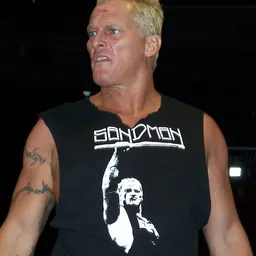


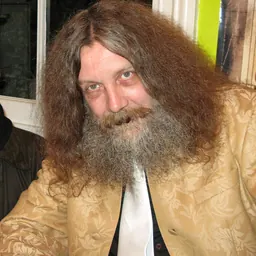

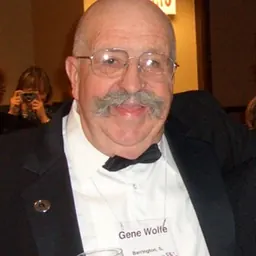
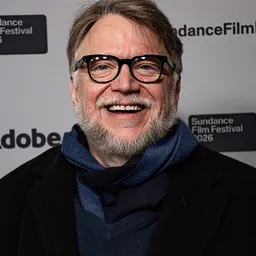
Related people
Same field, nearest in time



Contemporaries
People whose lives overlapped Neil Gaiman's



Frequently asked questions
Who is Neil Gaiman?
English writer (born 1960)
When was Neil Gaiman born?
Neil Gaiman was born on 10 November 1960 in Portchester.
What is Neil Gaiman's occupation?
Neil Gaiman is a beekeeper, comics writer, novelist, journalist, blogger and film producer.
What nationality is Neil Gaiman?
Neil Gaiman is British.
Sources & further reading
Cite this page
APA: Biography.guide. (2026). Neil Gaiman. https://biography.guide/neil-gaiman/
MLA: "Neil Gaiman." Biography.guide, https://biography.guide/neil-gaiman/.
Chicago: "Neil Gaiman." Biography.guide. https://biography.guide/neil-gaiman/.
Data last updated: 2026-09-23 · Spot an error? Report a correction.
Portrait: Wikimedia Commons · author & licence
Page generated 2026-09-27 05:07 UTC