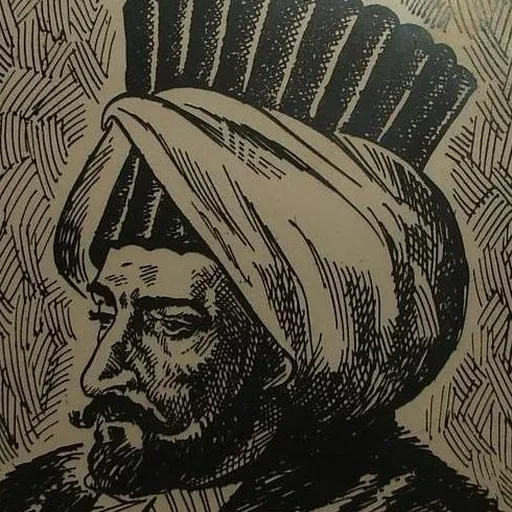
About Nedîm
Lived 1681 – 1730 (aged 48–49). Nedîm was a Turkish poet and writer.
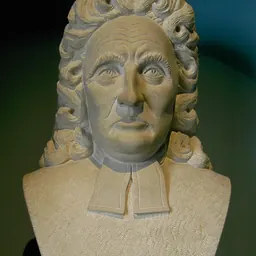
Ahmed Effendi, better known by his mahlas (nom de plume) Nedîm (Ottoman Turkish: نديم; – 1730), was an Ottoman lyric poet of the Tulip Period. He achieved his greatest fame during the reign of Ahmed III. He was known for his slightly decadent, even licentious poetry often couched in the most staid of classical formats, but also for bringing the folk poetic forms of türkü and şarkı into the court.
Life
Early life Not much is known about Nedîm's early life, except for what can be inferred from records of the time. Nedîm (then Ahmed) was born in Constantinople, most likely in 1681. His pre-nomial Mülakkabzâde (lit. descendant of the nicknamed [man]) was given to him as a result of his grandfather Merzifonlu Mülakkab Mustafa Muslihiddin Efendi; a kazasker who was known as a "man of unusual preferences", and was nicknamed as such, before being lynched in front of the Sultan Ahmed Mosque in 1648.
As the son of Kadı Mehmed Effendi, and a family vested in Ottoman bureaucracy, Nedîm's education is thought to have been quite robust, including a variety of sciences, as well as "enough Arabic and Persian to write poetry."
Nedîm was, however, better known for the challenge he provided to the literary environment of Constantinople, which by then strongly favored the Nâbî school; a school of highly philosophical, almost didactic ghazals. Other sources claim that he could have died of tremors, most likely from substance abuse or a disease resembling Parkinson's. Either way, it is known that he remained a scholar at the Sekban Ali Pasha Madrasa up until his last days.
Work
Nedim is now generally considered, along with Fuzûlî and Bâkî, to be one of the three greatest poets in the Ottoman Divan poetry tradition. It was not, however, until relatively recently that he came to be seen as such: in his own time, for instance, the title of reîs-i şâirân (رئيس شاعران), or "leader of poets", was given by Sultan Ahmed III not to Nedim, but to the now relatively obscure poet Osmanzâde Tâib, and several other poets as well were considered superior to Nedim in his own day. This relative lack of recognition may have had something to do with the sheer newness of Nedim's work, much of which was rather radical for its time.
Nedîm's works are a diverse collection; consisting of 170 ghazals, 34 şarkıs, 44 qasidas, 88 strophic forms, 3 mathnawis, 11 rubais and 2 koşmas, as well as a few poems of other forms. Because of this diversity, as well as cultural forces such as modernization, nationalism and heteronormativity, Nedîm's poems have been analyzed in a range of different, and sometimes contradictory ways. According to H. A. R. Gibb, for instance, Nedîm's school of poetry could have been described as a local, vernacular style of lyric poetry that makes use of "realistic descriptions of women", with a worldly focus and a lack of interest in Sufi mysticism.
Vernacularism The early 18th century, defined by the Ottoman Old Regime and the Tulip period, was a relatively peaceful period in Ottoman history. This environment allowed Ottoman art to enjoy a renaissance; the old musical canon was renewed and partially replaced, architecture took on perceptible European and Safavid influence, and poetry written in a more local, less Persianate Ottoman Turkish flourished.
His writing style, often described as "joyful" and "melodious", Tanpınar and Avşar both argue that there are traces of sadness in his poems that are more typical of Ottoman Diwan poems than vernacular Turkish poetry, which Avşar argues to be prominent in these lines: Nevertheless, Karadavut also points out that his depiction of Constantinople frequently engages in symbolism and hyperbole more typical of Ottoman poets, which is seen in these lines:
His interest in architecture is likely because of his participation in state gatherings, and so-called "halva nights", where the state bureaucracy would spend time together in major locations around Constantinople. Along with his qasidas, he seems to have noted down features and scenes from the city, and later used them in his chronogram (tarih) poems, The lines in which this is most obvious is the following:
Homoeroticism While Ottoman poetry was largely preoccupied by love in a lyric sense, explicitly erotic, and especially homoerotic literature was "far from absent" in the Ottoman Empire.
In the 17th century, anti-Sufi polemic and conservative movements in the Islamic world "eroded toleration of social, sexual, and spiritual diversity", marking a "conservative turn" from a more tolerant 16th century.
Furthermore, Nedîm seems to have subverted the ideals of Ottoman erotic poetry, as erotic desire in his works seem to also be directed towards older men, in stark contrast to the mostly pederastic norms of erotic literature at the time. Such characterizations are typical of Nedîm, and Matthias Kappler singles out Nedîm as a prolific author of interfaith love poems. According to Kappler, the "infidel" lover in Nedîm's poetry (and Ottoman poetry in general) represents some level of paradoxical incompatibility between lover and beloved, and the idea that cultural, religious and sexual diversity is necessary for a "perfect" human relationship. Therefore, the "infidel" stands both for the attractiveness of the beloved and their unreachability. Kappler gives this as an example:
Sufism and philosophy While there is wide consensus that Nedîm's focus was not on Sufism or philosophy, there is dispute on his religiosity and philosophical beliefs. It is known that he did want to join a tariqa at one point, however most dispute that he was a member. Some researchers, including Gölpınarlı, suggest that his religious beliefs might not have been fully genuine. Others, such as Muhsin Macit, have pointed out a lack of a "greater power" in Nedîm's poems, arguing that "[in his works], everything seems to happen on its own." Furthermore, he seems to have been dismissive of earlier philosophical traditions, to the point of openly disliking both Plato and Aristotle, calling their supporters "confused"; whether this was his genuine thoughts is however still debated.
Don’t just read it —
keep it.
Full-length biographies made to live with: read them, listen on the way to work, watch them tonight.
- E-book
- Audio
- Video
Instant download · yours to keep · every purchase keeps this site free
Important facts
Related people
Same field, nearest in time



Contemporaries
People whose lives overlapped Nedîm's




Frequently asked questions
Who was Nedîm?
Ottoman court poet (1681–1730)
When was Nedîm born?
Nedîm was born in 1681 in Istanbul.
When did Nedîm die?
Nedîm died in 1730 in Istanbul.
What was Nedîm's occupation?
Nedîm was a poet and writer.
What nationality was Nedîm?
Nedîm was Turkish.
Sources & further reading
Cite this page
APA: Biography.guide. (2026). Nedîm. https://biography.guide/nedim/
MLA: "Nedîm." Biography.guide, https://biography.guide/nedim/.
Chicago: "Nedîm." Biography.guide. https://biography.guide/nedim/.
Data last updated: 2026-09-21 · Spot an error? Report a correction.
Portrait: Wikimedia Commons · author & licence
Page generated 2026-09-27 05:00 UTC