
About Ned Buntline
Lived 1821 – 1886 (aged 65). Ned Buntline was an American writer, journalist, novelist, bretteur and dime novel.
Edward Zane Carroll Judson Sr. (March 20, 1821 – July 16, 1886), known by his pen name Ned Buntline, was an American publisher, journalist, and writer.
Early life and military service Judson was born on March 20, 1821 in Harpersfield, New York.#tag:ref|There are several different accounts of Judson's birth date and place. The Navy Department, Office of Naval Records and Library, Washington, D. C. officially records March 20, 1821.
In November 1834, Judson ran away to sea as a soldier, and the next year he shipped on board a Navy vessel. A number of years later, he rescued the crew of a boat that had been run down by a Fulton Ferry in New York's East River. As a result, he received a commission as a midshipman in the Navy from President Martin Van Buren on February 10, 1838, and he was assigned to the USS Levant. He later served on the USS Constellation and the USS Boston.
As a seaman, he served in the Seminole Wars, but he saw little combat, and he resigned after four years. During the Civil War, he enlisted in the First New York Mounted Rifles and rose to the rank of sergeant before he was dishonorably discharged for drunkenness.
Early literary efforts Judson's first publication was an adventure story in The Knickerbocker in 1838. He spent several years in the East starting up newspapers and story papers, only to have most of them fail. An early success that helped launch his fame was The Mysteries and Miseries of New York, a gritty serial story of the Bowery and slums of New York City. He was an opinionated man and strongly advocated nativism and temperance; he also became a leader in the Know Nothing movement. In 1844, he adopted the pen name "Ned Buntline". "Buntline" is the nautical term for a rope that attaches to the bottom of a square sail.
William and George were a co-owners of the steamboat Cicero and they invited Ned to go along on a January 1844 voyage to Cincinnati. On this cruise, Buntline told the Allen brothers of his recent marriage in St. Augustine, Florida, to Seberina Escudero, whom he described to the two brothers in glowing terms. Escudero joined her husband in Pittsburgh in May 1844. In August 1844, Buntline and Escudero relocated to Cincinnati, where Ned partnered with Lucius Hine and Hudson Kidd in an effort to purchase the Western Literary Journal. This magazine also failed.
A handbill, produced by Ned Buntline and the American Committee handed out prior to the Astor Place riot. Buntline started a third magazine, Buntline's Own, at this time. It was usually said to have been published in Nashville, but the Allen brothers' journals suggest that the early issues at least were printed in Smithland. George Allen's journal of January 25, 1846, said that upon his return to Smithland, he went to visit Escudero and learned that she had died there days earlier. William Allen later stated she was buried in Smithland.
Through his columns and his association with New York City's notorious gangs of the early 19th century, Buntline was one of the instigators of the Astor Place Riot, which left 23 people dead. He was fined $250 and sentenced to a year's imprisonment in September 1849.
After his release, he devoted himself to writing sensational stories for weekly newspapers, and his income purportedly amounted to $20,000 a year. In 1852 he was involved in a nativist riot in St. Louis, while he was a member of the Know Nothing Party. He eluded the authorities but was arrested in 1872 while touring and promoting his play in the city. Buntline, Buffalo Bill Cody, Giuseppina Morlacchi, Texas Jack Omohundro in The Scouts of the Prairie, 1872. Buntline took a train in 1869 from California to Nebraska, where he had been lecturing on the virtues of temperance. There, he met William Cody, who was with a group of men who had recently participated in a battle against the Sioux and Cheyenne.
Traveling with the gregarious Cody, Buntline became friends with him and later claimed that he created the nickname "Buffalo Bill" for the hero of his serial novel Buffalo Bill, the King of the Border Men, published in the New York Weekly beginning 23 December 1869.
For some time, 6-year-old Carlos Montezuma also was featured in the show as "Atzeka, the Apache-child of Cochise", being the only genuine American Indian on stage, while his adoptive father, the Italian photographer Carlo Gentile, was hired to produce and sell promotional cartes de visite of the cast members.
Cody at first was a reluctant actor, but came to enjoy the spotlight. Scouts of the Prairie opened in Chicago in December 1872 and starred Cody. It was panned by critics, but was a success nonetheless. It was performed to packed theaters across the country for years. Cody served as a scout for the Army in the summer; when campaigning stopped for the winter, he would head to the stage. Buntline's play served as training for Cody's later Wild West show.
The Buntline Special
Stuart N. Lake wrote in Wyatt Earp: Frontier Marshal (1931) that Wyatt Earp, Bat Masterson, Bill Tilghman, Charlie Bassett, and Neal Brown each received a Colt Single Action Army revolver as a gift from Buntline in thanks for their help in contributing local color to his Western yarns. The revolvers were said to be chambered in .45 Colt with 12-inch barrels, removable shoulder stocks, standard sights, and wooden grips into which the name "Ned" was ornately carved. These revolvers came to be known collectively as the Buntline Special. According to Lake, Earp kept his at the original 12-inch length, but the four other recipients cut their barrels down to 7½ inches. Modern researchers have not found any evidence in secondary sources or primary documents of the guns' existence prior to the publication of Lake's book.
Lake expended much effort trying to track these guns through the Colt company, Masterson, and Earp's contacts in Alaska. Researchers have not found any record of an order received by Colt, and Buntline's alleged connection with Earp has been largely discredited by William B. Shillinberg, who presented a detailed case to confute the Buntline Special legend.
Portrayals in popular culture Dick Elliott played "Major Ned Buntline" in the 1935 film Annie Oakley with Barbara Stanwyck in the title role. Thomas Mitchell played him in the 1944 film Buffalo Bill. Lloyd Corrigan played him in six episodes of the ABC Western series The Life and Legend of Wyatt Earp from 1955 to 1958. Burt Lancaster played him (referred to as "the Legend Maker") in Robert Altman's 1976 film Buffalo Bill and the Indians.
Written works
Don’t just read it —
keep it.
Full-length biographies made to live with: read them, listen on the way to work, watch them tonight.
- E-book
- Audio
- Video
Instant download · yours to keep · every purchase keeps this site free
Important facts
People in Ned Buntline's life
Named in this biography and alive at the same time
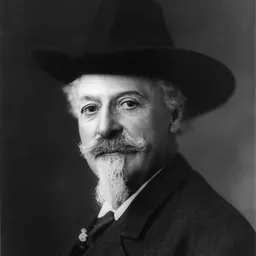
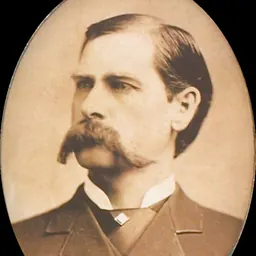
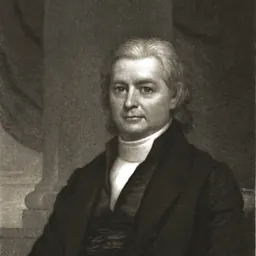
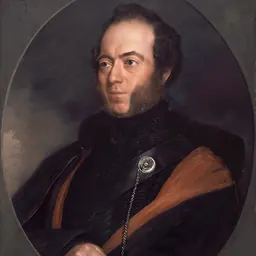



Related people
Same field, nearest in time
Contemporaries
People whose lives overlapped Ned Buntline's




Frequently asked questions
Who was Ned Buntline?
American novelist (1821–1886)
When was Ned Buntline born?
Ned Buntline was born on 20 March 1821 in New York.
When did Ned Buntline die?
Ned Buntline died on 18 July 1886 in New York.
What was Ned Buntline's occupation?
Ned Buntline was a writer, journalist, novelist, bretteur and dime novel.
What nationality was Ned Buntline?
Ned Buntline was American.
Sources & further reading
Cite this page
APA: Biography.guide. (2026). Ned Buntline. https://biography.guide/ned-buntline/
MLA: "Ned Buntline." Biography.guide, https://biography.guide/ned-buntline/.
Chicago: "Ned Buntline." Biography.guide. https://biography.guide/ned-buntline/.
Data last updated: 2026-09-22 · Spot an error? Report a correction.
Page generated 2026-09-27 05:32 UTC