
Neal Hefti
American jazz trumpeter, composer, songwriter, and arranger
About Neal Hefti
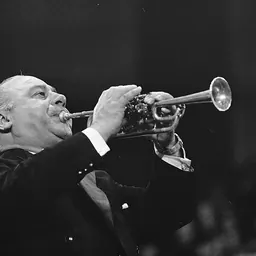
Lived 1922 – 2008 (aged 85). Neal Hefti was an American trumpeter, composer, jazz musician, record producer, film score composer and songwriter.
Neal Paul Hefti (October 29, 1922 – October 11, 2008) was an American jazz trumpeter, composer, and arranger. He wrote music for The Odd Couple movie and TV series and for the Batman TV series.
He began arranging professionally in his teens, when he wrote charts (musical arrangements) for Nat Towles. He composed and arranged while working as a trumpeter for Woody Herman providing the bandleader with versions of "Woodchopper's Ball" and "Blowin' Up a Storm" and composing "The Good Earth" and "Wild Root". He left Herman's band in 1946. Now concentrating on writing music only, he began an association with Count Basie in 1950. Hefti occasionally led his own bands.
Beginnings Neal Paul Hefti was born October 29, 1922, to an impoverished family in Hastings, Nebraska, United States. He later recalled his family relying on charity when he was a young child. He started playing the trumpet in school at the age of eleven, and by high school was spending his summer vacations playing in local territory bands to help his family make ends meet.
Growing up in, and near Omaha, Hefti was exposed to some of the great bands and trumpeters of the Southwest territory bands. He also was able to see some of the virtuoso jazz musicians from New York who came through Omaha on tour. His early influences all came from the North Omaha scene. He said, We'd see Basie in town, and I was impressed by Harry Edison and Buck Clayton, being a trumpet player. And I would say I was impressed by Dizzy Gillespie when he was with Cab Calloway. I was impressed by those three trumpet players of the people I saw in person... I thought Harry Edison and Dizzy Gillespie were the most unique of the trumpet players I heard.
These experiences seeing Gillespie and Basie play in Omaha foreshadowed his period in New York watching Gillespie play and develop the music of bebop on 52nd Street and his later involvement with Count Basie's band.
In 1939, while still a junior at North High in Omaha, he got his start in the music industry by writing arrangements of vocal ballads for local bands, like the Nat Towles band. Some material that he penned in high school also was used by the Earl Hines band. would not focus on arranging seriously for a few more years. As a member of Astor's band, he concentrated on playing trumpet.
After an injury forced him to leave Bob Astor, he stayed a while in New York. He played with Bobby Byrne in late 1942, then with Charlie Barnet for whom he wrote the classic arrangement of "Skyliner".
He also wrote band favorites such as "Apple Honey" and "Blowin' Up a Storm". His first hand experience in New York, hanging around 52nd Street and listening to the great Dizzy Gillespie, became an important resource to the whole band.
His bebop composition work also started to attract outside attention from other composers, including the interest of neo-classicist Igor Stravinsky, who later wrote "Ebony Concerto" for the band. What first attracted Stravinsky to Herman was the five trumpet unison on "Caldonia," which mirrored the new music of Gillespie... First it had been [Neal Hefti's] solo on Herman's "Woodchopper's Ball", then it became the property of the whole section, and finally, in this set form, it was made part of [Hefti's] arrangement of "Caldonia." Hefti's work successfully drew from many sources. As composer, arranger, and as a crucial part of the Herman ensemble, he provided the Herman band with a solid base which led to their popularity and mastery of the big band bebop style.
Late 1940s While playing with the First Herd, Neal married Herman's vocalist, Frances Wayne. Playing with the band was very enjoyable for Hefti, which made it doubly hard for him to leave when he wanted to pursue arranging and composing full-time. Talking about Herman's band, Hefti said, The band was a lot of fun. I think there was great rapport between the people in it. And none of us wanted to leave. We were always getting sort of offers from other bands for much more money than we were making with Woody, and it was always like if you left, you were a rat. You were really letting down the team.
The Basie years In 1950, Hefti began to arrange for Count Basie and what became known as "The New Testament" band. In his autobiography, Count Basie recalls their first meeting and the first compositions that Hefti provided the new band: Neal came by, and we had a talk, and he said he'd just like to put something in the book. Then he came back with "Little Pony" and then "Sure Thing," "Why Not?" and "Fawncy Meeting You," and we ran them down, and that's how we got married.
Hefti's compositions and arrangements featured and recorded by the orchestra established the distinctive, tighter, modern sound of the later Basie. This disparity is not so much a reflection of Hefti's ability (or lack thereof) as a musician, as it is a reflection of his focus as a writer. In the liner notes to Atomic Basie, critic Barry Ulanov says:
In a presentation of the Count Basie band notable of its justness, for its attention to all the rich instrumental talent and all the high good taste of this band — in this presentation, not the least of the achievements is the evenness of the manuscript. Neal Hefti has matched — figure for figure, note for note-blower — his talent to the Basie band's, and it comes out, as it should, Basie.
Hefti moved back to Los Angeles in 1960. Around this time, he began working for the Hollywood film industry and he enjoyed tremendous popular success writing music for film and television. He wrote much background and theme music for motion pictures, including the films Sex and the Single Girl, How to Murder Your Wife (1965), Synanon, Boeing Boeing (1965), Lord Love a Duck (1966), Duel at Diablo (1966), Barefoot in the Park (1967), The Odd Couple (1968), and Harlow (1965), for which he received two Grammy nominations for the song "Girl Talk". While most of his compositions during this period were geared to the demands of the medium and the directors, there were many moments when he was able to infuse his work with echoes of his jazz heritage.
In 1961, Hefti became the chief artists and repertoire representative of Reprise Records.
He also wrote background and theme music for television shows, including Batman He received three Grammy nominations for his television work and received one award for his Batman television score. His Batman title theme, a simple cyclic twelve-bar blues-based theme, became a Top 10 single for The Marketts and later for Hefti himself. His theme for The Odd Couple movie was reprised as part of his score for the television series of the early 1970s, as well as in a more R&B urban style for the 1982 updated version, and a jazzier version for the 2015 updated version. He received two Grammy nominations for his work on The Odd Couple television series.
Following his wife's death in 1978, Hefti gradually withdrew from active music making. In later years, he concentrated on "taking care of my copyrights".
Death Hefti died of natural causes on October 11, 2008, at his home in Toluca Lake, California, at the age of 85.
Awards
Grammy nominations Nomination for Jazz Pops (Li'l Darlin', Cute, Coral Reef) as artist. Two awards for Basie, aka Atomic Basie (Li'l Darlin', Splanky, Teddy the Toad) as composer. Three nominations (one award) for the Batman TV score. Two nominations for the Harlow movie score ("Girl Talk"). Two nominations for The Odd Couple TV score.
Academy of Television Arts & Sciences Nomination for Outstanding Individual Achievement in Music - 1968 "The Fred Astaire Show" as conductor
American Society of Composers, Authors and Publishers Jazz Wall of Fame 2005
Discography
Albums Swingin' on Coral Reef (Coral, 1953) Clifford Brown with Strings (Verve, 1955) Hefti, Hot and Hearty (Epic, 1955) Presenting Neal Hefti and His Orchestra (RCA, 1955) The Band with Young Ideas (Coral, 1956) Concert Miniatures (Vik, 1957) Pardon My Doo-Wah (Epic, 1958) Hollywood Songbook (Coral, 1958) Music USA (Coral, 1959) A Salute to the Instruments (Cora, 1960) Light and Right (Columbia, 1960) Jazz Pops (Reprise, 1962) Themes from TV's Top 12 (Reprise, 1962) The Leisurely Loveliness of Neal Hefti and His Orchestra / Li'l Darlin (Movietone, 1964) / (20th Century Fox, 1965) Sex and The Single Girl soundtrack (Warner Bros., 1964) How To Murder Your Wife soundtrack (United Artists, 1965) Harlow soundtrack (Columbia, 1965) Lord Love a Duck soundtrack (United Artists, 1966) Boeing Boeing soundtrack (RCA Victor, 1966) Lord Love a Duck soundtrack (United Artists, 1966) Duel at Diablo soundtrack (United Artists, 1966) Hefti in Gotham City (RCA Victor, 1966) Batman Theme & Other Bat Songs (RCA Victor, 1966) Batman soundtrack (1966) Definitely Hefti! (United Artists, 1967) Barefoot in The Park soundtrack (Dot, 1967) Oh Dad, Poor Dad, Mama's Hung You in the Closet and I'm Feelin' So Sad (RCA, 1967) The Odd Couple soundtrack (Dot, 1968)
As composer and arranger with Count Basie The Count! (Clef, 1952 ) Dance Session (Clef, 1953) Dance Session Album#2 (Clef, 1954) Basie (Clef, 1954) April in Paris (Verve, 1956) The Atomic Mr. Basie (Roulette, 1957) aka Basie and E=MC2 Basie Plays Hefti (Roulette, 1958) On My Way & Shoutin' Again! (Verve, 1962)
As composer and arranger with Harry James Harry James and His Orchestra 1948–49 (Big Band Landmarks – Vol. X & XI, 1969) The New James (Capitol, 1958) Harry's Choice (Capitol, 1958) Harry James Plays Neal Hefti (MGM, 1961)
Film scores 1964: Sex and the Single Girl 1965: Boeing Boeing 1965: How to Murder Your Wife 1965: Harlow 1965: Synanon 1966: Lord Love a Duck 1966: Duel at Diablo 1967: Oh Dad, Poor Dad, Mamma's Hung You in the Closet and I'm Feelin' So Sad 1967: Barefoot in the Park 1968: The Odd Couple 1968: P.J. 1971: A New Leaf 1972: Last of the Red Hot Lovers 1976: Won Ton Ton, the Dog Who Saved Hollywood
Don’t just read it —
keep it.
Full-length biographies made to live with: read them, listen on the way to work, watch them tonight.
- E-book
- Audio
- Video
Instant download · yours to keep · every purchase keeps this site free
Important facts
People in Neal Hefti's life
Named in this biography and alive at the same time
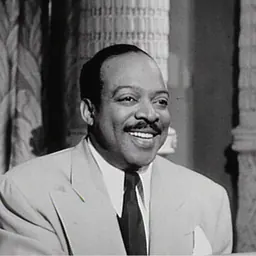
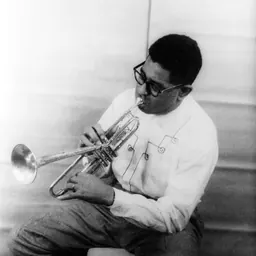



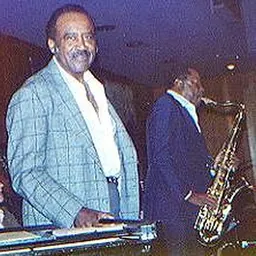


Related people
Same field, nearest in time
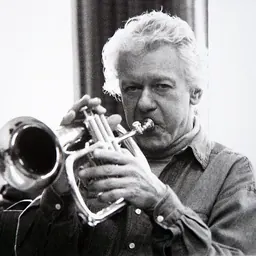


Contemporaries
People whose lives overlapped Neal Hefti's
Frequently asked questions
Who was Neal Hefti?
American jazz trumpeter, composer, songwriter, and arranger (1922-2008)
When was Neal Hefti born?
Neal Hefti was born on 29 October 1922 in Hastings.
When did Neal Hefti die?
Neal Hefti died on 11 October 2008 in Los Angeles.
What was Neal Hefti's occupation?
Neal Hefti was a trumpeter, composer, jazz musician, record producer, film score composer and songwriter.
What nationality was Neal Hefti?
Neal Hefti was American.
Sources & further reading
Cite this page
APA: Biography.guide. (2026). Neal Hefti. https://biography.guide/neal-hefti/
MLA: "Neal Hefti." Biography.guide, https://biography.guide/neal-hefti/.
Chicago: "Neal Hefti." Biography.guide. https://biography.guide/neal-hefti/.
Data last updated: 2026-09-26 · Spot an error? Report a correction.
Page generated 2026-09-27 05:13 UTC