
About Nawab Abdul Latif
Lived 1828 – 1893 (aged 64–65). Nawab Abdul Latif was a politician.
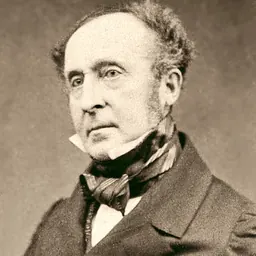
Nawab Bahadur Qazi Abdul Latif (1828 – 10 July 1893) was a Bengali Muslim aristocrat, educator, and social worker. His title, Nawab was awarded by the British in 1880. He was one of the first Muslims in 19th-century India to embrace the idea of modernisation.
Early life Qazi Abdul Latif was born into an aristocratic Bengali Muslim Qazi family in Rajapur, Faridpur District, Bengal Presidency in the then British India (now in Bangladesh). The ancestors of the Qazis of Rajapur are purported to had come and settled in Bengal from Hijaz in Arabia, via Delhi, Qazi Abdur Rasul son of Shah Azimuddin whom the family claims was a descendant of Khalid ibn Walid had setltled in Faridpur during the Mughal era after being appointed as Qazi. This claim opposes the consensus of Arab genealogists that Khalid ibn al-Walid's lineage in the paternal line had died out during the Plague of Amwas. Nonethelesss, Qazi Abdul Latif is said to have been a seventh generation descendant of this Shah Azimuddin. His father Qazi Faqir Mahmud (1774–1844) was a lawyer in the civil court of Kolkata. Latif had a brother, Khan Bahadur Abdul Ghafur Nassakh (1833–1889), a civil servant and a poet. He obtained the highest degree in Arabic, French and English language from Calcutta Madrassah (now the Aliah University).
The Society gave a remarkable impetus to the cause of Muslim advancement throughout India. It attracted the notice of successive administrations, the wants and grievances of the Indian Muslim community in regard to education, legislation and other cognate matters affecting the well-being of society. The Society was the precursor of similar institutions in other parts of India.
Awards The British government, in recognition of his meritorious services, honoured him with titles and decorations from time to time. In 1877, at the Imperial Assemblage, at Delhi, Viceroy Lord Lytton conferred upon him the title of "Khan Bahadur" and presented him with an "Empress Medal." In April 1880, Lord Lytton conferred upon him the high title of "Nawab." In 1883, Viceroy Lord Ripon honoured him with a "Companionship of the Most Eminent Order of the Indian Empire." In 1887, on the occasion of Queen Victoria's Golden Jubilee, Viceroy Lord Dufferin conferred upon him the highest Muslim title of "Nawab Bahadur."
He received the title of 'Order of the Majedi of Third Class' from the Turkish government.
Latif's achievements include working to turn Hindu College into Presidency College and thus open it for non-Hindus as well. He also established numerous educational institutes, including Haji Muhammad Mohsin Govt. High School, Rajshahi. As a prominent personality of mid 19th century Bengal, he was the pioneer of Muslim modernization and the architect of the Muslim Renaissance, was one of those great men who appeared as saviors of their frustrated, humiliated, demoralized and disorganized fellow countrymen under colonial rule His chief contribution was in the field of education. He was among the first to understand that young Bengali Muslims should receive modern education. He understood that the Muslims of Bengal had fallen behind in everything because of their prejudices against modern education. He devoted his whole life to removing this self-destructive prejudice from their minds. However, Bangladeshi educationist Ahmed Sharif criticized him for promoting Urdu over Bengali as the language of Bengali Muslims. Latif had made a representation to the 1882 Education Commission (Hunter Commission) that the instructional language of the aristocratic Muslims should be Urdu and that of the ordinary Muslims should be Bengali with a profusion of Arabic and Persian words.
Poet Nawab Syed Muhammad Azad was Latif's son-in-law. Syud Hossain and Sahibzadi Shahbanu Begum were some of his grandchildren. Shaista Suhrawardy Ikramullah was his great-granddaughter.
Don’t just read it —
keep it.
Full-length biographies made to live with: read them, listen on the way to work, watch them tonight.
- E-book
- Audio
- Video
Instant download · yours to keep · every purchase keeps this site free
Important facts
People in Nawab Abdul Latif's life
Named in this biography and alive at the same time


Related people
Same field, nearest in time



Contemporaries
People whose lives overlapped Nawab Abdul Latif's





Frequently asked questions
Who was Nawab Abdul Latif?
Bengali aristocrat, educator and social worker (1828–1893)
When was Nawab Abdul Latif born?
Nawab Abdul Latif was born in 1828 in Faridpur District.
When did Nawab Abdul Latif die?
Nawab Abdul Latif died on 10 July 1893 in Kolkata.
What was Nawab Abdul Latif's occupation?
Nawab Abdul Latif was a politician.
Sources & further reading
· Wikipedia: Nawab Abdul Latif
Cite this page
APA: Biography.guide. (2026). Nawab Abdul Latif. https://biography.guide/nawab-abdul-latif/
MLA: "Nawab Abdul Latif." Biography.guide, https://biography.guide/nawab-abdul-latif/.
Chicago: "Nawab Abdul Latif." Biography.guide. https://biography.guide/nawab-abdul-latif/.
Data last updated: 2026-09-20 · Spot an error? Report a correction.
Page generated 2026-09-27 05:32 UTC