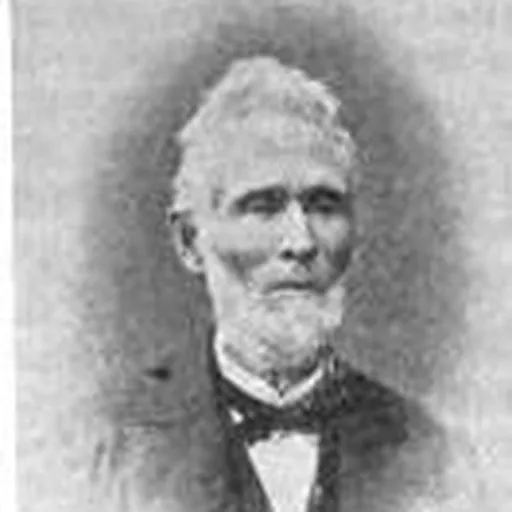
About Nathan Brown
Lived 1807 – 1886 (aged 78). Nathan Brown was an American lexicographer, translator, missionary, bible translator, journalist and linguist, known for Assamese language and Assamese literature.
Nathan Brown (; 22 June 1807 – 1 January 1886) was an American Baptist missionary to India and Japan, Bible translator, and abolitionist. He is noted for his works on Assamese language, grammar and script.
In around 1843, based in Sibsagar, he began translating the New Testament into Assamese under the title Amar Trankôrta Yisu Khristôr Nôtun Niyôm which he published in 1848. In 1854, he published another book titled meaning roughly Jesus Christ and his Holy Messages. He also translated prayers alongside his other missionary colleagues. His work Grammatical Notices of the Assamese Language was published by the American Baptist Mission Press in 1848. In 1846, with his colleague Oliver Cutter, he published Orunodoi , the first Assamese periodical. He also published works of contemporary and historical Assamese scholars, to name a few Ôxôm Burônzi (History of Assam, ) by Kashinath Phukan in 1844, Kitabôt Mônzôri (Mathematics, in Assamese verse, ) in two parts, Lilawôti and Pôdgônit by Bakul Kayastha in 1845, and Sutiya Burônzi in 1850, as well as others. In Assam, Brown is considered to be a pioneer and champion of the native language and literature.
Early life and missions to Burma and Assam
Born in New Ipswich, New Hampshire, he attended Williams College, where he graduated first in his class. He taught for two years in Vermont before he and his wife Eliza, whom he married in 1830, went on to serve as missionaries in Burma. In 1835, David Scott, the Agent to the Governor General in the North-East Frontier invited American Baptist Missionaries working in Burma (now Myanmar) to come to Assam to spread Christianity and education; Brown and Oliver Cutter were the first to arrive in 1837.
Brown's original intention had been to translate the Bible into Burmese, but he soon found himself pulled into a mission along with Cutter and Miles Bronson in the Indian region of Assam. By 1846 he had founded 14 Assamese-medium schools in Sibsagar delivering anti-slavery sermons in Boston. This struggle eventually resulted in the American Civil War. Many proponents of the anti-slavery movement had to deal with the bloody results of their efforts in a personal struggle of conscience. Rev. Brown dealt with the question of violent means in Magnus Maharba.
Brown joined the American Baptist Free Mission Society and met with president Abraham Lincoln to discuss emancipation. and in 1872, Nathan married Charlotte Marlit. based on what were then the oldest known Greek manuscripts; he would go on to print thousands of Hiragana copies for distribution print versions (with the goal of access to the Bible by less educated persons who might not understand Kanji). Brown died in Yokohama in 1886.
Family Brown had five children, of which two (Eliza and Nathan Worth) survived into adulthood.
His widow Charlotte went on to marry another missionary, William Ashmore, and they served with the American Baptist Missionary Union in Guangdong.
Publications Brown published a number of books including; The missionary's call. ([publisher not identified], 1820) (page images at HathiTrust) Grammatical notices of the Asamese language (Printed at the American Baptist Mission Press, 1848) (page images at HathiTrust) The New Testament of our Lord and savior Jesus Christ: translated into the Asamese [sic] language (American Baptist Mission Press, 1849) (page images at HathiTrust) Magnus Maha'rba. (Printed for the Filolojikal gemána, 1866) (page images at HathiTrust) The New Testament in vernacular Japanese: from the oldest existing Greek manuscripts, with interlinear notices of various readings ([American Baptist Missionary Union], 1879), also by Kawakatsu Tetsuya and American Baptist Missionary Union (page images at HathiTrust) The histori ov Magnus Maha'rba and the Blak Dragun (Printed for the Filolojikal gemána, 1908) (page images at HathiTrust)
Don’t just read it —
keep it.
Full-length biographies made to live with: read them, listen on the way to work, watch them tonight.
- E-book
- Audio
- Video
Instant download · yours to keep · every purchase keeps this site free
Important facts
People in Nathan Brown's life
Named in this biography and alive at the same time



Related people
Same field, nearest in time




Contemporaries
People whose lives overlapped Nathan Brown's





Frequently asked questions
Who was Nathan Brown?
missionary (1807–1886)
When was Nathan Brown born?
Nathan Brown was born on 22 June 1807 in New Ipswich.
When did Nathan Brown die?
Nathan Brown died on 1 January 1886 in Yokohama.
What was Nathan Brown's occupation?
Nathan Brown was a lexicographer, translator, missionary, bible translator, journalist and linguist.
What was Nathan Brown known for?
Nathan Brown was known for Assamese language and Assamese literature.
What nationality was Nathan Brown?
Nathan Brown was American.
Sources & further reading
· DBpedia: Nathan Brown (missionary)
Cite this page
APA: Biography.guide. (2026). Nathan Brown. https://biography.guide/nathan-brown-lexicographer/
MLA: "Nathan Brown." Biography.guide, https://biography.guide/nathan-brown-lexicographer/.
Chicago: "Nathan Brown." Biography.guide. https://biography.guide/nathan-brown-lexicographer/.
Data last updated: 2026-09-24 · Spot an error? Report a correction.
Portrait: Wikimedia Commons · author & licence
Page generated 2026-09-27 05:08 UTC