
Natalya Guseva
Russian ethnographer and indologist
About Natalya Guseva
Lived 1914 – 2010 (aged 96). Natalya Guseva was a Russian indologist and ethnographer.
Early life and family Guseva was born as Natalya Romanovna Chetyrkina on 21 March 1914 at Rubezhovka village in the Kiev Governorate.
Education, career and research Guseva developed interest in the eastern world, and in 1940, completed her graduation from the Leningrad State University with a specialty in Indology. Later, she worked at the Institute of Ethnography in Moscow as an employee, but in 1946, she joined the institute as a student for further studies. From 1950 to 1952, she worked as a research assistant at the Institute of Oriental Studies of the Academy of Sciences of the Uzbek SSR. In 1951, she came to Moscow and completed her Candidate of Sciences at the Institute of Ethnography with the defense of her thesis titled "Этнический состав населения Южной Индии" (The Ethnic Composition of the Population of South India). Later in 1952, she left Uzbekistan and on the invitation of Sergey Pavlovich Tolstov, she started working again at the Institute of Ethnography of the Academy of Sciences of the Soviet Union where she worked until her retirement in 1998. However, from 1963 to 1964, she had worked as the senior methodologist of the Russian language at the House of Soviet Culture in Delhi. In 1978, she completed her Doctor of Sciences at the institute with the defense of her thesis titled "Индуизм: история формирования. Культовая практика" (Hinduism: The History of Formation. Cultic Practice).
In her research, she worked to identify common features between the Hindu and Slavic mythologies. ''), a second edition of which was published in 2010.
She was a member of the Union of Soviet Writers, and later became a member of the Union of Russian Writers. She delivered a number of lectures for the Union of Soviet Societies for Friendship and Cultural Relations with Foreign Countries. Along with a number of her contemporary researchers, Guseva also suggested that Jainism originated long before 500 BCE. According to Guseva, Jainism is very different from Brahmanism and the Vedic religion and it does not believe in the Varna system, rejects the concept that Veda is holy, and opposes the concept of gods being the center of worship. Tokarev termed Guseva's claim of Jainism being the most ancient, and even pre-median, religion of India as doubtful.
Criticism Victor Schnirelmann claimed that Guseva and Aleksandr Gelyevich Dugin augmented and propagated "the Slavicized version of the German 'Aryan Myth'". According to Schnirelmann, the myth states that the Russians are the "most ancient" people, whose first homeland was the Arctic, which was also the Pagan gods' "native land", and where once existed subtropical environmental conditions. With time, "rapid glaciation" occurred in the area, as a result of which, the Russian people headed towards south where they "established a high civilisation" (according to some writers, in the Southern Urals region). It also claims that, in the Arctic, the Russians had "developed an early system of Vedaic knowledge and, in some versions, even invented the earliest writing". Later on, the Russian people who migrated to Eurasia, carried with them knowledge and an "advanced culture" in the region. In the opinion of Schnirelmann, "it is impossible to confirm this view with archaeological or historical evidence". Schnirelmann highlighted that the works authored by Guseva were "cited by many contemporary ultra-nationalists of the Aryan pursuasion ". In 1999, he noted that lately Guseva "distanced herself from Neo-Nazi and racist constructions" and that she had appealed for "a more sober evaluation of Arkaim".
Death Guseva died on 21 April 2010 at the age of 96 years, and honoring her request, her family members scattered her ashes in the Ganges in India.
The Government of India gave her the Jawaharlal Nehru Award for her contributions towards the development of Russia–India relations.
Books
Books edited
Selected papers
Don’t just read it —
keep it.
Full-length biographies made to live with: read them, listen on the way to work, watch them tonight.
- E-book
- Audio
- Video
Instant download · yours to keep · every purchase keeps this site free
Important facts
People in Natalya Guseva's life
Named in this biography and alive at the same time


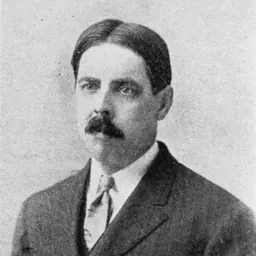
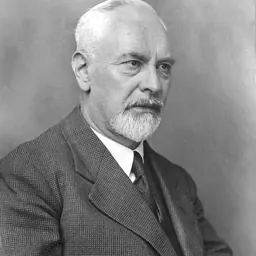
Related people
Same field, nearest in time
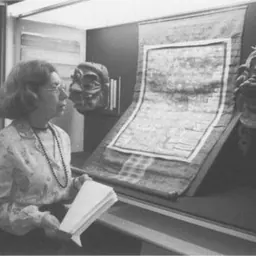



Contemporaries
People whose lives overlapped Natalya Guseva's


Frequently asked questions
Who was Natalya Guseva?
Russian ethnographer and indologist (1914-2010)
When was Natalya Guseva born?
Natalya Guseva was born on 8 March 1914 in Mykhailivka-Rubezhivka.
When did Natalya Guseva die?
Natalya Guseva died on 21 April 2010 in Moscow.
What was Natalya Guseva's occupation?
Natalya Guseva was an indologist and ethnographer.
What nationality was Natalya Guseva?
Natalya Guseva was Russian.
Sources & further reading
· DBpedia: Natalya Romanovna Guseva
Cite this page
APA: Biography.guide. (2026). Natalya Guseva. https://biography.guide/natalya-guseva-indologist/
MLA: "Natalya Guseva." Biography.guide, https://biography.guide/natalya-guseva-indologist/.
Chicago: "Natalya Guseva." Biography.guide. https://biography.guide/natalya-guseva-indologist/.
Data last updated: 2026-09-20 · Spot an error? Report a correction.
Page generated 2026-09-27 05:26 UTC