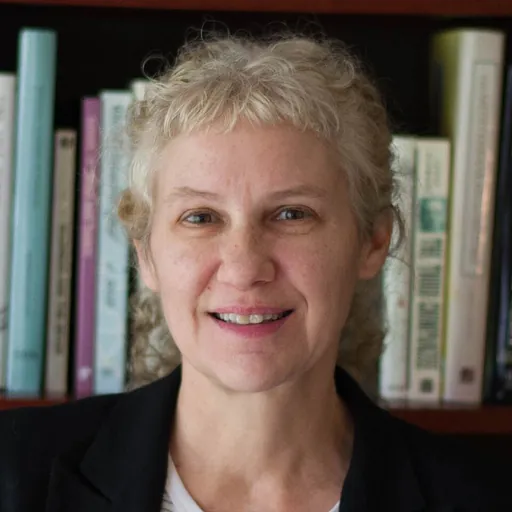
About Nancy M. Bonini
Born 1959. Nancy M. Bonini is an American neuroscientist and geneticist.
Early life and education Bonini was born in 1959 to parents Rose and William E. Bonini. Her father was a Professor of GeoScience and Civil Engineering at Princeton University from 1952 to 1996. Raised in Princeton, New Jersey, she graduated from Princeton Day School in 1977. Nancy, her sister (Jennifer), brothers (Jack and Jamie), and father all attended Princeton University.
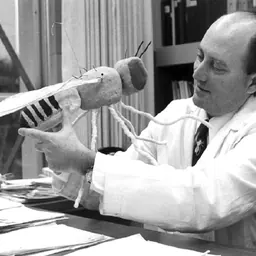
Bonini earned an AB degree from Princeton University in 1981, studying biology. Her undergraduate thesis research, performed under the direction of William (Chip) Quinn, formed the basis for her first publication, "Reward Learning in Normal and Mutant Drosophila". After graduation, Bonini entered the Neurosciences Training Program at the University of Wisconsin–Madison. There, she completed doctoral research in the laboratory of David L. Nelson, graduating with a Doctorate (Ph.D.) in Neuroscience in 1987. Bonini's postdoctoral research was performed in the laboratory of Seymour Benzer (behavioral geneticist) at the California Institute of Technology.
Research The fruit fly as a model for human neurodegenerative disease In 1998, Bonini's research conclusively demonstrated that Drosophila could be used as an in vivo model for human neurodegenerative disease.
Chaperones and Polyglutamine Repeat Diseases Studying Polyglutamine repeat diseases (polyQ diseases) in Drosophila neurodegeneration models, Bonini's research group elucidated an important role for molecular chaperones in polyQ diseases, and subsequently Parkinson's disease. In those studies, upregulation of the chaperone Hsp70 suppressed neurodegeneration, and this finding established chaperones as a new therapeutic target for Parkinson's disease and other neurodegenerative disorders. Bonini's research team demonstrated the pharmacologic potential of chaperones in further Drosophila studies; administering geldanamycin (an antitumor antibiotic that acts on Hsp90) to mutant flies before symptoms of neural decline were visible averted the onset of neurodegeneration in the mutant flies, suggesting a new approach for people susceptible to Parkinson's disease and other neurodegenerative conditions.
Amyotrophic lateral sclerosis (ALS/Lou Gehrig's Disease) Bonini's research laboratory developed and validated a Drosophila model for familial ALS, then used an ALS model to evaluate genes and pathways important for ALS onset, progression, and possible treatment.
A role for brain microRNAs in aging and disease The Bonini lab discovered that a conserved microRNA, miR-34, plays a neuroprotective role in the brains of aging Drosophila. The loss of miR-34 resulted in a profile consistent with accelerated aging, late-onset brain neurodegeneration, and reduced survival, whereas upregulation of miR-34 enhanced survival and mitigated neurodegeneration.
An epigenetic basis for Alzheimer's disease In 2018, Bonini, with collaborators Shelley Berger, Brad Johnson, and others, completed a study investigating the epigenetic landscape of tissue samples donated by individuals who did and did not have Alzheimer's disease. The findings established the basis for an epigenetic link between aging and Alzheimer's disease, suggesting a new model for the disease and a paradigm shift from the previously established view of Alzheimer's disease as an 'advanced state of normal aging'. Based on the study findings, Bonini and collaborators established that a set of normal aging changes that occur in the epigenome protect against Alzheimer's disease, and that disrupting those normal protective changes may be a trigger that predisposes people to the disease.
Honors and awards A professor of biology at the University of Pennsylvania since 1994, Bonini has held appointments as the inaugural Lucille B. Williams Term Professor of Biology (2006–2012), and the National Academy of Medicine. Also in 2012, Bonini became an elected Fellow of the American Association for the Advancement of Science. In 2014, Bonini was elected to the American Academy of Arts and Sciences.
Bonini was the recipient of a March of Dimes Basil O'Connor Award in 1996, a Packard Fellowship for Science and Engineering in 1997, an Ellison Medical Foundation Senior Scholar in Aging Research Award in 2009, a Glenn Award for Research in the Biological Mechanisms of Aging in 2015, and a National Institutes of Health Outstanding Investigator R35 Award in 2016. In 2010, she appeared as a panelist on Charlie Rose’s The Brain Series (Episode: The Disordered Brain).
Personal
Bonini is married to Anthony Cashmore,
Representative publications Journal articles
. (highlighted as paper of the week)
Reviews
Commentary
Don’t just read it —
keep it.
Full-length biographies made to live with: read them, listen on the way to work, watch them tonight.
- E-book
- Audio
- Video
Instant download · yours to keep · every purchase keeps this site free
Important facts
Family & relationships
People in Nancy M. Bonini's life
Named in this biography and alive at the same time


Related people
Same field, nearest in time






Contemporaries
People whose lives overlapped Nancy M. Bonini's


Frequently asked questions
Who is Nancy M. Bonini?
American neuroscientist and geneticist
When was Nancy M. Bonini born?
Nancy M. Bonini was born in 1959.
What is Nancy M. Bonini's occupation?
Nancy M. Bonini is a neuroscientist and geneticist.
What nationality is Nancy M. Bonini?
Nancy M. Bonini is American.
Sources & further reading
Cite this page
APA: Biography.guide. (2026). Nancy M. Bonini. https://biography.guide/nancy-m-bonini/
MLA: "Nancy M. Bonini." Biography.guide, https://biography.guide/nancy-m-bonini/.
Chicago: "Nancy M. Bonini." Biography.guide. https://biography.guide/nancy-m-bonini/.
Data last updated: 2026-09-24 · Spot an error? Report a correction.
Portrait: Wikimedia Commons · author & licence
Page generated 2026-09-27 05:09 UTC