
About Nancy Hart
Lived 1735 – 1830 (aged 94–95). Nancy Hart was a spy.
Nancy Morgan Hart (c. 1741–1830) was a rebel heroine of the American Revolutionary War, noted for her exploits against Loyalists in the northeast Georgia backcountry. She is characterized as a tough, strong and resourceful frontier woman who repeatedly outsmarted Tory soldiers, and killed some outright. Stories about her are mostly unsupported by contemporary documentation, and it has been impossible for researchers to entirely distinguish fact from folklore.
Early life
Although explicit details concerning most of her life are unknown, Nancy Ann Morgan Hart is believed to have been born in North Carolina around 1741, in the Yadkin River valley, though some researchers think that she was born in Pennsylvania or New York state. She married Benjamin Hart of that area. His extended family's descendants included such famous later political figures as Missouri Senator Thomas Hart Benton and Kentucky Senator Henry Clay.
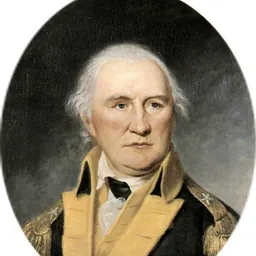
Hart was well connected through family ties to other prominent figures in early American history. She was a cousin to Revolutionary War general Daniel Morgan, who commanded victorious American forces at the Battle of Cowpens in South Carolina on January 17, 1781.
According to contemporary accounts, "Aunt Nancy", as she was often called, was a tall, gangly woman. She was rough-hewn and rawboned, with red hair and a face scarred by smallpox. One early account said that Hart had "no share of beauty—a fact she herself would have readily acknowledged, had she ever enjoyed an opportunity of looking into a mirror." While grading a railroad site less than a mile from the old Hart Cabin, the workers found five or six skeletons buried neatly in a row. A few of the skeletons' necks were broken, which suggested they had been hanged. They were determined to have been buried for at least 100 years.
In her 1925 county history, Cook published a version based on an 1825 newspaper article. McIntosh quoted two such stories in a 1940 history of Elbert County.
Other stories Mrs. Louisa H. Kendall was the niece of John Hart, the son whom Nancy lived with in later life. Kendall wrote a letter in 1872 recalling some of the stories her uncle had heard from his mother. According to this letter, once when Nancy was taking a bag of grain to the mill, a band of Tories forced her off her horse and threw the grain to the ground. Undaunted, Hart picked up the heavy bag and walked the rest of the way to the mill. Nancy Hart was said to have acted as a sniper, killing Tories as they came across the Broad River.
Two accounts say that Nancy dressed as a man in order to enter Tory camps, where she could overhear talk and observe the layouts and other elements of military value.
According to folklore, the local Native Americans referred to her as "Wahatche" which may translate to "War Woman", and named a creek for her. But many scholars dispute this, as there were records of the Cherokee name for the creek prior to the war. In addition, the late 19th-century ethnographer James Mooney noted, "Several cases of women acting the part of warriors are on record among the Cherokee."
Life after the war George Rockingham Gilmer, twice governor of Georgia before 1850, knew Hart personally. In an account of early settlers which he published in 1855, he wrote that she became "religious" after the war:
A Methodist society was formed in her neighborhood. She went to the house of worship in search of relief. She found the good people assembled in class meeting, and the door closed against intruders. She took out her knife, cut the fastening and stalked in. She heard how the wicked might work out their salvation; became a shouting Christian, fought the devil as manfully as she fought the Tories . . .
During the late 1780s, the Harts moved to Brunswick, Georgia. (Some accounts suggest that they may have spent time in Alabama and South Carolina as well). Benjamin Hart died shortly thereafter. Nancy Hart returned to the settlement on the Broad River but found that a flood had washed away their former cabin. Eventually, she settled with her son John Hart and his family along the Oconee River in Clarke County near Athens. Around 1803 John Hart took his mother and family to Henderson County, Kentucky, where they settled again near relatives. Hart spent the remaining years of her life there. She was buried in the Hart family cemetery a few miles outside of Henderson. organized to the north of Elbert County, was named for her, as was its county seat, Hartwell. During the American Civil War (1861–1865), a group of women in LaGrange, Georgia founded an all-female militia company, which they named the Nancy Harts, to defend the town from the Union Army. Most of the men of fighting age had been drawn off to war. In the 20th century, nearby Lake Hartwell and Hartwell Dam, Hart State Park, and the Nancy Hart Highway (Georgia Route 77) commemorate the legendary woman. In 1997 Hart was inducted into Georgia Women of Achievement.
Don’t just read it —
keep it.
Full-length biographies made to live with: read them, listen on the way to work, watch them tonight.
- E-book
- Audio
- Video
Instant download · yours to keep · every purchase keeps this site free
Important facts
People in Nancy Hart's life
Named in this biography and alive at the same time



Related people
Same field, nearest in time



Contemporaries
People whose lives overlapped Nancy Hart's





Frequently asked questions
Who was Nancy Hart?
Confederate spy during the American Revolutionary War
When was Nancy Hart born?
Nancy Hart was born in 1735 in North Carolina.
When did Nancy Hart die?
Nancy Hart died in 1830 in Henderson County.
What was Nancy Hart's occupation?
Nancy Hart was a spy.
Sources & further reading
Cite this page
APA: Biography.guide. (2026). Nancy Hart. https://biography.guide/nancy-hart/
MLA: "Nancy Hart." Biography.guide, https://biography.guide/nancy-hart/.
Chicago: "Nancy Hart." Biography.guide. https://biography.guide/nancy-hart/.
Data last updated: 2026-09-26 · Spot an error? Report a correction.
Page generated 2026-09-27 05:15 UTC